
Castles in North Carolina: Explore the State’s Grand Estates

When you think of castles in North Carolina, medieval turrets and European fortresses may not immediately come to mind – but the state is home to some of the most impressive estate architecture in the American South. From the palatial Biltmore Estate to mysterious mountaintop stone castles and lavish private retreats, these sites reflect Gilded Age wealth, Appalachian craftsmanship, and the artistic experimentation of the 20th century.
These are not medieval fortresses. Instead, North Carolina’s “castles” are Gilded Age mansions, Tudor-inspired mountain estates, imaginative hand-crafted structures, and grand private homes – each with its own story, atmosphere, and architectural personality.
If you’re exploring castle-style architecture across the country, don’t miss my full guide to Castles in America, which serves as a nationwide starting point.
Key Takeaways: Castles In North Carolina
- North Carolina’s castles include Gilded Age mansions, mountain estates, stone houses, and artistic, hand-built structures.
- The Biltmore Estate is the most famous – the largest privately owned home in the U.S.
- Castle Mont Rouge offers a whimsical stone retreat deep in the woods.
- Overlook/Seely’s Castle and Smithmore Castle add mountain grandeur and Tudor-style drama.
- Many of these sites sit in the Blue Ridge Mountains or near Asheville, making NC a prime destination for scenic castle exploring.
Historical Overview of Castles in North Carolina
North Carolina’s castle-style architecture developed through three major influences:
Gilded Age Wealth & Industrial Expansion
During the late 19th century, Asheville blossomed as a retreat for industrial magnates and wealthy families from the Northeast. The Biltmore Estate – completed in 1895 – set the tone for luxury mountain architecture inspired by European châteaux.
Arts & Crafts Mountain Building
In the early 20th century, local craftsmen in the Blue Ridge Mountains embraced natural stone, timber, and handcrafted detailing. This spirit shaped properties like Seely’s Castle (Overlook), blending imported architectural styles with regional materials.
Modern Creative Builders
Late-20th-century artistic experimentation produced unique, whimsical structures, including Castle Mont Rouge – an unfinished but intriguing stone complex hidden deep in the forest.
As a result, North Carolina’s “castles” reflect both Old World ambition and distinctly Appalachian creativity.
Architectural Styles & Design Elements
While North Carolina doesn’t boast medieval fortresses, the state does feature several notable architectural traditions that give its “castle-style” estates their unique character. These buildings reflect the influence of America’s Gilded Age, romantic European revival movements, and the rugged, mountainous landscapes of Appalachia.
Gilded Age Châteauesque & Beaux-Arts Grandeur
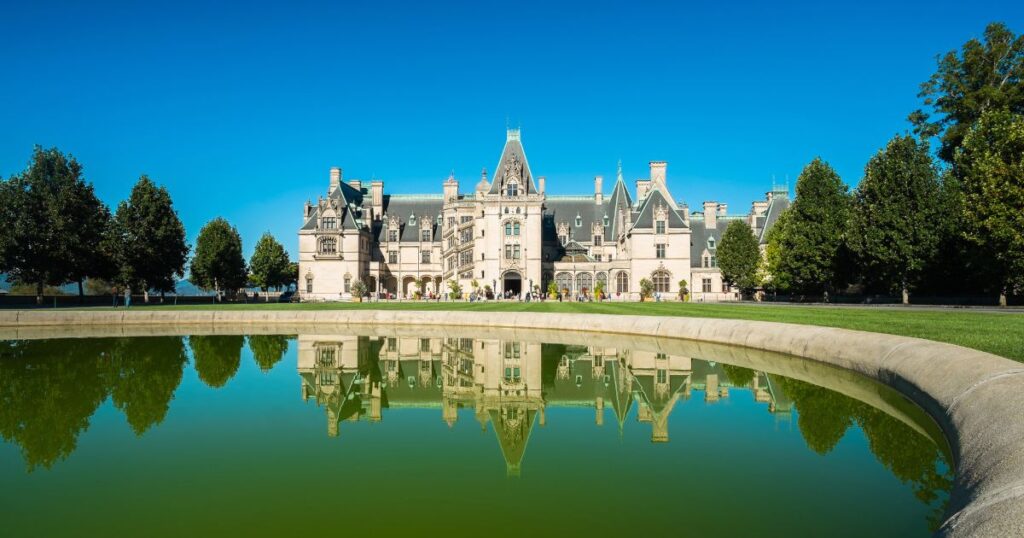
Biltmore Estate is the state’s crown jewel of castle architecture. Inspired by French Renaissance châteaux, it features steeply pitched roofs, elaborate stonework, turrets, sculptural ornamentation, and grand symmetrical façades. The integration of Beaux-Arts interior planning adds to its opulence.
Rustic Storybook & Fantasy Revival
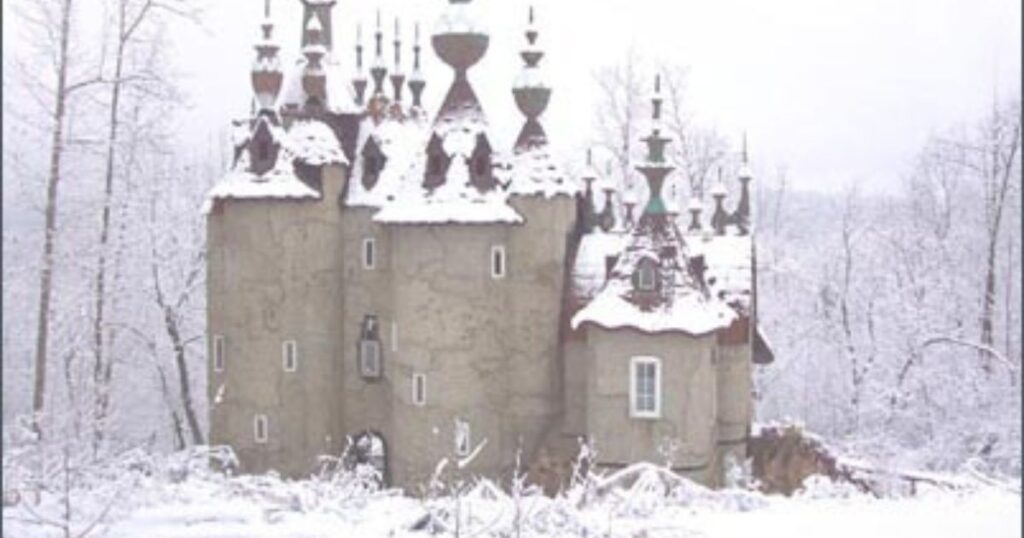
Castle Mont Rouge – unfinished and somewhat enigmatic – speaks to the “storybook castle” trend of the late 20th century. Its red domes and whimsical towers evoke Eastern European fantasy architecture rather than strict medieval forms.
Arts & Crafts Mountain Lodge Aesthetic
Overlook Mansion (Seely’s Castle) incorporates stone masonry and heavy timber elements typical of early 1900s Arts-and-Crafts design. Set high above Asheville, it blends castle-like massing (towers, thick walls, parapets) with mountain lodge principles that emphasize harmony with nature.
Modern Luxury Lodge Architecture
Smithmore Castle combines contemporary luxury with traditional European cues – stone façades, arched entryways, turret-inspired massing – resulting in a hybrid aesthetic designed more for grandeur and hospitality than historical replication.
Together, these styles highlight how North Carolina’s “castles” draw more from romanticism, landscape, and Gilded Age wealth than medieval precedent.
Where to Find Castles In North Carolina
Castle-style estates cluster in several scenic regions:
Asheville & the Blue Ridge Mountains
Home to Biltmore Estate, Overlook, and multiple historic mansions.
This is North Carolina’s primary castle region thanks to its Gilded Age allure and mountain landscapes.
Person County / Hill Country
Castle Mont Rouge sits here, deep in the woods and surrounded by rural farmland and rolling hills.
Western North Carolina Mountain Retreats
Private estates – like Smithmore Castle – take advantage of sweeping views and secluded terrain.
To compare castle-style architecture across the U.S., explore my full guide to Castles in America.
Top Castles to Visit in North Carolina
Biltmore Estate (Asheville)
America’s largest privately owned home, built by George Washington Vanderbilt II.
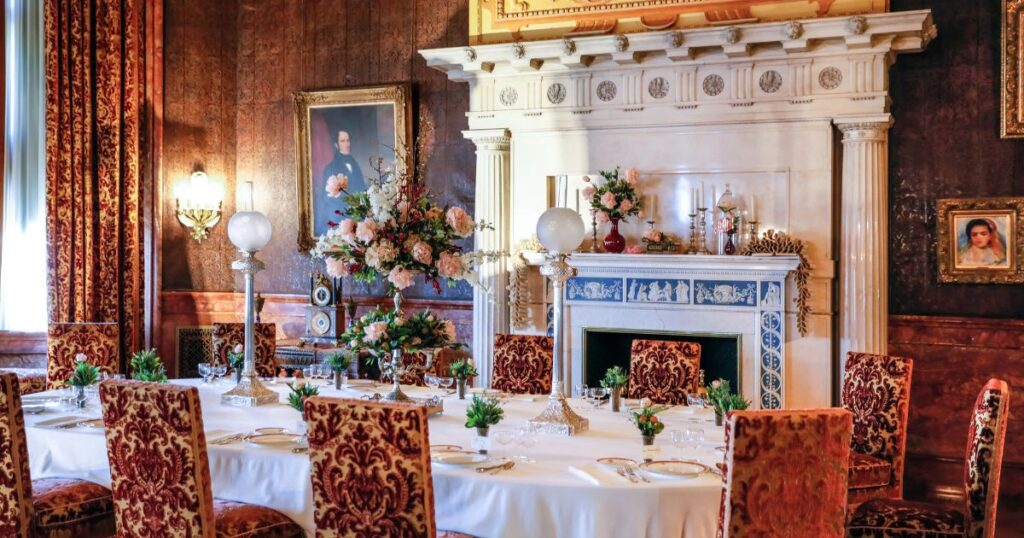
This Châteauesque masterpiece features 250 rooms, sweeping mountain views, a grand library, indoor pool, 19th-century innovations, and 75 acres of gardens designed by Frederick Law Olmsted. The Biltmore Estate remains one of the most iconic architectural achievements in the country and the crown jewel of castle-style sites in North Carolina.
Castle Mont Rouge (Rougemont)
A mysterious, turreted stone castle tucked in the forests of Person County. Created by sculptor Robert Mihaly, Castle Mont Rouge began as an artistic dream — a whimsical stone structure with towers, arches, and rambling walkways. Though unfinished and sometimes in a state of disrepair, the castle has captivated photographers and explorers for years. It remains one of North Carolina’s most unusual architectural landmarks.
Overlook Castle / Seely’s Castle (Asheville)
A Tudor Revival estate perched high on Sunset Mountain. Built in the early 1900s for industrialist Fred Seely, Overlook features stone walls, half-timbering, dramatic rooflines, and spectacular views over Asheville. Though privately owned, its striking appearance and architectural history make it one of the state’s most distinctive castle-style mansions.

Smithmore Castle (Spruce Pine)
A luxurious private estate and event venue on a mountain ridge. Blending stone architecture with modern mountain-lodge luxury, Smithmore Castle offers grand interior halls, sweeping views, medieval-inspired décor, and secluded forest surroundings. It represents the contemporary interpretation of a castle in North Carolina — dramatic, elevated, and designed for modern experiences.
Other Noteworthy Castles In North Carolina
While not all are open to the public, these locations contribute to NC’s castle landscape:
- Basilica of St. Lawrence (Asheville) – domed Spanish Renaissance architecture with dramatic stonework
- Grove Park Inn façade (Asheville) – towering stone architecture with castle-like massing
- Castle-style lodges along the Blue Ridge Parkway – rustic stone exteriors and grand fireplaces
If you’re comparing different regions, both the California and New York castle guides offer excellent examples of mansion-style estates similar to Biltmore’s grandeur. Or, check out my nationwide guide to Castles in America highlights similar architectural gems.
Castle Gardens & Landscapes in North Carolina
North Carolina’s dramatic natural beauty plays a major role in shaping its castle-like estates.
Biltmore Estate features one of the most important historic landscapes in the United States, designed by Frederick Law Olmsted. Visitors can explore formal Italian gardens, a rose garden with 250 varieties, wooded trails, meadows, and sweeping views of the Blue Ridge Mountains.
Seely’s Castle / Overlook Mansion sits high above Asheville, surrounded by dense forests and mountain vistas — a landscape that contributes significantly to its atmospheric, fortress-like presence.
Castle Mont Rouge, though unfinished, is nestled in the rolling hills of northern North Carolina, where its unusual architecture contrasts strikingly with the rural woodland setting.
Smithmore Castle embraces its wilderness backdrop with hiking trails, overlooks, and scenic photography spots that appeal to vacationers and retreat guests.
North Carolina’s castle-like properties are defined as much by their landscapes as their architecture — the Blue Ridge setting gives each site a storybook quality even when the structure itself is not traditionally medieval.
Castle Restoration & Preservation in North Carolina
Preservation efforts in North Carolina vary widely depending on the ownership and purpose of each estate:
Biltmore Estate
Ongoing preservation is handled by professional conservators who maintain everything from the limestone exterior to priceless artworks, textiles, and Olmsted-designed gardens. Restoration projects occur year-round and are among the most extensive in the country. For the most current information on preservation projects and estate history, visit the official Biltmore Estate website, which offers detailed insights into restoration efforts and ongoing conservation work.
Seely’s Castle (Overlook Mansion)
Though historically significant, Overlook has changed hands multiple times and has undergone various phases of restoration. Because it is privately owned, work tends to focus on stabilizing the stone structure and preserving the interior for modern use.
Castle Mont Rouge
Its unfinished state has inspired both artistic fascination and preservation concern. While not formally restored, it has become a point of regional architectural curiosity, prompting discussions about adaptive reuse.
Smithmore Castle
As a functioning luxury retreat, Smithmore undergoes continual updates to keep the stonework, grounds, and guest accommodations in good condition, maintaining its reputation as a private “castle getaway.”
These sites highlight the diversity of preservation challenges in North Carolina — from large-scale, museum-level conservation at Biltmore to private stewardship of historic and artistic properties.
Notable Figures & Events
These are some historically notable figures and events tied to North Carolina’s castle-style estates, reflecting the Gilded Age, artistic movements, and regional history.
George Washington Vanderbilt II (1862–1914)
Founder of Biltmore Estate, he transformed rural Asheville into an internationally recognized center of arts, forestry, and architecture. His vision for a grand château in the Blue Ridge Mountains helped position Western North Carolina as a cultural and tourism destination. Biltmore remains the largest privately owned home in America.
Richard Morris Hunt (1827–1895)
The architect behind Biltmore and one of the most influential American architects of the 19th century. His work helped bring French Renaissance style to the U.S., and Biltmore became one of his greatest achievements.
Frederick Law Olmsted (1822–1903)
Landscape architect for Biltmore, known for designing Central Park. His work at Biltmore included experimental forestry, model villages, and some of the first scientific forest management projects in the U.S.
Robert Mihaly – Castle Mont Rouge
A sculptor known for whimsical, European-inspired stonework, Mihaly built Castle Mont Rouge as an artistic experiment. Though partially unfinished, it stands as one of North Carolina’s most unusual folk-art structures and has drawn attention from sculptors, photographers, and travelers for two decades.
Asheville’s Gilded Age & the Overlook Mansion
Built in 1914, the Overlook Mansion reflects Asheville’s early 20th-century rise as a luxury mountain destination for wealthy industrialists and cultural figures. It became a symbol of Asheville’s architectural renaissance during a period of rapid development.
Smithmore Castle & Modern Hospitality Transformations
Originally a private stone lodge in the Spruce Pine highlands, Smithmore evolved into a boutique-style castle retreat. Its transition from private residence to luxury mountain escape reflects modern tourism’s embrace of “castle-style” lodging in scenic locations.
Castles in Modern North Carolina Culture
Castle-like estates in North Carolina often appear in media, travel publications, photography portfolios, and wedding or tourism marketing:
- Biltmore Estate remains one of the most photographed and filmed locations in the Southeast, frequently appearing in documentaries, travel shows, and Gilded Age features.
- Seely’s Castle has long been a subject of local folklore, paranormal stories, and historic interest.
- Castle Mont Rouge has become a regional icon due to its mysterious, unfinished design — popular among photographers and drone videographers.
- Smithmore Castle is often featured in luxury travel magazines, wedding blogs, and retreat-focused media.
These estates contribute to the storytelling appeal of North Carolina as a place where Blue Ridge romanticism meets Gilded Age grandeur.
Cultural Traditions Linked to North Carolina Castles
Though the state has fewer formal “castle traditions,” its major estates host annual or seasonal cultural events that keep their legacies alive.
Biltmore Estate
- Christmas at Biltmore — one of the most famous holiday traditions in the U.S.
- Spring Blooms festival in the gardens
- Summer concerts on the South Terrace
- Wine tastings and culinary events at Antler Hill Village
Smithmore Castle
- Seasonal retreats and culinary weekends
- Private events that celebrate Appalachian hospitality with a luxury spin
Castle Mont Rouge & Seely’s Castle
Mostly tied to local folklore, photography, and storytelling rather than formal events.
These cultural touchpoints help frame the “castle experience” in a way that resonates with both locals and travelers.
Planning Your Castle Tour in North Carolina
Visiting North Carolina’s castle-like estates often means planning around geography, ticketing, and private access:
Start with Biltmore Estate
Most visitors begin in Asheville. Plan at least half a day, though a full day lets you enjoy the mansion, winery, gardens, and hiking trails.
Combine castles with mountain drives
Seely’s Castle and Smithmore Castle are located along scenic mountain routes — ideal for pairing with Blue Ridge Parkway itineraries.
Prepare for limited access
Two of the castles (Seely’s and Smithmore) are privately owned or operate as retreats. Always check visiting policies well in advance.
Best seasons
- Spring: blooming gardens and comfortable temperatures
- Fall: famous mountain foliage
- Winter: holiday season at Biltmore is spectacular
Parking & Terrain
Expect hills, stone paths, and uneven ground — especially at Seely’s Castle and Mont Rouge. Wear sturdy shoes and give yourself extra time for photography and walking.
Even with fewer castles than other states, North Carolina offers a memorable mix of history, architecture, and dramatic natural landscapes that make each site worth the visit.
Practical Tips For Visiting Castles In North Carolina
North Carolina’s castle-style sites range from grand Gilded Age estates to mountain retreats and artistic stone towers, and each offers a very different visitor experience. A bit of planning helps you make the most of your visit — especially given the state’s varied terrain, seasonal tourism, and the private nature of some properties.
Trip Planning Essentials
Regions to consider:
Asheville is the centerpiece for castle-style architecture, home to Biltmore and several nearby historic estates. Central North Carolina offers unique folk-art and stone-built structures like Castle Mont Rouge. Western mountain communities host scenic retreats such as the Overlook Mansion and Smithmore Castle.
Getting around:
A car is essential in almost every case — these sites are spread across mountain valleys, rural areas, and small towns. Expect winding roads and elevation changes, especially near Asheville and Spruce Pine.
When to visit:
Spring and fall offer ideal weather and beautiful scenery (Biltmore is especially stunning during spring blooms and autumn foliage). Summer brings heavier crowds. Winter can create limited access in the mountains.
Book ahead:
Guided tours at Biltmore often sell out during Christmas, spring blooms, and fall foliage seasons. Smithmore visits must be arranged in advance due to its private-lodge model. Castle Mont Rouge has limited accessibility and may require confirming availability.
On-Site Advice & Insider Insights
Terrain:
Biltmore involves significant walking through gardens and the estate grounds. Mountain estates like Overlook or Smithmore include steep drives, uneven paths, and large properties — good footwear recommended.
Weather:
Mountain regions can shift quickly — warm in town, chilly at elevation. Summer humidity is common, and mist or fog may limit views in higher areas.
Photography:
Biltmore offers the most polished photography opportunities — grand staircases, manicured gardens, and sweeping vistas. Castle Mont Rouge is atmospheric and textured for architectural shots. Overlook Mansion has beautiful skyline views over Asheville.
Accessibility:
Biltmore provides the most accessible experience with shuttles and ADA-friendly areas. The other castles may have limitations due to private ownership, steep terrain, or historic layouts.
Good for kids:
Biltmore’s gardens, farm area (Antler Hill Village), and house tour are family friendly. Other castles are best for teens and adults due to terrain or limited access.
Seasonal highlights:
Spring flowers at Biltmore, fall colors across the Blue Ridge Mountains, and holiday events (especially Biltmore’s Christmas season) are the biggest seasonal draws.
Facilities:
Biltmore has full amenities — restrooms, dining, winery, shops. Independent estates may have limited or no facilities.
Frequently Asked Questions About Castles In North Carolina
Are there real castles in North Carolina?
Not medieval ones, but the state has grand Gilded-Age estates, stone castles, and modern mountain mansions.
Which is the most famous?
The Biltmore Estate.
Can you stay overnight in a North Carolina castle?
Smithmore Castle offers private stays depending on availability.
Can you visit Castle Mont Rouge?
There are no formal tours – it’s visible from certain public roads only.
Where are the most castles located?
The Asheville region and the western mountain areas.
Conclusion
North Carolina’s castles blend mountain grandeur, artistic expression, and Gilded Age luxury — offering everything from America’s largest private home to hidden stone retreats deep in the forest. Whether you’re exploring Asheville’s famed estates, admiring mountain architecture, or chasing the mystery of Castle Mont Rouge, these sites offer unforgettable glimpses into the state’s creativity, history, and scenic beauty.
To continue exploring castle architecture across the U.S., visit my full guide to Castles in America.
Image Credits
Castle Mont Rouge (Rougemont, North Carolina)
Castle Mont Rouge, photo by Robert Mihaly, via Wikimedia Commons, licensed under CC BY-SA 4.0 (https://creativecommons.org/licenses/by-sa/4.0/).
Seely Castle / Overlook Castle (Asheville, North Carolina)
Overlook Castle, photo via Wikimedia Commons, original image page: https://commons.wikimedia.org/wiki/File:Overlook_Castle_in_1920.jpg
Note: This file is in the public domain, so no license link is required beyond attribution of the source.