
Castles in California: Explore the State’s Most Iconic Mansions, Chateaus & Stone Fortresses

When you think of castles in California, medieval battlements aren’t the first thing that comes to mind – but California’s castle-style architecture is some of the most imaginative, dramatic, and visually compelling in the United States.
From the oceanfront grandeur of Hearst Castle to the hand-built stonework of Rubel Castle and the storybook Scandinavian charm of Vikingsholm, California’s castles reflect artistry, ambition, craftsmanship, and the bold personalities who shaped the West Coast’s cultural identity.
These estates aren’t medieval fortresses. Instead, they’re a blend of Mediterranean Revival, Gothic Revival, Arts-and-Crafts craftsmanship, Moorish influences, and handcrafted folk architecture – each expressing a different California story.
Whether you’re exploring wine-country chateaus, forest hideaways, coastal towers, or hilltop palaces, this guide highlights the most remarkable castle-style sites in the state – plus where to find them and how to plan your visit.
If you’re exploring castle-style architecture across the U.S., you may also enjoy my full guide to Castles in America, which serves as a nationwide starting point.
Key Takeaways: Castles In California
- California’s castles span Mediterranean Revival palaces, Gothic towers, Scandinavian fantasy architecture, arts-and-crafts stonework, and handcrafted folk-style complexes.
- These sites are not medieval; they are 19th–20th century American interpretations inspired by European architecture and cultural movements.
- Major highlights include Hearst Castle, Castello di Amorosa, Vikingsholm, Tor House, Kimberly Crest, and Rubel Castle.
- Castle regions include the Central Coast, Lake Tahoe, Napa Valley, Southern California, and historic enclaves along the Pacific.
- Many sites offer tours, scenic viewpoints, cultural programs, gardens, and film-history connections.
Historical Overview of Castles in California
California’s castle architecture blossomed during the late 19th and early 20th centuries – an era defined by artistic experimentation, wealth from new industries, immigration, and expanding cultural identity on the West Coast.
Mediterranean and Spanish Revival influences took center stage, reflecting both the climate and California’s romanticized connection to Old World aesthetics. At the same time, writers, conservationists, and artisan builders sought to create deeply personal architectural statements: coastal towers inspired by medieval poetry, Scandinavian-fantasy retreats beside alpine lakes, and hand-built stone castles constructed from found objects.
The Gilded Age and early Hollywood also played a role. Media magnates and cultural figures commissioned estates that showcased wealth, influence, and artistic taste. Hearst Castle became one of the most ambitious residential projects in American history, while storybook estates and Moorish-influenced mansions captured the imagination of travelers and filmmakers alike.
California’s castles today represent a fusion of global inspiration and uniquely Californian ingenuity – architecture shaped by climate, coastline, personality, and creative freedom.
Architectural Styles & Design Elements
California’s castles draw from an unusually wide range of architectural influences. These styles reflect the state’s creative culture, Mediterranean climate, and eclectic building traditions.
Mediterranean Revival / Spanish Colonial
Terracotta roofs, arcades, carved stone, courtyards, fountains, ceramic tile, and sweeping coastal terraces.
Examples: Hearst Castle, Kimberly Crest (with French influences)

Gothic Revival / Storybook Gothic
Towers, lancet windows, pointed arches, stone façades, and dramatic silhouettes.
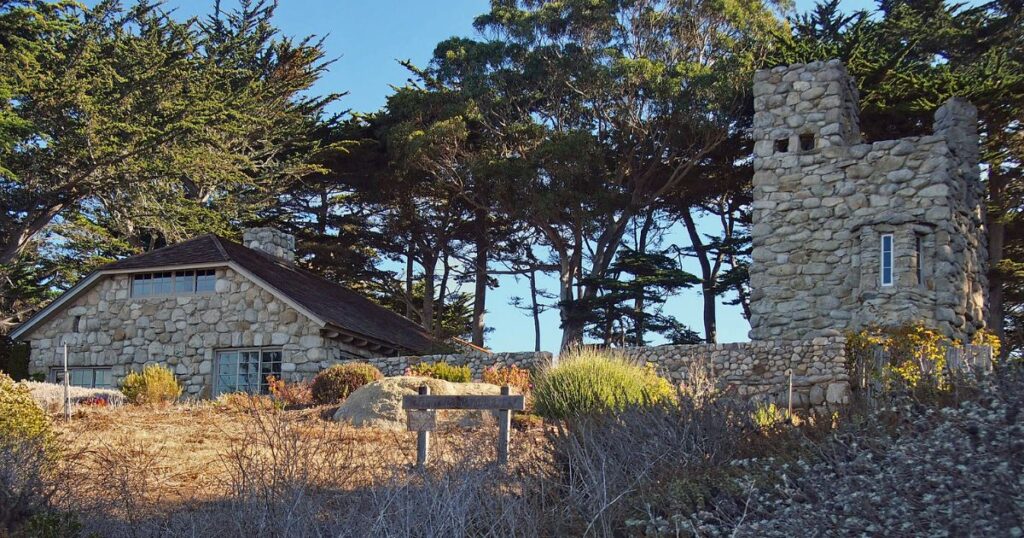
Examples: Tor House & Hawk Tower; Pyrenees Castle
Scandinavian Revival / Fantasy Architecture
Steep gables, carved beams, hand-hewn wood, and lakeside forms inspired by Viking traditions.
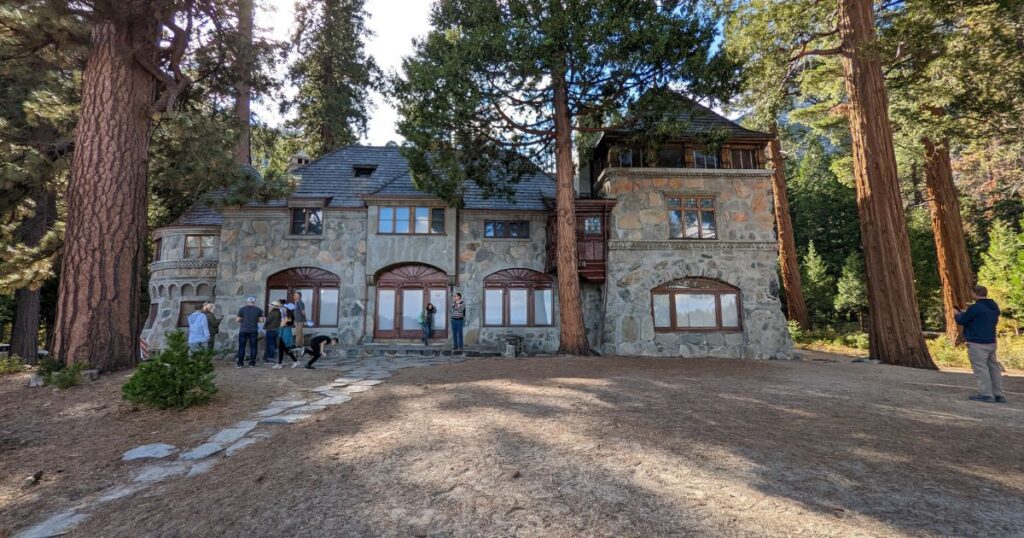
Example: Vikingsholm
Tuscan / Italian Medieval
Stone-clad walls, barrel vaults, wine-cellar tunnels, crenellations, and fortified-village design.
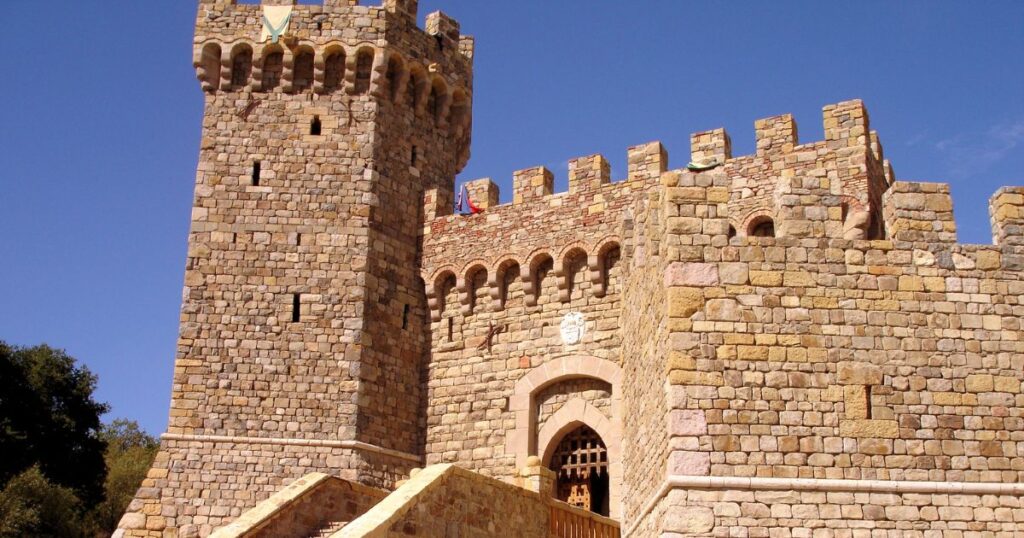
Example: Castello di Amorosa
Arts & Crafts / Folk Architecture
Hand-built masonry, locally sourced materials, irregular forms, and idiosyncratic craftsmanship.
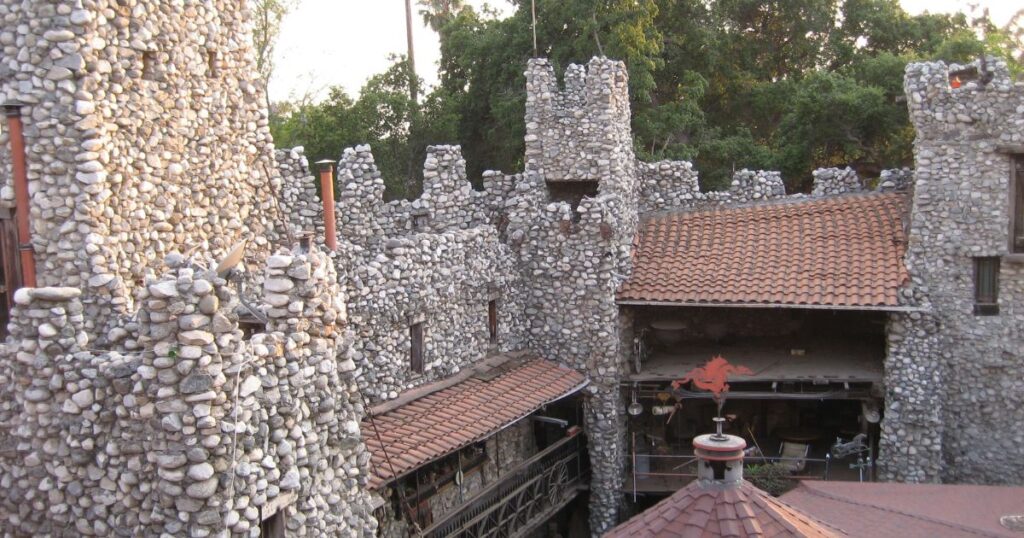
Examples: Rubel Castle, Tor House
Together, these styles create one of the most diverse castle landscapes in the United States.
Where to Find Castles In California
California’s geography plays a major role in where castle-style sites emerged:
Central Coast (San Simeon & Carmel)
Dramatic ocean landscapes attracted artists and magnates – resulting in Hearst Castle and Tor House.
Northern California (Lake Tahoe & Napa Valley)
Mountain scenery and wine-country traditions inspired Vikingsholm and Castello di Amorosa.
Southern California (Los Angeles & Inland Empire)
Storybook residences, Moorish villas, and folk-crafted castles appeared across Pasadena, L.A., and Redlands.
Sierra Foothills & Creative Enclaves
Regions where independent builders like Michael Rubel created “folk castles” using reclaimed materials.
To explore castle-style architecture across the United States, see my full guide to Castles in America.
Top Castles to Visit in California
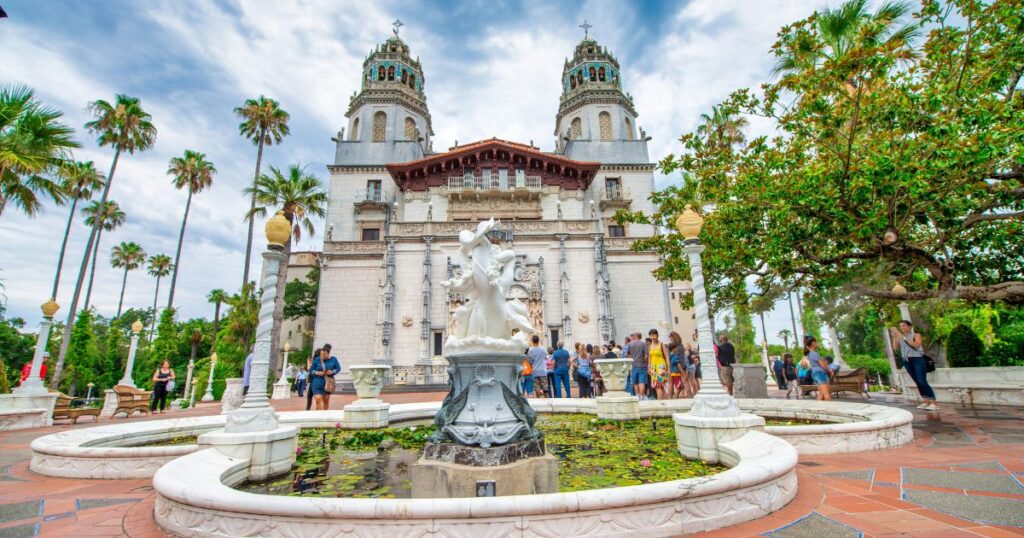
Hearst Castle
A legendary hilltop palace overlooking the Pacific.
Designed by architect Julia Morgan for newspaper magnate William Randolph Hearst, Hearst Castle blends Mediterranean Revival elegance with monumental scale—125 acres of gardens and terraces, multiple guesthouses, the iconic Neptune and Roman pools, and one of America’s greatest private art collections. Today it is a California State Park and one of the state’s most visited architectural landmarks.
Castello di Amorosa
An authentic Tuscan-style castle in Napa Valley wine country.
Hand-built stone by stone using old-world techniques, Castello di Amorosa includes courtyards, a chapel, towers, a dungeon, battlements, and vaulted cellars. Though modern (1990s–2000s), it feels centuries old and offers wine tastings, tours, and photography opportunities unmatched in the region.
Vikingsholm (Lake Tahoe)
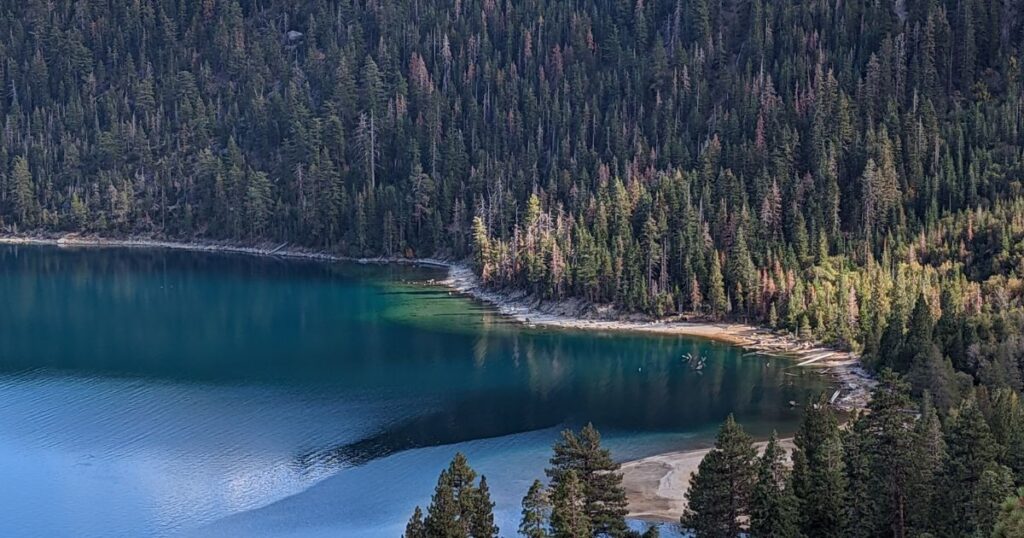
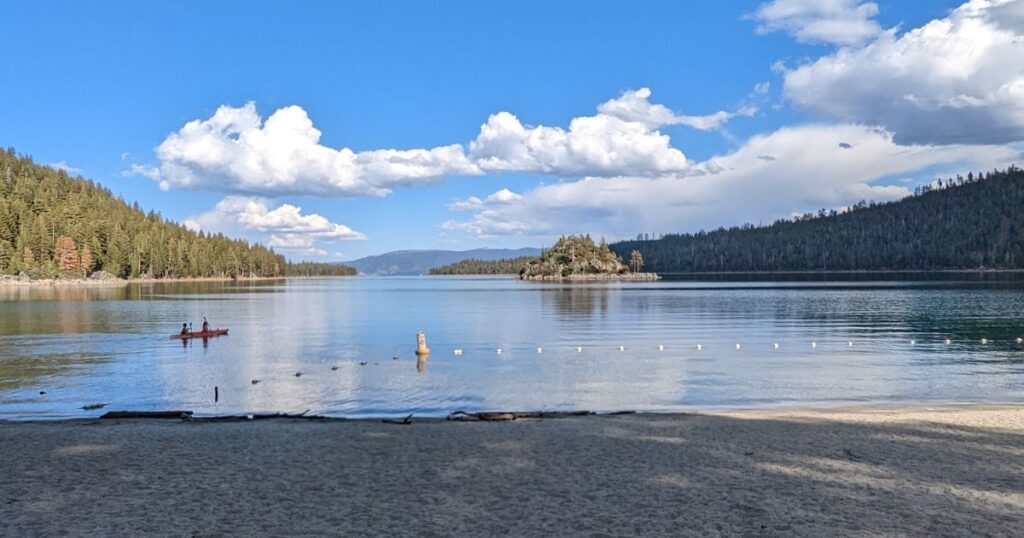
A storybook Scandinavian castle on Emerald Bay. Constructed in 1929, Vikingsholm integrates hand-hewn timbers, sod roofs, dragon-head carvings, and stone foundations that reflect authentic Nordic design. The castle is accessible via a steep but scenic trail, rewarding visitors with lakefront architecture that blends harmoniously with Tahoe’s alpine beauty.
Tor House & Hawk Tower (Carmel-by-the-Sea)
A poet’s handcrafted stone refuge on the Pacific coast. Built by poet Robinson Jeffers using granite he hauled from the shoreline, Tor House and its tower have a medieval quality – rugged masonry, narrow stairs, thick walls, and intimate rooms overlooking the crashing surf. Tours reveal Jeffers’ life, craftsmanship, and literary influence.
Lummis House (Los Angeles)
A stone-built arts-and-crafts landmark.
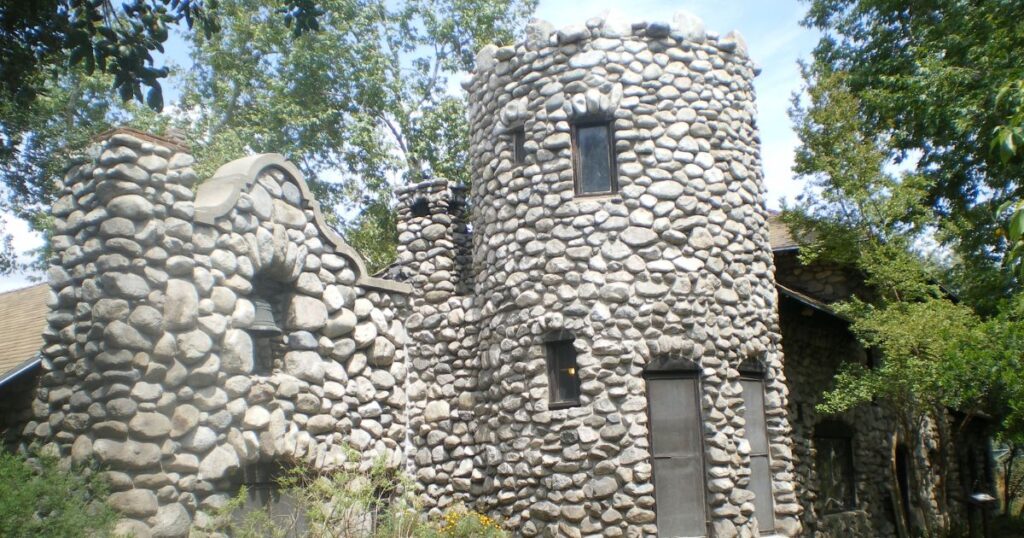
Constructed by journalist Charles Lummis over many years, this house blends Pueblo Revival design with hand-crafted stonework. It represents early L.A. arts culture, with interior details showcasing folk artistry and early preservation movements.
Kimberly Crest (Redlands)
A French château with ornate gardens and Victorian opulence.
Built in 1897, Kimberly Crest is a romantic blend of château-style architecture, terraced gardens, fountains, and historic interiors. The estate offers tours, community events, and one of Southern California’s most picturesque castle-like settings.
Pyrenees Castle / Wrensmoor (Alhambra)
A private hilltop estate with castle-like massing and Gothic features.
Built in 1926, this imposing residence includes towers, stone façades, parapets, and dramatic elevation. Though not open to the public, it’s a well-known landmark in Southern California architectural history.
Rubel Castle (Glendora)
A handcrafted folk castle built from found objects.
Constructed by Michael Rubel and a team of volunteers, Rubel Castle includes reinforced concrete, stone, bottles, reclaimed machinery, metalwork, towers, courtyards, and whimsical details. Its blend of humor, creativity, and engineering makes it one of America’s most distinctive “folk castles.”
If you’re comparing castle architecture across different states, my guide to Castles in America gives an overview of the most notable castle-style landmarks nationwide.
Other Noteworthy Castles In California
While less elaborate and not necessarily “castle-like”, these sites offer historical or architectural interest:
- Spreckels Mansion (San Francisco) – grand Beaux-Arts estate
- The Chateau at the Presidio – historic military-era lodging in mansion form
- Hollyhock House – experimental architecture with fortress-like forms
- The Magic Castle (Hollywood) – Victorian mansion with castle theming (private club)
If you’re comparing castle-style architecture across different U.S. regions, my Castles in Pennsylvania guide highlights Gothic towers, Gilded Age mansions, and a fortress-style landmark unlike anything in California.
Castle Gardens & Landscapes in California
California’s climate allows for lush Mediterranean landscaping, terraced gardens, and dramatic coastal viewpoints.
- Hearst Castle features grand esplanades, palm-lined terraces, and panoramic ocean views.
- Kimberly Crest offers French-style gardens and fountains.
- Vikingsholm blends naturally with the evergreen forests and granite landscape of Tahoe.
- Castello di Amorosa is surrounded by vineyards and hillside gardens.
- Tor House sits directly above rugged Pacific cliffs, dramatically influencing its atmosphere.
These landscapes amplify the visual drama of each site and often serve as major visitor attractions. American castle landscapes vary dramatically – I explore more examples in my Castles in America guide.
Castle Restoration & Preservation in California
- Hearst Castle is preserved by California State Parks with ongoing conservation of art, mosaics, pools, and structural elements. To learn more about ongoing conservation efforts, visit the official Hearst Castle restoration page.
- Vikingsholm is protected by the California State Parks system and requires constant monitoring due to its lakeside climate.
- Tor House is maintained by the Tor House Foundation, with careful preservation of handcrafted masonry.
- Rubel Castle was donated to the Glendora Historical Society and undergoes preservation tailored to its folk-art character.
- Castello di Amorosa performs continuous restoration after the 2020 Glass Fire damaged parts of the property.
These efforts safeguard California’s most beloved architectural treasures.
Notable Figures & Events
These are some historically notable figures and events tied to California’s castles, along with their cultural and architectural significance:
William Randolph Hearst (1863–1951)
The publishing magnate behind Hearst Castle, Hearst shaped American media and political influence in the early 20th century. His vision for a lavish Mediterranean Revival “ranch house” evolved into one of the most iconic estates in the United States. Hearst Castle’s creation — including art collecting on a massive scale — reflects both the extravagance of the Gilded Age elite and the birth of modern celebrity culture.
Julia Morgan (1872–1957)
One of America’s most important architects and the first licensed female architect in California, Morgan designed Hearst Castle and more than 700 buildings across the state. Her engineering expertise enabled the innovative use of reinforced concrete, seismic-resistant construction, and spectacular indoor-outdoor spaces. Her partnership with Hearst produced one of the most architecturally significant estates in the world.
Leland & Helen Stanford, Jr. (Indirect influence)
Though not directly tied to a single castle, the Stanfords’ taste and philanthropic legacy shaped California’s architectural landscape. Vikingsholm was built by Lora Josephine Knight, a prominent donor to Stanford University and later Charles Lindbergh’s transatlantic flight. Her connections to wealth, philanthropy, and social prominence helped fund one of the most beautiful Scandinavian-style castles in America.
Lora Josephine Knight (1864–1945)
The visionary behind Vikingsholm, Knight was one of the most influential women in California’s early 20th-century cultural scene. Her passion for Scandinavian art and design led her to recreate authentic Norse architecture on the shores of Lake Tahoe, using traditional construction techniques and artisans from Scandinavia. Her estate is considered the finest example of 9th-century Viking architectural revival in the U.S.
George & Rubelia Rubel (Rubel Castle)
The eccentric father–son pair responsible for Rubel Castle created one of California’s most unusual folk-art fortresses. Built almost entirely from found materials, concrete, and local labor, the project became a cultural hub for artists, actors, musicians, and an eclectic cast of volunteers. Rubel Castle is now recognized as a National Landmark of folk architecture and community creativity.
Robinson Jeffers (1887–1962)
The celebrated American poet built Tor House & Hawk Tower with his own hands using granite from the Carmel coast. His work helped define the rugged, mythic poetic voice of early 20th-century California. The site remains a symbol of artistry, craftsmanship, and a deep spiritual relationship with the landscape.
Charles Fletcher Lummis (1859–1928)
A journalist, historian, and early preservationist, Lummis built the Lummis House as both a residence and cultural center celebrating Southwestern and Native American art. His activism helped protect California’s Spanish missions and shaped regional identity. The house remains a landmark of early heritage conservation.
Esther & John K. Kimberly (Kimberly Crest)
Prominent industrialists whose fortune came from the Kimberly-Clark company, the Kimberlys constructed one of the state’s most photographed Victorian château-style mansions. Their estate reflects the prosperity of late-19th-century industry and the growth of grand residential architecture in Southern California.
The Early Hollywood Era at Pyrenees Castle / Wrensmoor
Pyrenees Castle became famous in the mid-20th century as a filming location and for its association with actors, musicians, and L.A.’s entertainment elite. Its iconic stone façade and romantic silhouette made it a sought-after backdrop for early cinematic productions, contributing to the “castle mystique” in Southern California culture.
Castles in Modern California Culture
California’s castles appear frequently in films, television, commercials, fashion shoots, and music videos.
Notable examples:
- Hearst Castle: Spartacus (1960), Lady Gaga’s “G.U.Y.” music video, countless commercials.
- Castello di Amorosa: Featured in documentaries, wine specials, and travel series.
- Tor House: Appears in literary documentaries, California arts programs, and regional cultural features.
- Kimberly Crest: Period-themed photoshoots and event films.
Hollywood continues to use these sites for their atmospheric, historic, or dreamlike qualities.
Cultural Traditions Linked to California Castles
- Hearst Castle Evening Tours recreate early 20th-century glamour.
- Vikingsholm Scandinavian Festivals celebrate Nordic culture and craftsmanship.
- Kimberly Crest Holiday Events bring Victorian traditions to life.
- Rubel Castle Community Programs highlight folk-art heritage and hands-on creativity.
- Hearst Castle’s Holiday Twilight Tours are widely considered one of California’s most atmospheric seasonal experiences, combining history, architecture, and immersive storytelling.
These programs keep California’s architectural stories alive for new generations.
Planning Your Castle Tour in California
Planning varies widely depending on geography. Hearst Castle requires timed tickets and advance reservations, with various tour themes available. Napa Valley castles integrate easily with winery itineraries. Vikingsholm is accessible via a steep hike – visitors should prepare for the descent and ascent. Tor House tours operate on limited schedules and sell out quickly. Rubel Castle offers occasional guided tours through the Glendora Historical Society.
Best time to visit: Spring–Fall for vineyard views, stable hiking conditions, and full operating hours.
Allow time:
- Hearst Castle: 2–4 hours
- Vikingsholm: Half-day (including hike)
- Castello di Amorosa: 1.5–2 hours
- Tor House: 1 hour
- Rubel Castle: Guided tour windows only
Suggested clusters:
- Central Coast: Hearst Castle + surrounding coastal towns
- Napa Valley: Castello di Amorosa + other wineries
- Lake Tahoe: Vikingsholm + Emerald Bay hikes
- Carmel / Monterey: Tor House + coastal viewpoints
- Los Angeles: Lummis House + Rubel Castle (tour schedules permitting)
Practical Tips For Visiting Castles In California
California’s castles span coastal cliffs, wine regions, mountains, and urban neighborhoods. A bit of planning helps ensure a fantastic experience.
Trip Planning Essentials
Regions to consider:
Central Coast for Mediterranean palaces; Napa Valley for Tuscan castles; Lake Tahoe for alpine architecture; Carmel for stone tower craftsmanship; Los Angeles for folk-art and historic estates; Inland Empire for chateau-style gardens.
Getting around:
A car is essential for nearly all sites. Vikingsholm requires a strenuous walk. Urban castles may require navigating narrow neighborhoods or timed parking.
When to visit:
Spring and fall offer the most comfortable temperatures. Summer brings crowds, while winter may reduce tour schedules.
Book ahead:
Hearst Castle, Tor House, Rubel Castle, and guided wine tours at Castello di Amorosa often sell out.
On-Site Advice & Insider Insights
Terrain:
Expect hills (Hearst), steep trails (Vikingsholm), stone steps, and uneven ground at hand-built sites like Rubel Castle.
Weather:
Coastal fog can roll in quickly; Tahoe can be cold even in summer; Napa gets hot midday. Layers are your friend.
Photography:
Golden hour at Castello; ocean backdrops at Hearst; Emerald Bay panoramas at Vikingsholm; atmospheric stone textures at Tor House; quirky angles at Rubel Castle.
Accessibility:
Hearst and Kimberly Crest have the best accessibility; Vikingsholm and Tor House are more limited.
Great for kids:
Hearst Castle’s pools and terraces fascinate; Rubel Castle offers quirky surprises; Castello is fun for older kids.
Seasonal highlights:
Holiday décor at Hearst; autumn vineyards in Napa; summer lake views at Tahoe.
Facilities:
Most sites have restrooms and small shops; Vikingsholm has limited facilities; Rubel Castle may only offer basics on tour days.
Frequently Asked Questions About Castles In California
Are there real castles in California?
Yes – California has numerous castle-inspired estates, wineries, folk-art fortresses, and historic mansions.
Which California castle is the most famous?
Hearst Castle is the best-known and most visited.
Can you stay overnight in a California castle?
Some allow events or private stays, but most are day-visit attractions.
Which castles have the best views?
Vikingsholm for lake scenery; Hearst Castle for coastal panoramas; Castello di Amorosa for vineyards.
Are these medieval castles?
No – they were built between the late 1800s and early 2000s, inspired by European traditions.
Conclusion
California’s castles reveal the state’s extraordinary architectural imagination—from Mediterranean palaces to Scandinavian lodges, Tuscan replicas, folk-art towers, literary stone houses, and elegant French chateaus. Each site reflects a different chapter in California’s cultural and artistic story.
Whether you’re road-tripping along Highway 1, wine tasting in Napa, hiking to Emerald Bay, or exploring Los Angeles history, these castle-style landmarks deliver unforgettable experiences for travelers, architecture lovers, photographers, and curious explorers.
For East Coast castle-style estates, see my full guide to Castles in North Carolina, featuring Biltmore and more.
To continue your journey through America’s castle architecture, explore my full guide to Castles in America, covering the top castle-style sites across the nation.
Image Credits
Castello di Amorosa, California
Castello di Amorosa, photo by Jim Gateley, via Wikimedia Commons, licensed under CC BY 3.0 (https://creativecommons.org/licenses/by/3.0/).
Tor House & Hawk Tower, California
Tor House & Hawk Tower, photo by McGhiever, via Wikimedia Commons, licensed under CC BY-SA 4.0 (https://creativecommons.org/licenses/by-sa/4.0/).
Kimberly Crest House, Redlands, California
Kimberly Crest House and Gardens, photo by Oleknutlee, via Wikimedia Commons (Public Domain).
Lummis House, Los Angeles, California
Lummis House, photo by Los Angeles, via Wikimedia Commons, licensed under CC BY-SA 3.0 (https://creativecommons.org/licenses/by-sa/3.0/).
Rubel Castle, Glendora, California
Rubel Castle, photo by Sandylibrarian, via Wikimedia Commons, licensed under CC BY-SA 3.0 (https://creativecommons.org/licenses/by-sa/3.0/).