
Castles in New York: Discover the State’s Most Fascinating Fortresses & Historic Estates

When you hear the word castle, you might picture medieval Europe – moats, battlements, and centuries of royal intrigue. New York’s castles (as elsewhere in the U.S.) tell a different story. While you won’t find 12th-century strongholds here, you will discover grand Gilded Age mansions, fortress-inspired island estates, Gothic Revival masterpieces, and elaborate American interpretations of European architecture.
While not medieval fortresses, these American castles are remarkable examples of architectural ambition, artistry, and Gilded Age storytelling.
From dramatic island retreats in the Thousand Islands to opulent Hudson Valley estates and castle-like mansions on Long Island, New York features an extraordinary variety of architectural treasures. Whether you’re dreaming of stone towers, romantic gardens, sweeping river views, or ornate interiors, this guide highlights the most fascinating castles across the state – plus how to visit them.
If you’re exploring America’s unique architectural castles, you can also browse my full guide to Castles in America for an overview of the country’s most fascinating historic estates.
Key Takeaways: Castles In New York
- New York offers one of the most diverse collections of castles in the U.S., including Gothic Revival mansions, island fortresses, and Gilded Age estates.
- These aren’t medieval castles – they’re American architectural interpretations inspired by Europe’s grand designs.
- Many sites are open for tours, boat excursions, overnight stays, and cultural events.
- Top castle regions include the Hudson Valley, Thousand Islands, Long Island’s Gold Coast, and pockets of Upstate New York.
- Strong architectural elements – towers, turrets, arches, stone façades – give these sites rich historic and visual appeal.
Historical Overview of Castles in New York
New York’s castle landscape developed during a distinctive period in American history, when industrialization and new wealth reshaped the social fabric of the nation. From the mid-1800s through the early 1900s, influential families, artists, and entrepreneurs sought to express their tastes – and their status – through architecture inspired by Europe’s medieval and Renaissance buildings.
The Hudson Valley attracted many of these estate builders because of its dramatic scenery and proximity to New York City. Here, Gothic Revival flourished as architects like Alexander Jackson Davis blended medieval motifs with American romanticism. At the same time, the emergence of the Gilded Age ushered in opulent mansions designed to display extraordinary wealth. Vanderbilts, Goulds, and other elite families constructed grand homes that rivaled European palaces in craftsmanship and scale.
Further north, the Thousand Islands region became a stage for bold architectural experimentation. Romantic island castles like Boldt and Singer reflected not only the era’s prosperity but also the growing fascination with picturesque landscapes and private leisure retreats. These castles, though far younger than Europe’s fortresses, represent a uniquely American form of architectural storytelling – driven by personal ambition, aesthetic exploration, and the cultural movements of their time.
For a broader look at similar architectural movements across the country, see my full overview of Castles in America.
Architectural Styles & Design Elements
Gothic Revival
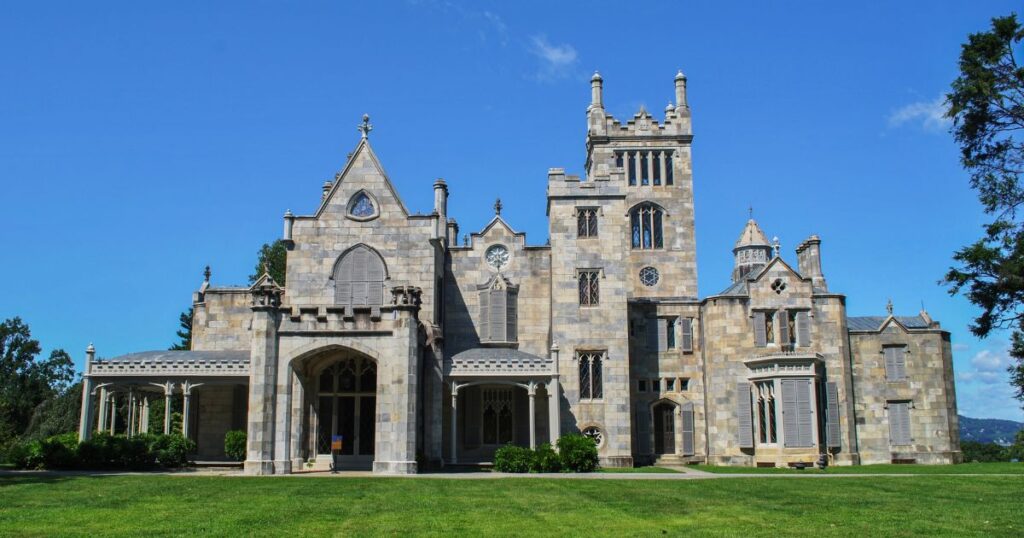
Characterized by pointed arches, clustered chimneys, turrets, crenellations, and dramatic rooflines.
Examples: Lyndhurst Mansion (classic Gothic towers and tracery); Belvedere Castle (Victorian Gothic folly).
Romanesque Revival / Medieval Revival
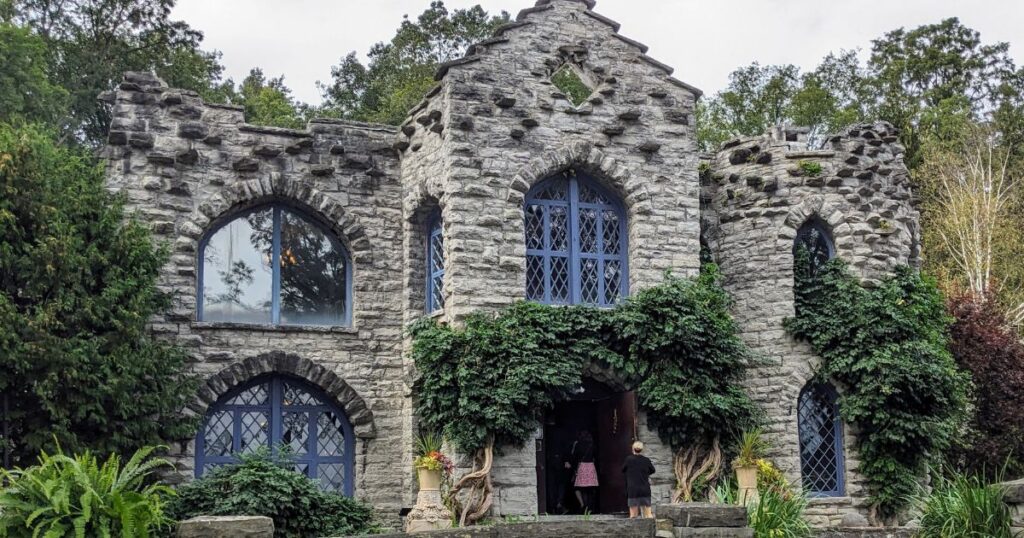
Defined by thick stone walls, rounded arches, fortress-like façades, and strong masonry massing.
Examples: Beardslee Castle (rugged stone manor evoking medieval fortresses); Castle Gould, especially the south façade of Hempstead House (arched openings and heavy Romanesque stonework).
Tudor Revival
Known for steeply pitched roofs, half-timbering, tall chimneys, and asymmetrical manor-house styling.
Examples: Oheka Castle includes Tudor-inspired rooflines in addition to French-influenced design; several Hudson Valley gatehouses and estate structures feature traditional Tudor elements.
Beaux-Arts / Gilded Age Palatial Design
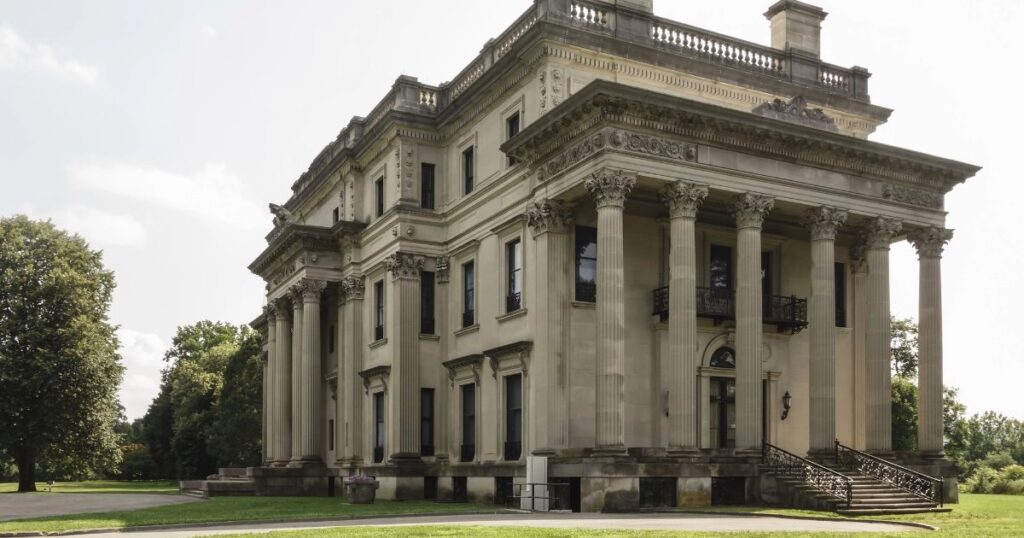
Emphasizes symmetry, grand stairways, formal garden integration, and ornate European detailing.
Examples: Vanderbilt Mansion (textbook Beaux-Arts composition); Oheka Castle (axial layout, terraces, and European palatial styling).
Exotic Revival / Global Influence
Inspired by Middle Eastern, Persian, or other non-European architectural traditions, often featuring patterned exteriors and vibrant ornamentation.
Example: Olana State Historic Site (Persian-inspired motifs, towers, patterned stonework, and richly colored façade).
Travelers drawn to New York’s Hudson Valley mansions will also appreciate the grand seaside estates of Newport, Rhode Island.
Where to Find Castles In New York
Hudson Valley
A rich concentration of Gilded Age mansions, Gothic Revival estates, and grand country homes with spectacular river vistas.
Thousand Islands / St. Lawrence River
Home to iconic island castles—some romantic, some fortress-like, all highly scenic.
Long Island (Gold Coast)
Early 20th-century mansions built to resemble European estates, including chateau-inspired façades and castle-like stone architecture.
Upstate New York
Rural and wooded landscapes hide atmospheric stone mansions and lesser-known architectural gems.
Many of these architectural influences appear in other regions as well, which you can explore in Castles in America. Or, for a neighboring state, my guide to Castles in Pennsylvania highlights Gothic-inspired towers, Gilded Age estates, and some of the most unique historic properties on the East Coast.
Top Castles to Visit in New York
Below are eight of the most visually stunning, historically meaningful, and visitor-friendly castles across the state.
Boldt Castle
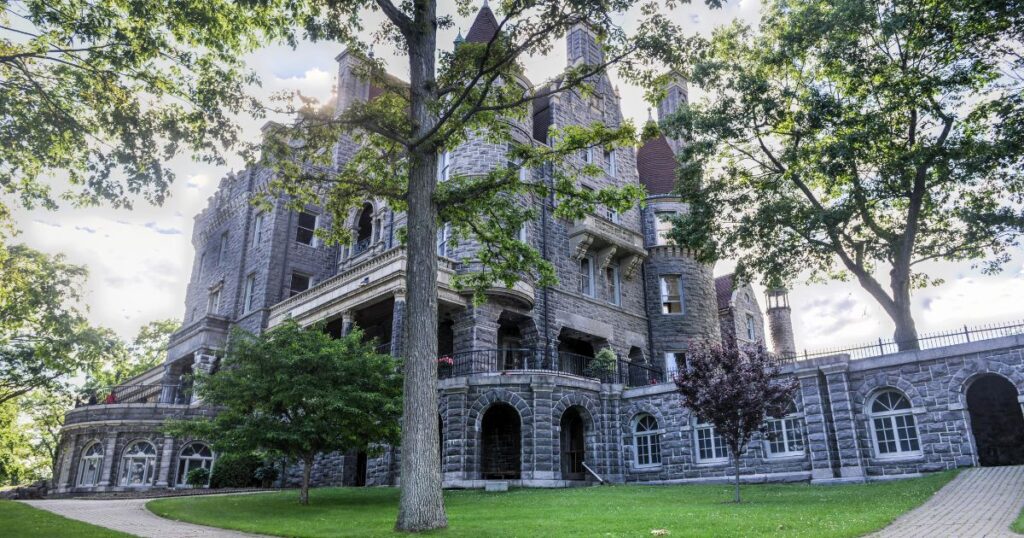
Fairy-tale island castle in the Thousand Islands.
Built as a monument of love by hotel magnate George Boldt for his wife Louise, Boldt Castle blends European-inspired design with Gilded Age ambition. Though construction halted after Louise’s sudden death, extensive restoration has transformed the estate into a spectacular destination with furnished rooms, sculpted gardens, and panoramic river views. Visitors arrive by ferry from both the U.S. and Canada, making it one of New York’s most beloved castle experiences.
Singer Castle
A Gothic-inspired island fortress with secret passageways.
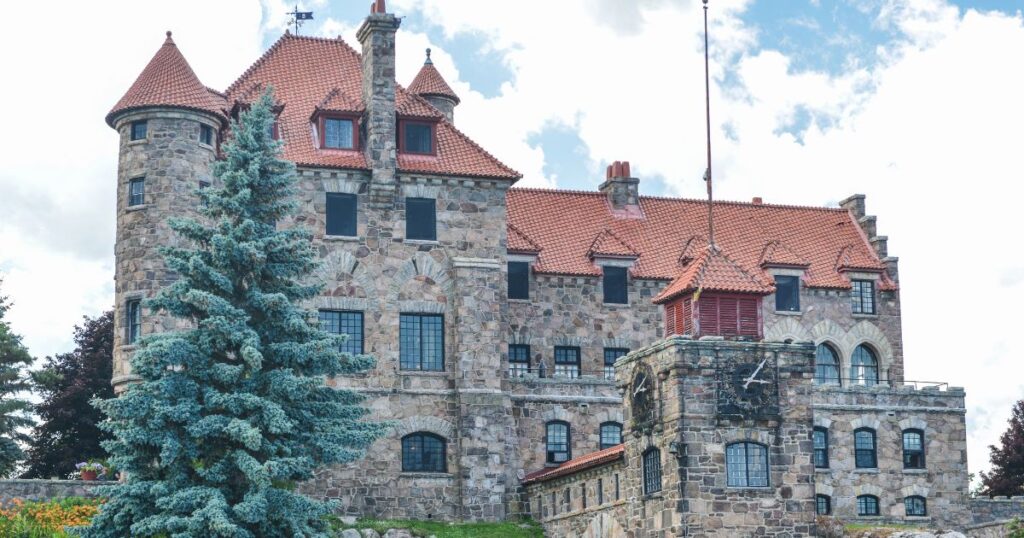
Completed in 1905 for Frederick Bourne of the Singer Sewing Machine Company, Singer Castle was built with theatrical intention—complete with hidden corridors, medieval-style details, and commanding stone architecture. Based loosely on the fictional Hermitage Castle, it sits dramatically on Dark Island. Tours reveal ornate interiors and charming oddities, while overnight stays in the Royal Suite offer a one-of-a-kind castle experience.
Oheka Castle
A grand French-style château on Long Island’s Gold Coast.
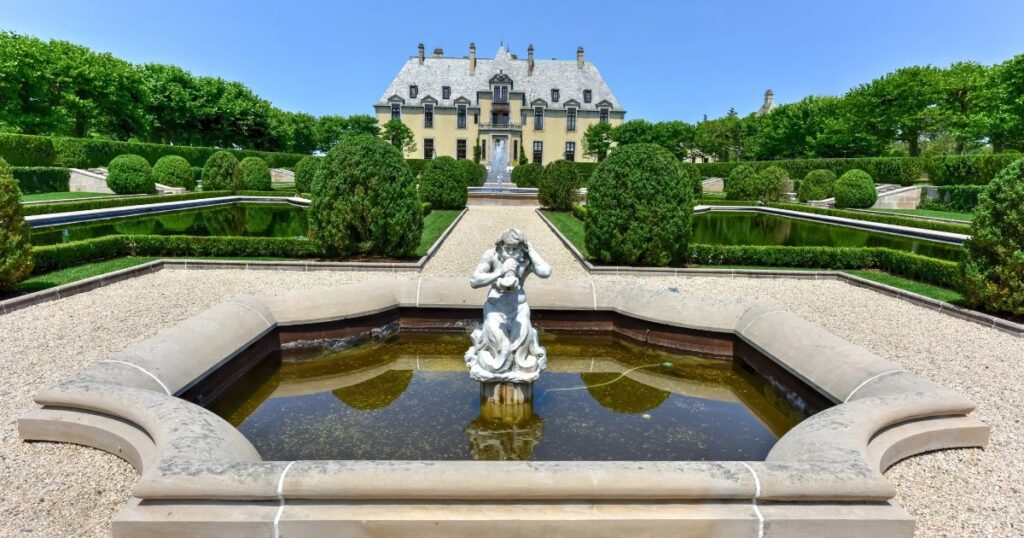
Constructed in 1919 for financier Otto Kahn, Oheka Castle stands as one of the largest private homes in the United States. Modeled after European palaces, it features symmetrical façades, manicured gardens, sweeping staircases, and lavish reception rooms. Today Oheka operates as a luxury hotel and event venue, regularly appearing in films and television. Guided tours showcase the estate’s glamorous Gilded Age history.
Lyndhurst Mansion
One of America’s finest Gothic Revival estates.
Designed in 1838 by architect Alexander Jackson Davis, Lyndhurst is an American Gothic Revival masterpiece with turrets, pointed arches, clustered chimneys, and dramatic stonework. The interiors are filled with period furnishings and fine decorative arts. Its riverfront grounds, historic plantings, and seasonal events make Lyndhurst a perennial favorite among architecture enthusiasts and photographers.
Vanderbilt Mansion
A Gilded Age estate with palatial grandeur.
Built between 1896 and 1899 for Frederick Vanderbilt, this Beaux-Arts mansion showcases classical European influences, opulent interiors, and elegant gardens. As one of the most significant architectural residences of the era, it offers richly interpreted tours through grand rooms and landscaped grounds overlooking the Hudson River. The site is preserved as a National Historic Site and prides itself on exceptional interpretive detail.
Olana State Historic Site
A Persian-inspired masterpiece by artist Frederic Church.
Olana’s architecture is unlike anything else in New York. Designed by painter Frederic Edwin Church, the villa blends Middle Eastern motifs, intricate exterior patterns, towers, and bold colors with sweeping Hudson Valley views. The home’s interiors, filled with art and global collections, reflect Church’s extensive travels and artistic vision. It remains one of the region’s most culturally significant estates.
Beardslee Castle
A rugged stone manor with Irish and Scottish inspiration.
Built in the 1860s in Little Falls, Beardslee Castle was designed to emulate medieval fortresses, complete with stone walls, castle-like massing, and picturesque detailing. The property carries a rich local history—along with a few ghost stories. Today it operates as a restaurant and special-event venue, drawing visitors for both its atmospheric architecture and dramatic setting.
Castle Gould (Gould–Guggenheim Estate)
A grand, castle-inspired stone complex on Long Island.
Constructed in 1900 as a replica of Ireland’s Kilkenny Castle, Castle Gould occupies a dramatic position within the Sands Point Preserve. Its stone façades, arched openings, crenellations, and towering massing give it a distinctly castle-like appearance. The southern façade of nearby Hempstead House (on the same estate) is particularly striking and pinnable. The preserve hosts tours, events, and public walks that highlight the estate’s rich architectural legacy.

Other Noteworthy Castles In New York
These sites offer architectural interest, unique histories, or scenic appeal but aren’t included in the main list due to limited visitor access, smaller scale, or restricted image options. They’re still well worth noting for travelers seeking additional castle-inspired sites across the state.
- Bannerman Castle (Pollepel Island) – Atmospheric ruins of a Scottish-inspired arsenal, accessible only by seasonal tours.
- Belvedere Castle (Central Park) – A Victorian folly with Gothic and Romanesque touches; charming but small.
- Greystone Court – A Gothic-style private estate with a dramatic silhouette but limited visitor access and image availability.
- Amsterdam Castle – A former armory converted into a boutique hotel with fortress-like features.
If you’re exploring castle destinations in the western U.S., you may enjoy my guide to Castles in California.
Castle Gardens & Landscapes in New York
New York’s castles often sit within landscapes that are as thoughtfully crafted as the buildings themselves. Hudson Valley estates, influenced by the ideals of the romantic landscape movement, feature sweeping lawns, framed river views, wooded ravines, and historic plantings designed to complement Gothic and Beaux-Arts architecture. Many of these grounds were shaped by influential designers who valued harmony between built structures and natural scenery.
Olana is one of the most extraordinary examples of landscape as art. Frederic Church designed not just a home but an entire environment – contouring driveways, placing viewpoints, and shaping sightlines so that the villa appears dramatically from certain angles and melts into the terrain from others.
Meanwhile, the island castles of the Thousand Islands offer an entirely different experience. Their rocky shorelines, terraced gardens, and panoramic water views create dramatic contrasts between stone architecture and natural surroundings. These sites are particularly striking at sunrise or sunset when the river lights up in gold and deep blue.
On Long Island, grand estates like Oheka and the Gould–Guggenheim complex incorporate formal gardens, reflecting pools, and sculpted terraces that echo European palace traditions. Together, these landscapes highlight the breadth of New York’s natural beauty – from riverfront vistas to manicured lawns to island gardens shaped by the St. Lawrence winds.
For a different regional take on dramatic gardens and historic estates, see my Castles in Pennsylvania guide.
Castle Restoration & Preservation in New York
Preservation efforts across the state keep these treasures accessible:
- Boldt Castle has undergone extensive restoration by the Thousand Islands Bridge Authority.
- Lyndhurst Mansion is maintained by Historic Hudson Valley, with ongoing conservation work.
- Vanderbilt Mansion is protected as a National Historic Site.
- Sands Point Preserve continues to restore and maintain the Gould–Guggenheim buildings.
- Bannerman Castle Trust stabilizes and protects the iconic island ruins.
Collectively, these preservation efforts ensure that New York’s castle heritage remains accessible, protected, and appreciated for generations to come.
Many of these properties are preserved or interpreted in partnership with the New York State Office of Parks, Recreation and Historic Preservation, which oversees dozens of historic estates and cultural sites across the state.
Notable Figures & Events
These are some historically notable figures and events tied to New York’s castles, along with their significance:
- George C. Boldt – A self-made hotel magnate who managed the legendary Waldorf-Astoria in New York City. Boldt Castle reflects not only his wealth but also the Gilded Age trend of transforming remote landscapes into romantic architectural projects. His unfinished castle remains one of the most compelling personal love stories in American architecture.
- Frederick Gilbert Bourne – As president of the Singer Sewing Machine Company, Bourne oversaw one of the era’s most globally influential manufacturing empires. His construction of Singer Castle echoed the power and reach of American industrialists at the turn of the 20th century.
- Otto Hermann Kahn – A financier, philanthropist, and major cultural patron who helped fund the Metropolitan Opera and numerous artistic causes. Oheka Castle symbolized the prestige and opulence of New York’s Gold Coast during its most glamorous decades.
- Alexander Jackson Davis – One of America’s most important 19th-century architects, responsible for defining Gothic Revival in the United States. His work at Lyndhurst shaped the American interpretation of medieval European aesthetics and influenced countless later designs.
- Frederic Edwin Church – A leading artist of the Hudson River School. Church’s design of Olana merged art, architecture, landscape design, and global influences, creating a culturally significant site that represents America’s fascination with global travel and exotic design in the Victorian era.
- The Gilded Age Estate Movement – The rise of industrial wealth in the late 1800s led families like the Vanderbilts, Astors, and Goulds to construct elaborate country homes. Vanderbilt Mansion is a prime example of this era’s architectural ambitions and social transformations.
- Bannerman Arsenal Explosion (1920) – Although no longer in your “Top” list, the event itself is historically notable for shaping preservation movements in New York. It highlighted the risks of munitions storage and contributed to decades of structural decay on the island.
Castles in Modern New York Culture
Today, many of New York’s castles continue to play an active role in the state’s cultural identity. Their architectural drama and historic ambiance make them ideal backdrops for film, television, fashion photography, and music videos. Oheka Castle, for example, has appeared in productions ranging from Citizen Kane to Royal Pains and is frequently used for editorial shoots due to its palatial interiors and symmetrical gardens.
Lyndhurst Mansion is a favorite for period dramas, gothic stories, and historical documentaries. Its richly textured stone façade and atmospheric interiors have featured in films, television specials, and even annual Halloween productions that transform the estate into a theatrical experience.
Castle Gould and Hempstead House on Long Island regularly host cultural events, concerts, and educational programs, keeping these historic structures alive through public engagement. Many castles offer specialty tours – architectural tours, photography sessions, holiday programs, or thematic events – that help visitors connect with their histories in new ways.
Through these modern uses, New York’s castles remain part of the state’s evolving story, bridging the gap between their Gilded Age origins and their contemporary cultural significance.
Cultural Traditions Linked to New York Castles
New York’s castles serve as vibrant community anchors, offering seasonal celebrations and cultural experiences throughout the year. Hudson Valley estates often host Victorian Christmas events featuring historic décor, candlelit tours, and period music that reflect the traditions of the 19th century. These festivities draw both locals and travelers looking for immersive holiday experiences.
Summer brings outdoor concerts, garden festivals, and art exhibitions to many estates. Olana and Lyndhurst in particular are known for programs that highlight the intersection of art, history, and landscape design. Educational lectures, plein-air painting demonstrations, and architecture-focused tours allow visitors to explore these sites through different lenses.
Autumn is a celebrated season at many castles, as the Hudson Valley and Upstate regions transform into colorful panoramas. Estates like Lyndhurst and Olana offer some of the best foliage views in the state, while Halloween season often brings theatrical storytelling and twilight tours.
Across Long Island’s Gold Coast, the opulent mansions participate in community events and fundraisers, preserving their heritage while welcoming new audiences. These traditions reinforce each castle’s role not only as an architectural landmark but also as a hub of cultural life.
Planning Your Castle Tour in New York
Planning a New York castle tour depends on the regions you hope to explore and the time of year. In the Hudson Valley, castles and estates are located within easy driving distance of one another, allowing for half-day or full-day itineraries that combine architecture, gardens, and scenic views. The region’s popularity, especially in summer and fall, means reserving tours in advance is wise.
Travelers heading to the Thousand Islands should plan around ferry schedules and consider dedicating at least one full day to island castles. Boldt Castle and Singer Castle are among the state’s most memorable experiences, but reaching them requires coordination – and flexibility if wind or water conditions change.
Long Island’s Gold Coast estates are ideal for single-day or weekend trips. Oheka Castle and Castle Gould/Hempstead House offer contrasting styles and histories, and both pair well with coastal walks, gardens, or visits to other nearby mansions from the same era.
Across all regions, weather can influence your experience, especially outdoors or near the water. Comfortable walking shoes, layered clothing, and checking site-specific hours can make the difference between a rushed visit and a relaxed, rewarding one.
Practical Tips For Visiting Castles In New York
New York’s castles span large estates, island fortresses, and historic mansions, so planning ahead ensures a smoother visit. Many sites involve walking trails, stairs, or multi-level interiors, while island castles require boat transport. Seasonal hours vary dramatically, and some locations are open only for guided tours. These tips will help you make the most of your castle-hopping adventure.
Trip Planning Essentials
Regions to consider:
Thousand Islands for dramatic island castles; the Hudson Valley for Gothic Revival and Gilded Age estates; Long Island’s Gold Coast for grand chateau-style mansions; and pockets of Upstate New York for rugged stone manors and atmospheric architecture.
Getting around:
A car is the most practical way to visit most New York castles, especially in the Hudson Valley and Upstate regions. Island castles such as Boldt and Singer require ferry transport, with schedules that vary by season and weather.
When to visit:
Late spring through early fall offers the best access, with gardens in bloom and most estates fully open. Island castles typically operate seasonally, while winter brings reduced hours and occasional closures at historic homes.
Book ahead:
Tours at Oheka Castle, Lyndhurst Mansion, and Vanderbilt Mansion often sell out during peak travel seasons. Ferries to Boldt and Singer Castle may also require advance reservations, especially on weekends and holidays.
On-Site Advice & Insider Insights
Terrain:
Expect a mix of paved walkways, garden paths, staircases, and occasionally uneven ground—especially at older estates and island sites. Comfortable, supportive footwear makes a big difference.
Weather:
Humidity, wind along the rivers, or sudden showers can affect comfort and visibility. Island castles are particularly susceptible to weather-related ferry changes, so always check conditions on the day of travel.
Photography:
Morning and late-afternoon light are ideal for capturing façades and landscapes. Olana’s overlook is especially spectacular at sunset, while Boldt Castle offers excellent opportunities along its waterfront terraces.
Accessibility:
Many historic estates have limited elevator access or stair-heavy interiors. Check accessibility notes in advance if mobility is a concern. Vanderbilt Mansion and Lyndhurst offer some of the most mobility-friendly touring options.
Great for kids:
Boldt Castle’s open grounds, gardens, and island setting are engaging for families. Lyndhurst’s expansive lawns and seasonal programs offer additional appeal, while Oheka’s grand interiors fascinate older kids interested in architecture or pop culture.
Seasonal highlights:
Fall foliage in the Hudson Valley is one of the most beautiful times to visit. Summer is ideal for Thousand Islands tours, while winter brings holiday decor and special events at certain mansions.
Facilities:
Hudson Valley estates often have visitor centers, restrooms, or small cafés. Island castles may have limited facilities, so planning ahead for snacks and water is helpful. Many properties offer scenic picnic areas.
Frequently Asked Questions About Castles In New York
Are there real castles in New York?
Yes – New York has numerous castle-like estates, island fortresses, and grand mansions inspired by European architecture.
Which New York castle is the most famous?
Boldt Castle is the most iconic, thanks to its romantic origin story and dramatic island setting.
Can you stay overnight in a New York castle?
Yes – Singer Castle offers overnight stays, and Oheka Castle operates as a luxury hotel.
Are New York castles open year-round?
Some are, such as Oheka, Vanderbilt Mansion, and Lyndhurst. Island castles operate seasonally.
Are these castles medieval?
No – New York’s castles were built between the 19th and early 20th centuries, inspired by European styles rather than feudal defense.
Conclusion
New York’s castles may not date to medieval times, but they offer an unforgettable blend of artistry, romance, architectural ambition, and scenic beauty. From island fortresses to grand Gilded Age estates, each castle tells its own story – shaped by the people, dreams, and eras that built them.
Whether you’re a history enthusiast, architecture lover, photographer, or simply a curious traveler, these eight castles reveal just how enchanting New York’s architectural landscape can be.
If you’re exploring castle-style architecture across the U.S., don’t miss my guide to Castles in North Carolina, home to the iconic Biltmore Estate and other unique sites. And visit my full guide to Castles in America for more historic estates, island retreats, and architectural treasures.
Image Credits
Lyndhurst Mansion
Lyndhurst Mansion, photo by Elisa.rolle, via Wikimedia Commons, licensed under CC BY-SA 4.0
Beardslee Castle
Beardslee Castle, photo by Apocheir, via Wikimedia Commons (CC0/Public Domain).
Hempstead House (Gould–Guggenheim Estate)
Hempstead House at Sands Point Preserve, photo by Mr.choppers, via Wikimedia Commons, licensed under CC BY-SA 3.0.