Schloss Weikersheim Guide: Inside Germany’s Hidden Renaissance Gem
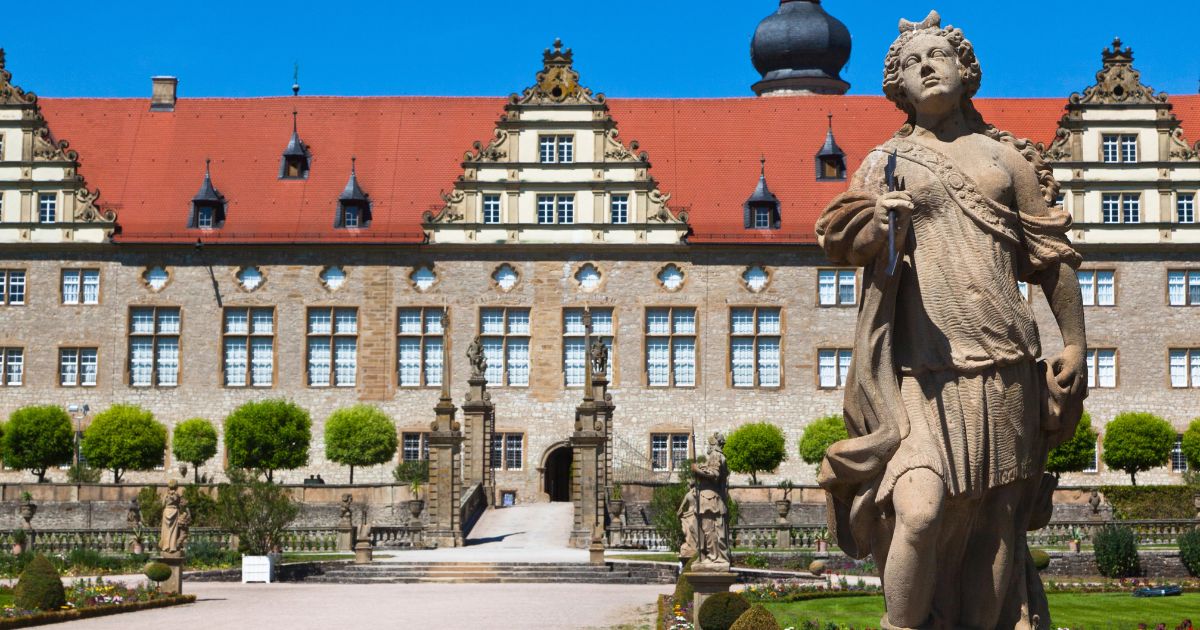
Schloss Weikersheim is one of Germany’s most elegant Renaissance palaces – a beautifully preserved residence famed for its grand banquet hall, richly furnished state rooms, and one of the most enchanting Baroque gardens in Europe. Set in the gentle landscapes of the Tauber Valley, the castle combines aristocratic grandeur, whimsical garden sculptures, and centuries of princely history.
After decades as a European travel advisor and countless visits to historic estates, I can confidently say that Schloss Weikersheim is one of the most delightful palaces in southern Germany. Whether you’re exploring the Romantic Road, road-tripping through Baden-Württemberg, or visiting from nearby Rothenburg ob der Tauber, this guide will help you plan a perfect visit.
Historical Snapshot
- One of Germany’s best-preserved Renaissance palaces
- Built by the Lords of Hohenlohe beginning in the 16th century
- Famous for its magnificent Knights’ Hall and Baroque garden
- Still furnished with original 17th- and 18th-century décor
- Located in the Tauber Valley, a beautiful landscape of vineyards and medieval towns
Planning a broader trip through the region?
Explore more historic sites on our German Castles Page.
Table of Contents
Historical Overview
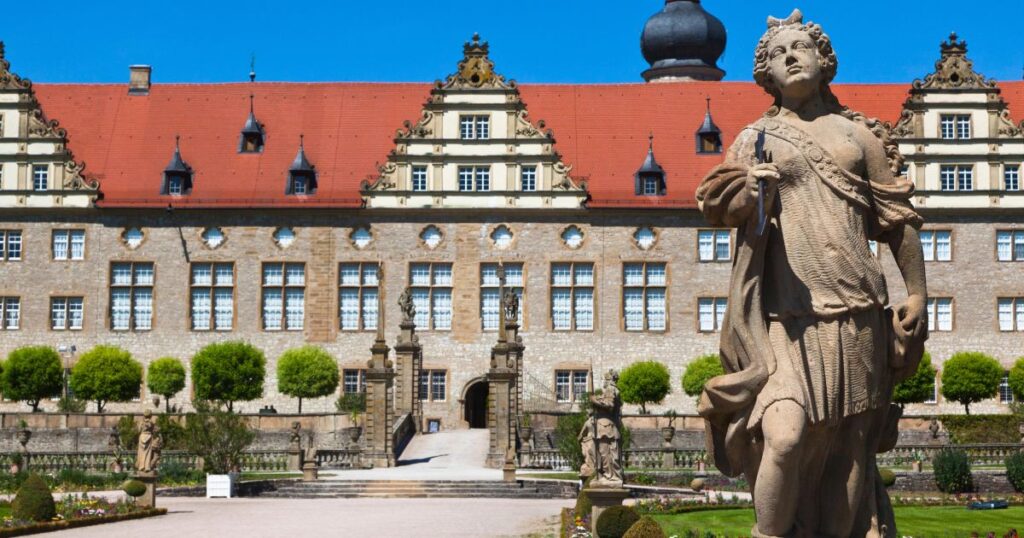
Schloss Weikersheim traces its origins to the medieval seat of the Hohenlohe noble family. In the late 1500s, Count Wolfgang II von Hohenlohe began transforming the site into a grand Renaissance residence – a project continued by his successors for more than two centuries.
If you’re interested in exploring more historic fortresses across the country, visit our full Castles in Germany Guide.
Key Moments in the Castle’s History
- 1595–1603 – Renaissance palace constructed around a medieval core
- 1700s – Major Baroque enhancements, including the magnificent gardens
- Late 18th century – The Hohenlohe-Weikersheim line ends; furnishings remain remarkably intact
- 20th century – Palace opened to the public; restoration preserves interiors and gardens
- Today – Schloss Weikersheim is managed by the State Palaces & Gardens of Baden-Württemberg, maintaining its exquisite period décor
If you enjoy palaces that preserve original living spaces, you’ll also love exploring Moritzburg Castle and Ludwigsburg Palace – both rich in authentic aristocratic detail.
Architectural and Design Highlights
Schloss Weikersheim is a rare treasure: a Renaissance residence that survived wars and political change without losing its architectural harmony.
Renaissance Façade
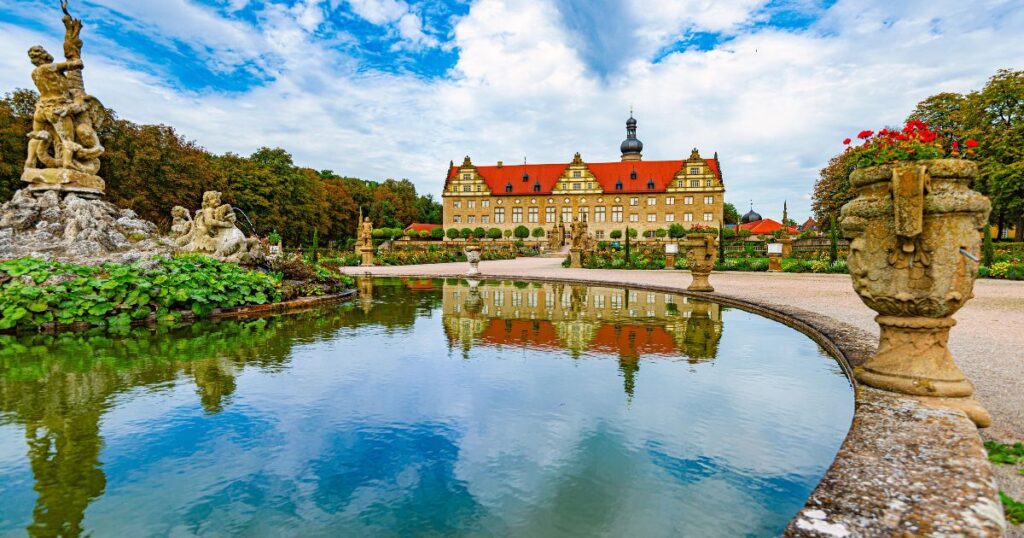
Expect warm stone walls, ornate gables, and symmetrical window arrangements typical of the German Renaissance. The façade balances elegance and stateliness, giving the castle a serene, noble presence.
Horseshoe Courtyard
One of the palace’s defining features is its three-wing layout that embraces visitors as they enter. The courtyard’s proportion and symmetry show off the Hohenlohe family’s aspirations for status and refinement.
Ornamental Windows & Gables
Look closer for some of these details when you visit:
- carved stone window frames
- decorative pediments
- heraldic emblems
- Renaissance scrollwork
These touches add artistry without overwhelming the palace’s clean architectural lines.
Baroque Garden Architecture
In the 18th century, the grounds were redesigned to include straight avenues, parterres, and dramatic sculptural elements – all oriented to create balanced sightlines from inside the palace.
If you love palaces that beautifully blend Renaissance structure with Baroque landscaping, Schwerin Castle also offers a similar visual harmony.
Inside Schloss Weikersheim: What You’ll See
The interior of Schloss Weikersheim is one of the most well-preserved in Germany. Many rooms contain original furniture, tapestries, and decorative arts that have remained in place for centuries.
Knights’ Hall (Rittersaal)
This could be considered the star of the schloss. This grand ceremonial hall stretches nearly 40 meters and features:
- an impressive beamed ceiling
- 28 life-size hunting scene sculptures
- elaborate wall paintings
- a raised dais for musicians
- windows overlooking the gardens
The hall was designed for court festivities, banquets, and celebrations – and today is one of Germany’s finest surviving Renaissance ceremonial spaces.
State Apartments
These beautifully furnished rooms reflect 17th- and 18th-century aristocratic life.
Expect to see:
- carved wardrobes
- porcelain displays
- richly patterned wall textiles
- period seating and writing desks
- ancestral portraits
Because the palace wasn’t modernized in later centuries, the rooms feel frozen in time.
Hunting Room
As with many noble residences, hunting was central to life at Weikersheim. This room showcases:
- hunting trophies
- weapon displays
- themed artwork
- decorative antler arrangements
It also connects thematically to the garden statues depicting stags, hounds, and woodland creatures.
Orange Room
A charming chamber known for its warm color palette, decorative stove, and elegant furniture. It offers a softer, more personal glimpse into palace life.
Chapel
The intimate castle chapel contains early Baroque religious art, a beautifully crafted altar, and wood-carved details that showcase the region’s ecclesiastical craftsmanship.
Castle Gardens
Schloss Weikersheim’s gardens are among the most beautiful in Germany – an ideal place for peaceful walks, photography, and admiring 18th-century landscape design.
Baroque Garden Highlights
The garden’s layout follows classical Baroque principles, which often include these features:
- symmetrical parterres
- long, straight avenues
- ornamental pools
- precisely trimmed hedges
From the palace windows, the avenues create beautiful long views that draw the eye toward garden sculptures and water features.
Statues, Fountains & Mythology
One of the most whimsical features of the garden is its extensive statuary collection, including:
- Greek and Roman gods
- allegorical figures
- stylized animals
- hunting-themed sculptures
- the iconic garden dwarf parade
The dwarf figures (Zwergengarten) are particularly beloved – a humorous touch that contrasts with the formal Baroque layout.
The Garden Setting: How the Landscape Shapes the Palace Experience
One of the charms of Schloss Weikersheim is the way the palace and gardens unfold together as a single, unified landscape. The building sits at a slightly elevated position, giving visitors sweeping views down the long Baroque garden axis, across the parterres, and toward the sculptural fountains at the far end. From almost any vantage point, the palace façade, garden avenues, and surrounding countryside form a beautifully orchestrated tableau.
Because the Tauber Valley slopes gently around the estate, the gardens often catch soft morning and late-afternoon light – making this one of Germany’s most photogenic palace landscapes. It’s a place where architecture, nature, and artistry genuinely feel in harmony.
Notable Figures and Events
Schloss Weikersheim’s story centers on the influential Hohenlohe family.
Count Wolfgang II von Hohenlohe
Initiated the transformation of Weikersheim from a medieval seat to a Renaissance residence.
Count Carl Ludwig (1674–1756)
Responsible for the creation of the Baroque gardens and much of the palace’s decorative refinement.
19th–20th centuries
The palace became an important site for music and cultural events, especially as its large halls lent themselves to performances.
Legendary Tales and Local Lore
Schloss Weikersheim may not be filled with ghost stories, but it has its share of delightful myths:
The Garden Dwarf Gossip
Local lore says the garden dwarfs are modeled after real court personalities – each with exaggerated features to poke fun at courtly behavior.
The “Perfect Perspective” Myth
Some visitors insist the main garden avenue looks impossibly long or impossibly short depending on your direction. It’s actually a clever Baroque optical illusion.
The Musical Echo Legend
It’s said the Knights’ Hall carries musical echoes so beautifully that even a simple hum sounds symphonic. Modern visitors often test the theory.
Why Visit Schloss Weikersheim
Travelers love Schloss Weikersheim because it offers:
- one of Germany’s best-preserved Renaissance interiors
- a magnificent Knights’ Hall unlike any other
- whimsical Baroque gardens filled with character
- a peaceful, romantic setting outside major crowds
- easy access from Rothenburg, Würzburg, or the Romantic Road
- stellar photography opportunities year-round
If you enjoy palaces that feel personal and authentic, Weikersheim delivers.
Visiting Schloss Weikersheim Today: What To Expect
Here’s what you can expect during your visit:
- Guided and self-guided tours available
- Many rooms furnished with original period pieces
- Access to the full Baroque garden complex
- Seasonal exhibitions and concerts
- Relaxed atmosphere — rarely overcrowded
- Easy walking paths with gentle gradients
- Excellent signage in English and German
Most visitors spend 1.5 – 2 hours inside and at least another hour in the gardens.
Getting There
Closest Cities:
- Rothenburg ob der Tauber (25 minutes)
- Bad Mergentheim (10 minutes)
- Würzburg (45 minutes)
By Car:
Parking is available near the castle entrance. Routes are well marked from major roads.
By Train:
Regional trains to Weikersheim station; a short walk leads through the village to the palace.
By Bicycle:
Popular with cyclists exploring the Tauber Valley bike routes.
Visitor Information
Hours, ticket details, and seasonal schedules can change – be sure to double-check the official website before planning your visit.
Hours
- Open year-round
- Reduced hours in winter
- Gardens accessible seasonally
Admission
- Standard entry for the palace
- Combined tickets for palace + gardens
- Discounts for children and families
- Special pricing for concerts or exhibitions
Accessibility
- Flat approach
- Multiple rooms accessible
- Some staircases inside; elevator access is limited
- Gardens mostly accessible along main paths
Nearby Attractions
Enhance your Tauber Valley itinerary with stops at:
- Rothenburg ob der Tauber – Germany’s most famous medieval town
- Bad Mergentheim – spa town with a charming palace complex
- Würzburg Residence – UNESCO Baroque masterpiece
- Creglingen – known for its wooden altarpiece by Tilman Riemenschneider
- Tauber Valley Vineyards – excellent regional wine tastings
Frequently Asked Questions About Schloss Weikersheim
Is Schloss Weikersheim worth visiting?
Yes – it’s one of Germany’s most well-preserved Renaissance palaces.
How long does a visit take?
Plan 1.5–2 hours indoors plus at least an hour in the gardens.
Can I take photos inside?
Photography is permitted in some areas; check posted signs.
Is the walk difficult?
No – the approach is gentle and suitable for most visitors.
Are the gardens worth seeing?
Yes – the Baroque gardens are a major highlight and incredibly charming.
Conclusion
Schloss Weikersheim offers an unforgettable blend of Renaissance architecture, Baroque artistry, and serene Tauber Valley scenery. Whether you’re admiring the grandeur of the Knights’ Hall, wandering among whimsical garden statues, or exploring one of Germany’s most authentic palace interiors, this estate provides a wonderfully immersive historical experience.
If you’re continuing your journey through Germany’s royal landmarks, consider pairing Weikersheim with Schwerin Castle, Moritzburg Castle, or even Hohenzollern Castle for a diverse look at Germany’s architectural heritage.