Glamis Castle Guide: History, Royal Secrets & Ghostly Legends

Glamis Castle is one of Scotland’s most atmospheric and legendary estates – a place where grand turrets, royal history, and centuries of supernatural lore intertwine in the most fascinating way. Known as the childhood home of Queen Elizabeth The Queen Mother, the birthplace of Princess Margaret, and the inspiration for countless ghost stories, Glamis is a castle that feels as dramatic as the Scottish landscape surrounding it.
After decades of planning European itineraries and exploring historic estates across Scotland, Glamis remains one of the most memorable and story-rich castles I’ve ever experienced. This guide brings you through its royal heritage, remarkable architecture, famous legends, gardens, and everything you need to plan a perfect visit.
Historical Snapshot
- One of Scotland’s most famous lived-in castles
- Seat of the Earls of Strathmore & Kinghorne for over 650 years
- Childhood home of Queen Elizabeth The Queen Mother
- Birthplace of Princess Margaret
- Connected to Shakespeare’s Macbeth
- Known for elaborate rooms, dramatic towers, and world-famous ghost stories
- Surrounded by expansive parklands, gardens, and forest walks
Planning a broader trip through the region? You can Explore Scottish Castles here.
Table of Contents
Historical Overview
Glamis Castle’s history stretches across nearly seven centuries of Scottish politics, royal connections, clan power, and folklore. What began as a medieval stronghold gradually evolved into one of Britain’s most distinctive ancestral homes – a place where architecture, monarchy, and myth all converged.
If you’re interested in exploring more historic fortresses across the country, visit our full Castles in Scotland Guide.
The earliest recorded structure was a 14th-century tower house, built after Sir John Lyon received the lands in 1372. Its primary purpose was defensive, positioned to oversee fertile Angus farmland and key routes between the Lowlands and the Highlands. As the Lyon family’s prominence grew, so did Glamis.
By the 17th century, the family had transformed the original tower into the magnificent Scots Baronial residence that now dominates the landscape. Successive Earls extended the wings, added new staircases, softened the medieval lines, and created the sweeping, symmetrical façade recognizable today.
During the 18th and 19th centuries, Glamis became less of a fortress and more of a refined aristocratic estate. Elegant interiors were added, the gardens were formalized, and the castle became a gathering place for cultural, social, and royal events.
In the 20th century, Glamis stepped into modern royal history. Lady Elizabeth Bowes-Lyon – the future Queen Elizabeth The Queen Mother – spent much of her childhood here, and her daughter Princess Margaret was born in the castle in 1930, making Glamis the only royal residence in Britain to be the birthplace of a king’s granddaughter.
Today, it remains the family seat of the Earls of Strathmore & Kinghorne – a rare, still-inhabited Scottish castle that seamlessly blends living heritage with public access.
Architectural and Design Highlights
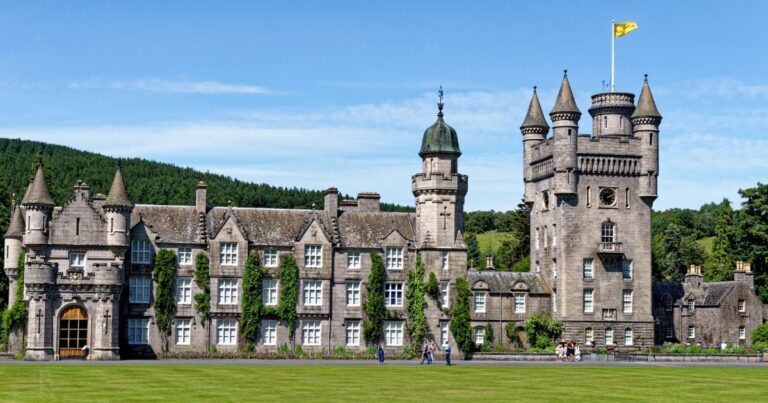
Glamis Castle is one of the most striking examples of Scots Baronial architecture – a uniquely Scottish blend of medieval fortification, Renaissance refinement, and 17th-century romanticism. Its dramatic silhouette, soaring towers, and richly decorated interiors create a sense of grandeur that feels both aristocratic and fairy-tale inspired.
Scots Baronial Style
The castle is a textbook example of the architectural movement that swept Scotland in the 16th and 17th centuries – a style that mixed defensive elements with the fantasy of noble display. You can expect to see features like this:
- conical roofs topped with finials that lend the castle its fairytale charm
- corner turrets that recall medieval watchtowers
- crenellated battlements – once defensive, later purely decorative
- crow-stepped gables, a hallmark of Scottish aristocratic architecture
- tall, narrow chimneys rising in elegant clusters
- asymmetrical wings that give the castle unusual depth and dimension
Together, these elements create Glamis’ legendary “storybook” profile – one of the most photographed castle façades in Europe.
Towers, Turrets & Battlements
The dramatic main façade is dominated by:
- an imposing central keep dating back to the castle’s earliest defensive structure
- symmetrically arranged turret clusters added during later expansions
- ornamental battlements, no longer defensive but symbolic of noble power
- a gracefully curved grand staircase, designed to impress arriving guests
- arrow-slit inspired windows that hint at the castle’s medieval origins
This blend of martial architecture and aristocratic ornamentation is quintessentially Scottish – bold, dramatic, and deeply tied to clan identity.
Renaissance & Jacobean Influences
Although Glamis is outwardly Baronial, the interiors reflect the cultural and artistic influences of the Renaissance and early Jacobean periods. These include:
- geometric symmetry in hall layouts
- carved oak ceilings and wall paneling
- decorative plasterwork featuring floral and heraldic motifs
- stone fireplaces with elaborate overmantels
- tapestries and textiles inspired by continental Europe
This merging of styles gives the castle a rare layered elegance – medieval bones infused with Renaissance sophistication.
Period Rooms & Decorative Interiors
Inside Glamis, centuries of noble life unfold across rooms that still contain original furnishings, portraits, textiles, and heirlooms. You’ll notice:
- hand-carved oak paneling that darkens and glows in natural light
- ornate plaster ceilings filled with symbolism, family emblems, and classical motifs
- antique furniture collections spanning multiple eras of the Bowes-Lyon family’s history
- family portraits, including royals, dating back generations
- intricately decorated fireplaces, many carved with heraldic creatures
- historic artifacts, from children’s toys to elaborate silverware
The interiors truly feel “untouched by time” – more like stepping into a living home than a museum. Few Scottish castles offer this degree of authenticity.
Architectural Significance Today
Glamis is considered one of Scotland’s most architecturally important castles because:
- It evolved organically over 600+ years rather than being rebuilt from scratch.
- It retains features from multiple eras – medieval, Renaissance, Jacobite, Victorian – in a seamless whole.
- Its Scots Baronial silhouette helped define what many people worldwide think a Scottish castle should look like.
- It remains privately owned and partially inhabited, which preserves a genuine sense of place.
This architectural richness is a major reason Glamis stands apart from other Highland and Lowland estates.
Inside Glamis Castle: What You’ll See
A visit to Glamis is wonderfully immersive because so many rooms feel authentically lived-in – layered with history, family heirlooms, and centuries-old details rarely preserved at this scale.
The Drawing Room
Bright, elegant, and framed by tall sash windows, this room served as the social hub of the castle. You’ll find French-inspired furnishings, gilt mirrors, and paintings that reflect the family’s ties to the Scottish nobility and the British monarchy.
The Dining Room
Lined with ancestral portraits and gleaming silver, the dining room showcases Glamis’ aristocratic grandeur. The long dining table, velvet drapes, and polished woodwork give a sense of how formal dinners were held here for centuries – including royal gatherings.
The Chapel
One of the castle’s most atmospheric spaces. Its softly lit interior, painted ceiling, and beautifully carved pews give it a reverent, intimate feel. Visitors often linger here, not only for the artistry, but because of the hall’s connection to the castle’s most famous ghost – the Grey Lady.
The Crypt & Secret Passages
These darker, older spaces make Glamis’ medieval roots tangible. Thick stone walls, narrow stairways, and puzzling hidden rooms fuel curiosity about the castle’s legends. Even though many of the myths are just that – myths – the crypt genuinely feels like a place where stories could be born.
Royal Apartments
These rooms evoke the early life of Lady Elizabeth Bowes-Lyon and later, Princess Margaret. Photographs, letters, and personal objects help tell the story of Glamis as a warm family home long before it became the subject of royal fascination.
Historic Exhibitions
Depending on the season, you may find exhibitions featuring period clothing, coronation memorabilia, the Bowes-Lyon family archives, or displays on Glamis’ role in Scottish history. The curation is excellent, especially for visitors drawn to royal heritage.
Glamis Castle Grounds and Gardens
Glamis’ estate is vast – nearly 14,000 acres of farmland, forest, gardens, wildlife habitats, and ornamental landscaping. The castle’s dramatic façade is only one part of its charm; the natural setting enhances everything.
Italian Garden
Created in the early 1900s for the Countess of Strathmore, this garden features:
- symmetrical beds
- clipped yews
- stone urns and statues
- seasonal borders
- a graceful sundial at its center
It’s a peaceful, contemplative garden that contrasts beautifully with the wild Scottish landscape beyond.
Walled Garden
A classic estate garden filled with:
- herbaceous borders
- roses
- soft lawns
- winding paths
In spring and summer, it bursts with color and fragrance – one of the most magical areas on the property.
Woodland Walks
The estate’s wooded paths feel timeless. Towering conifers, ancient oaks, wildlife sightings, and gently flowing streams make these walks ideal for families and photographers. Depending on your route, you may pass historical markers connected to estate legends.
Ponds & Parkland
Water features sit close to the castle, providing beautiful reflections and photographic vistas. The parkland is also home to red squirrels, deer, and numerous bird species – a reminder that Glamis is both a heritage site and a living estate.
Notable Figures and Events
These are some influential individuals and defining moments tied to Glamis Castle:
- Sir John Lyon — founder of the family line
- The Bowes-Lyon family — centuries of noble residence
- Queen Elizabeth The Queen Mother — beloved royal, raised here
- Princess Margaret — born at Glamis
- Associated with Shakespeare’s Macbeth — though not historically accurate
- Jacobite involvement — the castle played a role in political tides of Scotland
Legendary Tales and Local Lore
Glamis Castle is considered one of the most haunted places in Scotland, and the legends are part of its enduring fame.
The Grey Lady
Said to haunt the chapel, she is Scotland’s most famous noble ghost – believed to be Lady Janet Douglas, unjustly executed in 1537.
The Monster of Glamis
A centuries-old myth claiming a disfigured heir was hidden in secret rooms. Pure legend, but an irresistible one.
The Earl’s Card Game
A gambler who supposedly played cards with the Devil on the Sabbath – now eternally heard shuffling in the walls.
Secret Rooms
Some are real; others are constructed in imagination. Either way, they’ve inspired ghost stories for generations.
Shakespearean Lore
Though King Macbeth had no real historical link to the castle, Shakespeare’s association cemented Glamis as a place of drama and mystery.
These legends do not overshadow the castle’s real historical importance, but they certainly add flair and fascination.
Why Visit Glamis Castle
Glamis is frequently cited as one of Scotland’s must-see castles – and for good reason. Here’s what sets it apart:
Royal Connections You Can Actually Feel
Unlike many royal-linked castles that feel museum-like, Glamis retains its warmth. Rooms hold personal items, portraits depict familiar royal faces, and stories from the Bowes-Lyon family make the visit feel intimate.
A Castle That Looks Like a Fairy Tale
Its soaring central tower, perfectly balanced wings, turret clusters, and crow-stepped gables make it one of the most photogenic castles in Europe.
Atmosphere and Storytelling
Between real history and centuries of folklore, Glamis offers a mix of wonder, mystery, and mood you won’t find anywhere else.
A Spectacular Estate To Explore
The Italian Garden, woodland trails, and picture-perfect parkland mean your visit extends far beyond the castle walls.
Clans, Kings, Queens, and Legends – All In One Place
Few estates combine architecture, royal heritage, medieval roots, and ghost stories as seamlessly as Glamis.
An Easy Day Trip
Within reach of Dundee, Perth, Angus, and even Aberdeen, Glamis fits beautifully into a Scotland itinerary – especially for travelers exploring castle clusters.
Visiting Glamis Castle Today: What To Expect
Your visit includes:
- self-guided or guided tours
- beautifully preserved rooms
- extensive gardens and trails
- a café and gift shop
- seasonal exhibitions
- courtyard views and woodlands
- great accessibility for families and groups
Most visitors spend 2–3 hours here, more if exploring the estate.
Getting There
Closest Cities:
- Dundee (25 minutes)
- Perth (45 minutes)
- Aberdeen (1 hr 15 min)
By Car: Well-signed routes; ample parking near the entrance.
By Bus: Regular connections from Dundee and surrounding areas.
By Tour: Many Scotland castle tours include Glamis.
Visitor Information
Hours, ticket details, and seasonal schedules can change – be sure to double-check the official website before planning your visit.
Hours
- Typically open from spring to late autumn
- Shorter hours in shoulder seasons
Admission
- Castle + gardens combination ticket
- Discounts for children, seniors & families
Accessibility
- Some staircases limit upper-floor access
- Gardens mostly accessible
- Helpful signage throughout
Nearby Attractions
If you’re exploring eastern Scotland or building a Highlands itinerary, these nearby attractions pair beautifully with a visit to Glamis.
- Kirriemuir – birthplace of J.M. Barrie (Peter Pan)
- V&A Dundee – Scottish design museum
- Edradour Distillery – a charming Highland whisky tour
Frequently Asked Questions About Glamis Castle
Is Glamis Castle worth visiting?
Yes, most definitely! It’s one of Scotland’s most iconic and atmospheric castles.
How long does a visit take?
Most visits last 2-3 hours. Longer if visiting the gardens.
Can I take photos inside?
Photography is restricted in certain areas; check signage.
Is Glamis Castle really haunted?
The stories are folklore – but they’re a beloved part of the castle’s identity.
Does Glamis Castle have a Macbeth connection?
Only literary – Shakespeare’s character was not historically tied to the site.
Conclusion
Glamis Castle blends regal architecture, royal heritage, and centuries of unforgettable myth. Whether you come for the history, the legends, or simply the dramatic beauty of the Highlands, Glamis offers a remarkable experience you won’t soon forget. It’s one of the rare castles where history, myth, and modern royal heritage all meet under one dramatic skyline.
If you’re continuing your journey through Scotland’s historic estates, consider pairing Glamis with Cawdor Castle, Eilean Donan Castle, Inveraray Castle, or our full guide to the Castles in Scotland.
For travelers who love royal history, Balmoral Castle makes an ideal next stop – it’s one of the Royal Family’s most beloved private estates. Don’t miss my Balmoral Castle guide for planning tips.