
Castles in Wales: Explore the Best Welsh Castles, Ruins & Royal Strongholds
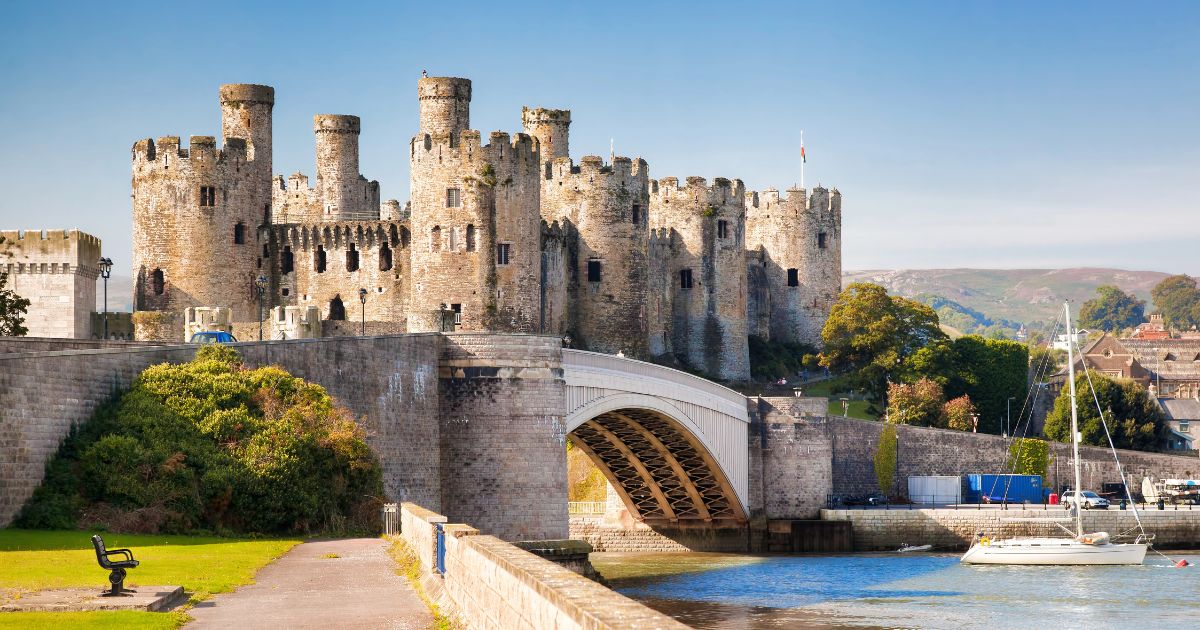
Wales has more castles per square mile than anywhere else in the world – over 400 fortresses, royal strongholds, medieval walled towns, and hilltop ruins scattered across mountains, coastlines, valleys, and ancient Celtic landscapes. From mighty stone defenses built by Edward I to atmospheric ruins wrapped in myth, Welsh castles reveal a sweeping history of conquest, rebellion, resilience, and cultural identity.
Whether you’re exploring the UNESCO-listed castle towns of North Wales or wandering windswept coastal ruins along the Pembrokeshire cliffs, Welsh castles offer some of the most dramatic and immersive historical experiences in Europe.
After spending many winters exploring castles across Europe, I can confidently say that Wales offers some of the most unforgettable fortress landscapes on the continent – rugged, storied, and wonderfully photogenic.
Key Takeaways
- Wales has 400+ castles, the highest density of fortresses anywhere in Europe.
- The most famous are the Edwardian “Iron Ring” castles: Caernarfon, Conwy, Harlech, and Beaumaris – all UNESCO World Heritage Sites.
- Welsh castles range from massive stone strongholds to romantic hilltop ruins surrounded by forests, cliffs, and valleys.
- Top regions include North Wales, Pembrokeshire, Brecon Beacons, Gower Peninsula, and the Wye Valley.
- Many castles host festivals, reenactments, night tours, museums, and scenic walking paths.
Historical Overview of Castles in Wales
Castle-building in Wales spans over 1,000 years and reflects wave after wave of conflict and cultural transformation. Early Welsh princes built timber and earthwork strongholds (motte-and-bailey fortresses) to defend valleys and mountain passes. When the Normans arrived in the 11th century, they introduced large stone keeps and fortified marcher lordships across the border territories.
The turning point came in the late 13th century, when King Edward I of England launched a massive military campaign to conquer Wales and built a chain of monumental royal fortresses known as the Iron Ring of Castles. Caernarfon, Conwy, Harlech, and Beaumaris became symbols of English dominance – but also architectural masterpieces unmatched in medieval Europe.
Later centuries brought Tudor influence, Civil War damage, and Romantic-era renewal, leaving Wales with an extraordinary variety of castle styles, from pristine stone giants to haunting skeletal ruins.
Notable Eras & Architectural Evolution
Early Welsh Strongholds (5th–11th Centuries)
Before stone castles appeared, Welsh rulers built timber forts, earthen ramparts, and hilltop enclosures to control strategic valleys. These early defenses emphasized natural terrain – steep hills, ridges, and rivers – rather than monumental masonry.
Norman Conquest & Marcher Lord Castles (11th–12th Centuries)
Norman lords established a chain of fortresses along the Welsh-English border, introducing stone keeps, motte-and-bailey complexes, and powerful marcher territories. Chepstow Castle, one of Britain’s oldest surviving stone fortresses, exemplifies this period.
Edward I’s Iron Ring of Castles (13th–14th Centuries)
Edward I’s military campaign transformed Welsh architecture forever. His castles were enormous, symmetrical, heavily fortified, and strategically placed to suppress rebellion. Built by master architect James of St. George, these stone giants remain some of the finest medieval fortresses in the world.
Late Medieval & Tudor Transformations (15th–16th Centuries)
As large-scale warfare declined, castles added domestic features: grand halls, gardens, and decorative stonework. Many Welsh castles evolved into noble residences influenced by Tudor tastes.
Romanticism & 19th-Century Restorations
Like much of Europe, Wales enjoyed a Romantic revival. Ruins became artistic icons, while wealthy families restored or rebuilt castles as grand country homes – notably Cardiff Castle and Penrhyn Castle.
Architectural Styles & Design Elements in Welsh Castles
Welsh castle architecture is defined by dramatic landscapes, relentless medieval warfare, and centuries of shifting power between native Welsh princes and Norman/English monarchs. While Wales shares some stylistic trends with the rest of Britain, its castles developed distinct regional characteristics: mountainous defensive sites, massive curtain walls, round towers, Edwardian concentric designs, and native Welsh fortresses that blended traditional earthworks with stone fortification. Together, these elements create one of the most visually powerful castle traditions in Europe.
Native Welsh Fortifications (Pre-Norman to 12th Century)
Before the Norman conquest, Welsh princes relied on a combination of natural terrain and modest fortification. Early structures included wooden palisades, earthwork ramparts, and hillforts positioned on steep ridges or crags. These strongholds prioritized quick construction and natural defense rather than monumental architecture. Although few survive intact, their strategic placement set the pattern for later Welsh fortifications, especially in Gwynedd and Powys.
Norman Motte-and-Bailey Castles (11th–12th Century)
Following the Norman invasion of England, the conquerors pushed rapidly into Wales, building dozens of motte-and-bailey castles to cement territorial control. These early fortifications featured a timber tower atop a mound (motte) with an enclosed courtyard (bailey) below. They were fast to erect and highly effective in contested regions. Over time, many were rebuilt in stone, forming the foundations of later great castles in the Welsh Marches.
Native Welsh Stone Castles (12th–13th Century)
Welsh rulers such as Llywelyn ap Iorwerth and Llywelyn ap Gruffudd began building sophisticated stone fortresses to assert their independence. These castles often used rugged terrain to maximum advantage—steep cliffs, river bends, and rocky promontories – reducing the need for elaborate outer defenses. Towers tended to be D-shaped or irregular to match the landscape, and simple but strong curtain walls enclosed compact, defensible courtyards.
Examples: Dolwyddelan, Criccieth, and Castell y Bere exemplify this distinctly Welsh architectural identity.
Edwardian Concentric Castles (Late 13th Century)
Edward I’s “iron ring” of North Wales castles represents one of the greatest achievements in medieval military engineering. Designed by master architect James of St. George, these fortresses introduced immense stone curtain walls, twin-towered gatehouses, flanking towers, integrated barbicans, portcullises, arrow loops, murder holes, and concentric defenses where multiple walls created layers of protection. Their symmetrical layouts and precision stonework reflected both military might and political dominance.
Examples include: Caernarfon, Conwy, Harlech, and Beaumaris – all UNESCO World Heritage Sites today.
Marcher Lord Castles (12th–14th Century)
In the borderlands between England and Wales, powerful Norman lords built elaborate castles that mixed residential luxury with frontier defense. These Marcher castles often featured towering keeps, grand halls, and extensive domestic ranges within fortified enclosures. They blended English feudal architecture with innovations adapted for the volatile Welsh frontier, resulting in some of Britain’s most imposing medieval complexes.
Examples include: Chepstow, Kidwelly, and Raglan.
Late Medieval & Tudor Transformations (15th–16th Century)
As warfare shifted and gunpowder technology advanced, castles across Wales evolved from purely defensive structures into symbolic residences for wealthy families. Comfort became a priority—larger windows, ornate fireplaces, gardens, and decorative stonework replaced earlier fortress-like austerity. Moats and curtain walls remained, but their role was increasingly aesthetic or ceremonial rather than military.
Examples: Castles such as Raglan embody this transition, blending medieval power with Renaissance elegance.
18th–19th Century Romantic Revival
Like the rest of Britain, Wales embraced a Romantic fascination with medieval ruins during the 18th and 19th centuries. Artists, poets, and travelers celebrated the dramatic silhouettes of Welsh castles, inspiring restorations, landscaping, and sometimes partial rebuilding to enhance their “picturesque” appearance. Though not military in purpose, these interventions shaped modern perceptions of Welsh castles and helped preserve many for future generations.
Famous Castle Regions in Wales
Wales has more castles per square mile than anywhere else in Europe, and the variety is extraordinary – royal fortresses built to dominate rebellious frontiers, native Welsh strongholds perched on volcanic crags, coastal citadels guarding medieval ports, and ruined hilltop towers overlooking sheep-dotted countryside. These key regions reveal the distinct character and strategic purpose behind Wales’s most iconic castles.
North Wales (UNESCO Castles & Mighty Edwardian Fortresses)
This region contains the world-famous “Iron Ring” of Edward I’s fortifications – Caernarfon, Conwy, Harlech, and Beaumaris – designated collectively as a UNESCO World Heritage Site. These monumental stone castles feature concentric defenses, imposing gatehouses, polygonal towers, and spectacular coastal or riverside settings. The area also includes native Welsh sites such as Dolwyddelan and Dolbadarn Castle, offering insight into the military tradition of the Princes of Gwynedd.
South Wales (Norman Strongholds & Marcher Lord Castles)
After the Norman invasion, this region became a frontier zone filled with powerful marcher lord fortresses. Massive castles such as Cardiff, Chepstow, and Caerphilly showcase innovation in military engineering, including early stone keeps, towering curtain walls, and extensive water defenses. Many South Wales castles sit within thriving towns, making them especially accessible for visitors.
Mid Wales (Hilltop Castles & Remote Strongholds)
Central Wales holds a mix of rugged hilltop ruins and lesser-known medieval fortresses shaped by centuries of border conflict. Castles such as Montgomery, Powis, and Carreg Cennen display dramatic natural defenses – limestone cliffs, steep ridges, and elevated rocky spurs. Their isolation adds to their atmosphere, offering some of the most photogenic castle landscapes in Wales.
West Wales (Coastal Fortresses & Lands of the Princes of Deheubarth)
This region blends coastal defenses, Norman fortifications, and sites tied to the medieval Welsh princes. Pembroke Castle stands as one of the finest surviving Norman fortresses in Britain, while Tenby’s town walls and coastal castles reflect maritime connections. Native Welsh castles, including Cilgerran and Dinefwr, rise above rivers or wooded valleys, blending natural and man-made defenses.
The Welsh Borders (Marcher Castles & Fortress Towns)
Straddling the boundary between Wales and England, this region is home to some of the most heavily militarized landscapes of the medieval era. Castles such as Hay-on-Wye, Grosmont, and White Castle formed strategic defensive triangles, guarding trade routes and controlling contested territory. Their architecture ranges from motte-and-bailey beginnings to full concentric stone fortresses.
Top Castles to Visit in Wales
Caernarfon Castle
A monumental royal fortress and UNESCO World Heritage Site, famous for polygonal towers, massive walls, and its role in the investiture of the Prince of Wales.
Conwy Castle
One of the best-preserved medieval fortresses in Europe, with soaring towers, complete town walls, and commanding estuary views.
Harlech Castle
A dramatic clifftop fortress perched above dunes and sea, known for its iconic “men of Harlech” history and breathtaking panoramas.
Beaumaris Castle
Often called the “perfect” medieval castle, this symmetrical concentric masterpiece was Edward I’s most architecturally advanced project.
Pembroke Castle
A vast Norman fortress with a great keep, riverside setting, and deep links to British royal history as the birthplace of Henry VII.
Cardiff Castle
A unique blend of Roman walls, medieval towers, and Victorian fantasy interiors — one of the most beautiful urban castles in Europe.
Castell Coch
A whimsical 19th-century Gothic Revival “fairy-tale” castle nestled in the forest above Cardiff, rich in color and decoration.
Carreg Cennen Castle
A dramatic ruin perched on a limestone precipice above the countryside, famous for its cave passage and breathtaking isolation.
Raglan Castle
A late-medieval palace-fortress with grand halls, hexagonal towers, and elegant Renaissance touches – ideal for scenic wanderings.
Other Noteworthy Welsh Castles
- Chepstow Castle – One of Britain’s oldest stone fortresses overlooking the Wye River.
- Dolbadarn Castle – A lone tower guarding the entrance to Snowdonia.
- Dolwyddelan Castle – Birthplace of Llywelyn the Great, set amid mountain peaks.
- Criccieth Castle – A clifftop ruin with sweeping views over Cardigan Bay.
- Denbigh Castle – Impressive town walls and a monumental gatehouse.
- Kidwelly Castle – Striking riverside fortress with complete towers and battlements.
- Manorbier Castle – A charming coastal castle overlooking cliffs and a sandy beach.
- Carew Castle – Mix of Norman fortress and later Tudor mansion beside a tidal mill.
- Castell Dinas Brân – Hilltop ruins with iconic views over Llangollen.
Castle Gardens & Landscapes in Wales
Wales’ castle landscapes are some of the most dramatic in Europe, shaped by coastal cliffs, river valleys, rolling farmland, rugged mountains, and centuries of strategic military placement. While Welsh castles were primarily defensive rather than ornamental, many now sit within restored gardens, peaceful parklands, or sweeping panoramas that elevate their historic grandeur. The mix of natural scenery and medieval engineering makes Wales’ castle settings unforgettable.
Medieval Defensive Settings & Natural Terrain
Welsh castles were often positioned to command the landscape—on river bends, rocky ridges, tidal inlets, or high promontories. The terrain itself functioned as a defensive barrier, so the “gardens” around these castles were originally wild slopes, open ground for visibility, or cleared fields for defense. Today, these rugged surroundings create dramatic backdrops and excellent walking paths.
Where to see it:
Caerphilly Castle’s moats and wetlands, Harlech Castle’s cliffs overlooking the sea, and Conwy Castle’s riverfront ramparts.
Coastal & Estuary Views
Many of Wales’ finest castles dominate harbors, estuaries, and sweeping coastlines. These landscapes offer panoramic viewpoints that shift with tides and weather—misty mornings, golden sunsets, and stormy seas all frame the fortresses differently, making them irresistible for photographers.
Where to see it:
Beaumaris Castle on the Isle of Anglesey, Pembroke Castle rising above its millpond, and Criccieth Castle perched dramatically above Cardigan Bay.
Woodland & Parkland Settings
Although most Welsh castles weren’t built with formal gardens, several later estates developed landscaped parks or woodland walks around former fortresses. These areas provide shaded paths, wildlife habitats, and peaceful retreats that contrast with the imposing stone walls.
Where to see it:
Powis Castle’s world-famous terraced gardens, Raglan Castle’s surrounding parkland, and the woodland trails near Cilgerran Castle.
Terraces, Herb Gardens & Restored Grounds
Some Welsh castles—especially those later used as residences—now feature restored terraces, herb gardens, or manicured lawns inspired by medieval or early modern designs. These gardens reflect historical uses such as medicinal plants, kitchen gardens, or decorative spaces for nobility.
Where to see it:
Powis Castle’s iconic terraced gardens, the restored lawns at Cardiff Castle, and garden areas near Manorbier Castle overlooking the coast.
Scenic Walking Trails & Viewpoints
Wales is made for walkers, and many castles integrate directly into public footpaths, coastal trails, and hillside climbs. The landscapes surrounding these fortresses offer some of the best viewpoints in the UK, blending heritage with outdoor adventure.
Where to see it:
Harlech’s rise above the dunes, Conwy’s town walls and riverside walks, and Castell y Bere’s panoramic trails across Snowdonia.
Castle Restoration & Preservation in Wales
Wales holds one of the highest concentrations of castles in Europe, and preserving these extraordinary sites is an ongoing national effort. Many Welsh castles endured cycles of invasion, neglect, partial destruction, and later revival – meaning today’s preservation work is a blend of archaeology, engineering, and long-term heritage planning. Most active restoration and conservation work is overseen by Cadw, the Welsh Government’s historic environment service, along with local councils, private estates, and charitable trusts.
19th- and Early 20th-Century Restorations
The Victorian era sparked renewed interest in medieval heritage, leading to major restoration campaigns at sites like Caernarfon, Conwy, and Harlech. While some restorations reflected romantic ideals rather than strict historical accuracy, they nonetheless saved many castles from collapse and set the stage for modern conservation standards. These early interventions stabilized crumbling walls, reconstructed battlements, and opened sites to tourism for the first time.
Modern Conservation Methods
Today, preservation work in Wales follows strict archaeological and engineering guidelines designed to protect original stonework while making castles safe and accessible for visitors. Efforts include repointing medieval masonry with traditional lime mortar, reinforcing weak curtain walls, addressing soil erosion on steep embankments, and repairing towers damaged by centuries of weathering. Environmental monitoring is increasingly important as Welsh castles cope with coastal storms, rising moisture levels, and freeze-thaw cycles that threaten exposed stone.
Visitor Experience & Accessibility Improvements
Many Welsh castles now feature visitor centers, interpretive exhibits, guided routes, and improved accessibility features where feasible. Sites such as Caernarfon and Cardiff Castle integrate multimedia displays and restored interior rooms that help visitors visualize medieval and early modern life. Meanwhile, more rugged castles – like Carreg Cennen or Castell y Bere – maintain a wilder, more atmospheric experience while still benefiting from path improvements, signage, and stabilization work.
World Heritage Designations
The four great castles built by Edward I – Caernarfon, Conwy, Harlech, and Beaumaris – were collectively added to the UNESCO World Heritage List in 1986. This designation offers additional visibility, funding, and oversight to ensure their protection. As some of the best-preserved examples of medieval military engineering in Europe, they represent a global benchmark for castle conservation.
Ongoing Challenges
Restoring Welsh castles is an unending process. Many stand on cliffs, riverbanks, or coastal headlands where erosion and extreme weather accelerate structural decline. Tourism brings welcome funding but also places stress on fragile stonework and narrow medieval passageways. Conservation teams constantly balance visitor access with long-term protection, relying on digital modeling, drone surveys, and evolving preservation technologies to guide decisions.
Stewardship & Support
For official information on restoration efforts and heritage management in Wales, Cadw remains the primary authority. Their ongoing mission ensures that these extraordinary sites – from mighty royal strongholds to remote ruins – continue to educate, inspire, and anchor Welsh cultural identity for generations to come.
For more about how Wales preserves and protects its castles, visit Cadw, the official Welsh Government body responsible for safeguarding the nation’s historic monuments.
Notable Figures & Events
- Llywelyn the Great – Medieval prince and unifier of Wales.
- Owain Glyndŵr – Leader of the 15th-century Welsh rebellion.
- Edward I – Builder of the Iron Ring fortresses.
- Tudor Dynasty – Rose from Pembroke to create a new royal era.
- Welsh Wars of Independence – Shaped many major fortresses.
Castles in Modern Welsh Culture
Welsh castles are more than historical monuments – they’re iconic symbols of national identity, cultural revival, and storytelling. Their silhouettes appear in tourism campaigns, literature, film, music festivals, and even local folklore celebrations, linking the past to contemporary Welsh pride.
Many of Wales’s most famous fortresses – such as Caernarfon, Conwy, and Harlech – are UNESCO World Heritage Sites and serve as powerful reminders of Wales’s medieval significance. They feature prominently in documentaries, British television programs, and international productions requiring grand medieval backdrops.
Notable film and TV uses include:
- Caerphilly Castle – Merlin (BBC), various historical documentaries
- Raglan Castle – The Bastard Executioner
- Conwy Castle – Multiple BBC and National Geographic features
- Castell Coch – Netflix productions, Welsh-language children’s programming
Castles are also vibrant cultural venues. They host concerts, literary events, artisan markets, medieval festivals, and holiday celebrations. Cardiff Castle, for example, is a major site for public gatherings, outdoor cinema, and music performances, blending medieval architecture with modern entertainment.
Beyond media and tourism, castles play a role in Welsh national identity. They often appear in artwork, branding, and local heritage programs, reinforcing the idea of Wales as a “land of castles” and cultural guardianship. Their presence shapes how locals and visitors alike experience Wales’s history, landscape, and living traditions.
Cultural Traditions Linked to Castles
Welsh castles are deeply woven into the customs, storytelling, and local heritage of the regions around them. Traditions associated with these fortresses spotlight Wales’s mix of Celtic mythology, medieval history, and community celebration.
Storytelling & Legends
Wales has one of Europe’s richest storytelling cultures, and castles are frequent stages for myth and legend. Tales of dragons, enchanted maidens, ghostly guardians, lost princes, and magical gateways are tied to sites like Dinas Emrys, Conwy Castle, and Castell Coch. These narratives are passed down through festivals, oral history events, and Welsh-language education.
Festivals & Community Events
Many towns use castle courtyards as venues for local fêtes, music events, and medieval reenactments. Popular themes include:
- Medieval weekends with jousting, falconry, and craft demonstrations
- Historic reenactments of castle sieges or royal visits
- Seasonal fairs, including Christmas markets and autumn harvest events
- St. David’s Day celebrations in iconic castle courtyards
Music & Performance
Castles often host choral performances, traditional harp concerts, open-air theatre, and operatic productions. These performances reflect Wales’s longstanding reputation as the “Land of Song.”
Food & Craft Traditions
Welsh food festivals sometimes take place within castle walls, featuring local cheese, ciders, honey, baked goods, and artisan crafts. Markets and fairs keep traditional skills alive – from blacksmithing to weaving and wood carving.
These practices help castles function as cultural gathering spaces—places where history, art, and community life remain active and celebrated.
Planning Your Castle Tour in Wales
Wales is compact and easy to explore, which makes castle-hopping especially rewarding. With more than 400 castles – ranging from well-preserved strongholds to atmospheric ruins – you can create themed routes based on medieval history, landscapes, coastal fortresses, or UNESCO World Heritage Sites.
Suggested Regional Routes
North Wales Highlights
Caernarfon → Conwy → Beaumaris → Harlech
A UNESCO group and the most famous concentration of grand medieval castles in the UK.
South Wales Gateway Route
Cardiff Castle → Castell Coch → Caerphilly Castle → Raglan Castle
Easily accessible from Cardiff and ideal for first-time visitors.
Coastal & Scenic Castles
Pembroke → Manorbier → Tenby → Kidwelly
Perfect for combining coastal scenery, beaches, and medieval history.
Borderlands “Marcher Lords” Circuit
Chepstow → Skenfrith → Grosmont → White Castle
A fantastic look at defensive fortresses along the Wales–England border.
Practical Tips For Visiting Castles In Wales
Castle visits in Wales often involve rugged paths, unpredictable weather, scenic climbs, and plenty of photography opportunities. These tips help you enjoy the experience comfortably and efficiently.
Trip Planning Essentials
Regions to consider:
North Wales for massive Edwardian castles (Conwy, Caernarfon, Harlech, Beaumaris); South Wales for Norman fortresses (Cardiff, Chepstow, Raglan); Mid Wales for atmospheric ruins in the hills; Pembrokeshire for coastal strongholds overlooking cliffs and beaches.
Getting around:
A car offers the most flexibility, especially in rural or coastal areas. Roads can be narrow and winding, particularly in Snowdonia and along the coast. Public transport is possible between major towns like Cardiff, Conwy, and Caernarfon but rarely reaches remote castles.
When to visit:
Late spring through early autumn has the best combination of mild weather and longer days. Winter can be magical but expect shorter daylight, slippery paths, and limited opening hours—some smaller castles close entirely in the off-season.
Book ahead:
Reserve timed entry for major Cadw sites during peak months, especially Caernarfon, Conwy, and Harlech. Events, reenactments, and night tours often sell out early.
On-Site Advice & Insider Insights
Expect irregular terrain:
Welsh castles often sit on rocky outcrops, grassy slopes, and uneven stone floors. Some require steep climbs or long staircases to reach towers or outer walls.
Prepare for changeable weather:
Wales is beautiful—but famously wet. Bring waterproof layers, as rain showers can appear suddenly even in summer. Wind can be strong on high ramparts.
Photography tips:
Sunrise and sunset are spectacular at coastal castles (especially Harlech and Pembroke). Many interiors are dim, so adjust settings accordingly. Drones are restricted in most Cadw-managed sites.
Accessibility considerations:
Medieval stairwells and high wall walks are often inaccessible. Larger castles sometimes offer partial accessible routes, digital guides, and ground-level exhibitions.
Food & facilities:
Major castles often have cafés or nearby pubs; rural sites may offer no services at all. Plan ahead, especially when exploring Snowdonia or Pembrokeshire.
Frequently Asked Questions About Castles In Wales
How many castles are there in Wales?
Over 400 fortifications remain, from ruins to royal strongholds.
What is the most famous castle in Wales?
Caernarfon Castle – a UNESCO World Heritage Site and one of Europe’s greatest medieval fortresses.
Can you stay in a Welsh castle?
Yes – several castles or manor houses operate as hotels or guesthouses.
Are Welsh castles open year-round?
Most major sites are open year-round; rural ruins may have seasonal access.
Why does Wales have so many castles?
Because of centuries of conflict between Welsh princes, Norman lords, and English kings.
Conclusion
Exploring castles in Wales is a journey through dramatic landscapes, medieval power struggles, legendary heroes, and some of the best-preserved fortresses in Europe. From UNESCO giants in the north to coastal ruins in the west and fairy-tale Gothic marvels near Cardiff, Welsh castles offer unforgettable scenery and centuries of storytelling.
Wherever your travels take you, these remarkable sites reveal the heart of Welsh history – a land of resilience, beauty, and enduring legend.