Castles in Scotland: Discover the Best Scottish Castles and Historic Fortresses
Scotland is one of the most extraordinary places in the world to explore castles – not just because of their sheer number, but because of how deeply these fortresses are woven into the country’s landscapes, legends, and identity. From medieval tower houses perched on dramatic cliffs to royal palaces, clan strongholds, and romantic Victorian-era rebuilds, the castles in Scotland tell the story of a nation shaped by kings, clans, battles, artistry, and centuries of cultural transformation.
With more than 40 years in the travel industry—and decades spent wandering European castles, lochs, and historic estates – I’ve explored Scotland from Edinburgh to Skye, from the Highlands to the Borderlands. This comprehensive guide gathers Scotland’s essential castle history, architectural styles, regions, and must-see estates to help you plan an unforgettable journey through one of Europe’s most dramatic and historic landscapes.
Whether you’re drawn to atmospheric ruins, royal residences, haunting legends, or simply those stunning lochside views, this guide to the castles in Scotland is your perfect starting point.
Key Takeaways
- Scotland has more than 2,000 castles, from medieval tower houses to Victorian baronial estates.
- Scottish castles are deeply tied to clan history, folklore, Jacobite uprisings, royal politics, and Scotland’s struggle for independence.
- Each region offers a distinct experience—Highland strongholds, Aberdeenshire mansions, island fortresses, and central royal palaces.
- Many castles feature gorgeous gardens, coastal walks, wooded estates, and dramatic viewpoints.
- It’s easy to build themed routes such as the Highlands Loop, Aberdeenshire Castle Trail, and Central Scotland Royal Route.
- Popular castles (Edinburgh, Stirling, Balmoral) benefit from advance tickets, especially during summer.
Historical Overview of Castles in Scotland
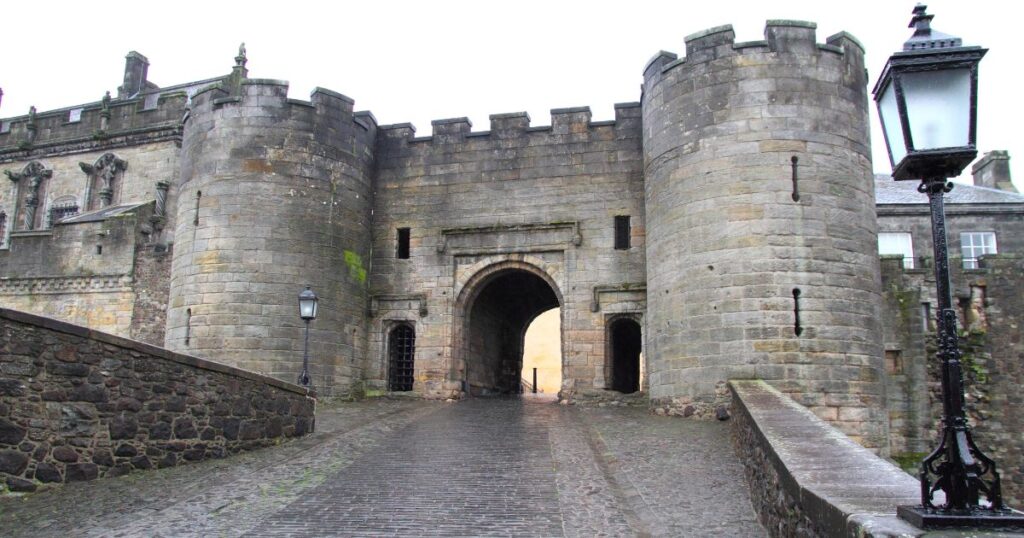
Scottish castles developed over many centuries, shaped by warfare, clan rivalry, royal ambition, and political upheaval. Understanding these eras helps travelers appreciate the unique character of each site.
Early Fortifications & Pictish Strongholds (pre-12th century)
Before stone castles, Scotland’s defensive landscape included Iron Age hillforts, Pictish settlements, and large drystone brochs – circular towers found primarily in the Highlands and islands. These early sites illustrate the long heritage of fortified living in Scotland and laid the groundwork for later medieval masonry traditions.
While few survive fully intact today, their forms influenced the vertical massing and defensive priorities seen in later tower houses.
Examples:
Mousa Broch • Dun Telve Broch • Dun Troddan Broch
Medieval Tower Houses & Clan Power (12th–15th centuries)
When Norman influences reached Scotland, stone fortifications became far more sophisticated. This era gave rise to:
- Tower houses (Scotland’s signature castle style)
- Curtain walls
- Defensive gateways
- Battlements
- Lochside and coastal strongholds
Clan chiefs and regional lords built these castles to display power, control territory, and protect their people during frequent conflicts.
Examples:
Edinburgh Castle • Stirling Castle • Cawdor Castle • Blair Castle

Renaissance & Royal Residence Era (15th–17th centuries)
As firearms made medieval defenses less effective, castles evolved into elegant residences for Scotland’s royals and nobility.
New features included:
- Large windows
- Spiral staircases
- Grand halls
- Decorative stonework
- Extensive gardens
- Fine tapestries and furnishings
This era coincides with the reigns of James IV, James V, and Mary, Queen of Scots – each leaving a distinctive architectural legacy.
Examples:
Stirling Castle (Renaissance Palace) • Glamis Castle

Civil Wars, Jacobite Uprisings & the Decline of Defensive Castles (17th–18th centuries)
The Wars of the Three Kingdoms and later Jacobite rebellions significantly impacted Scotland’s castles. Some were damaged, others abandoned, and many transformed into manor houses with military functions no longer required.
Examples:
Urquhart Castle (ruins tied to Jacobite history)

19th-Century Romantic Revival & Scottish Baronial Style (Victorian Era)
The Victorian era sparked a renewal of interest in Scotland’s medieval past. Architects revived traditional elements – turrets, battlements, crow-stepped gables – creating the distinctive Scottish Baronial style that defines many castles today.
Queen Victoria and Prince Albert’s love for Balmoral played a major role in popularizing this romanticized architecture.
Examples:
Balmoral Castle • Dunrobin Castle • Inveraray Castle • Culzean Castle (reimagined in parts)
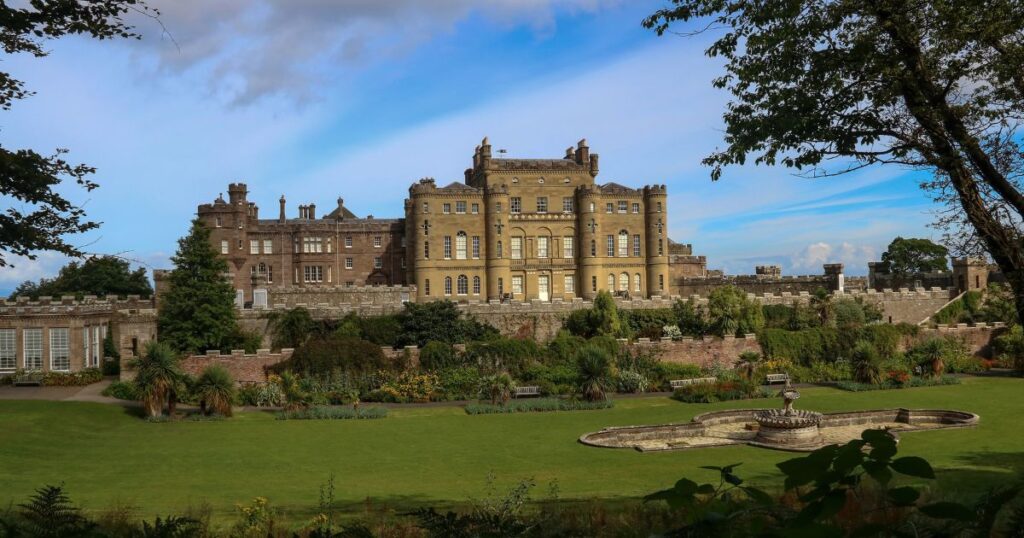
Many of Scotland’s castles are now safeguarded by Historic Environment Scotland, the national body responsible for protecting and preserving the country’s most important heritage sites.
Architectural Styles & Design Elements in Scottish Castles
Scottish castles showcase a mix of defensive, residential, and romantic influences. As you explore the country, keep an eye out for these defining features:
Pre-Norman Brochs & Forts
- Circular drystone towers
- Thick walls
- Ancient defensive settlements
Medieval Tower Houses
- Vertical fortifications
- Narrow staircases
- Limited windows
- Thick stone walls
Curtain-Wall Fortresses
- Large defensive enclosures
- Gatehouses
- Courtyards
- Battlements
Renaissance Additions
- Ornate stonework
- Larger halls
- Decorative fireplaces
- Tapestries
Scottish Baronial Architecture
- Turrets
- Conical roofs
- Crow-stepped gables
- Harled walls
- Asymmetrical facades
- Romantic silhouettes
Victorian Enhancements
- Restored interiors
- Landscaped gardens
- Decorative Victorian wings
Famous Castle Regions in Scotland
Scotland’s castles cluster into distinct regions, each offering unique architecture, history, and landscapes.
The Highlands: Clan Strongholds & Dramatic Landscapes
Wild scenery, ancient lore, and atmospheric ruins define this region. Highland castles often sit beside lochs or on rocky promontories.
Top Sites:
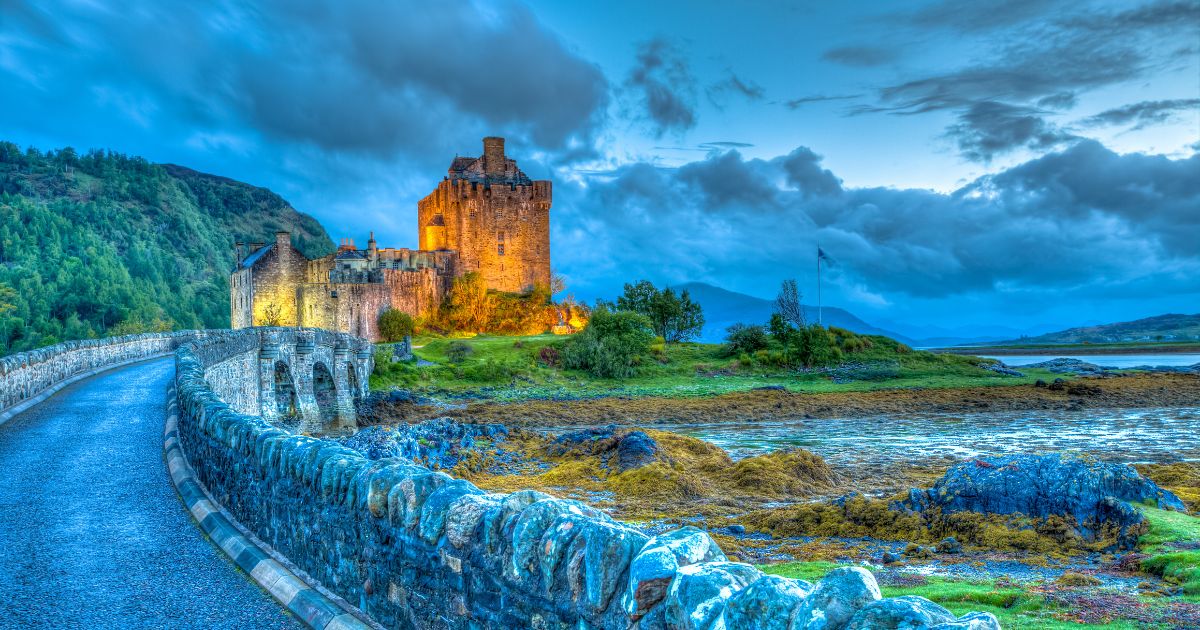
- Eilean Donan Castle – Iconic Highland fortress where three lochs meet.
- Urquhart Castle – Dramatic Loch Ness ruin with powerful medieval history.
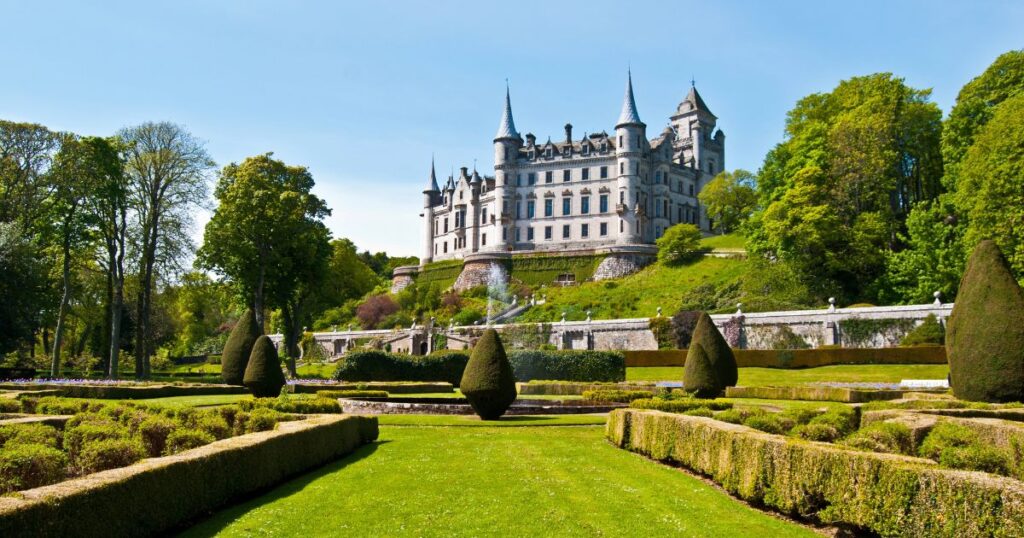
- Dunrobin Castle – French-inspired seaside palace overlooking the North Sea.
- Blair Castle – Ancestral seat of Clan Murray and the Atholl Highlanders.
Isle of Skye & the Hebrides: Coastal Fortresses & Faerie Legends
Remote, rugged, and rich in folklore – these island castles feel magical.
Top Sites:
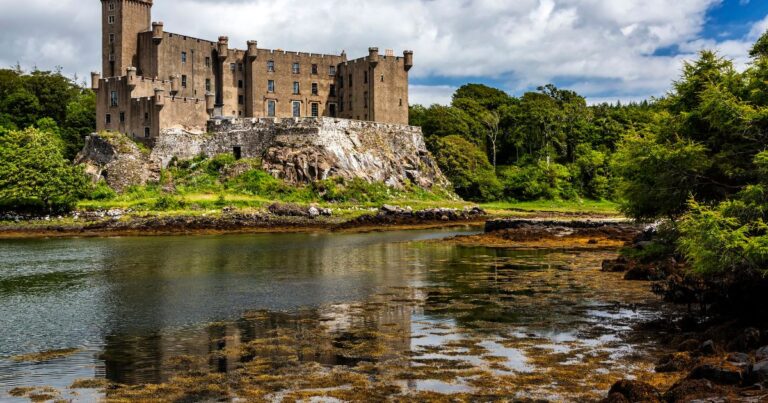
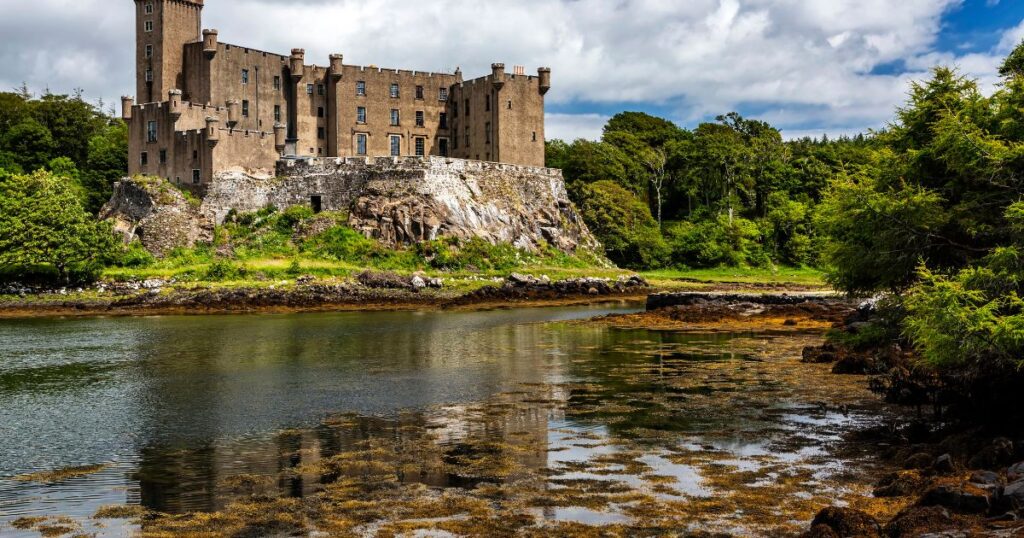
- Dunvegan Castle (Clan MacLeod seat) – The historic seat of Clan MacLeod.
- Duntulm (ruins) – Atmospheric cliff-top ruins on the Isle of Skye.
Aberdeenshire: “Scotland’s Castle Trail” Capital
More than 260 castles dot this region, many built by powerful families during the Renaissance and Victorian eras.
Top Sites:
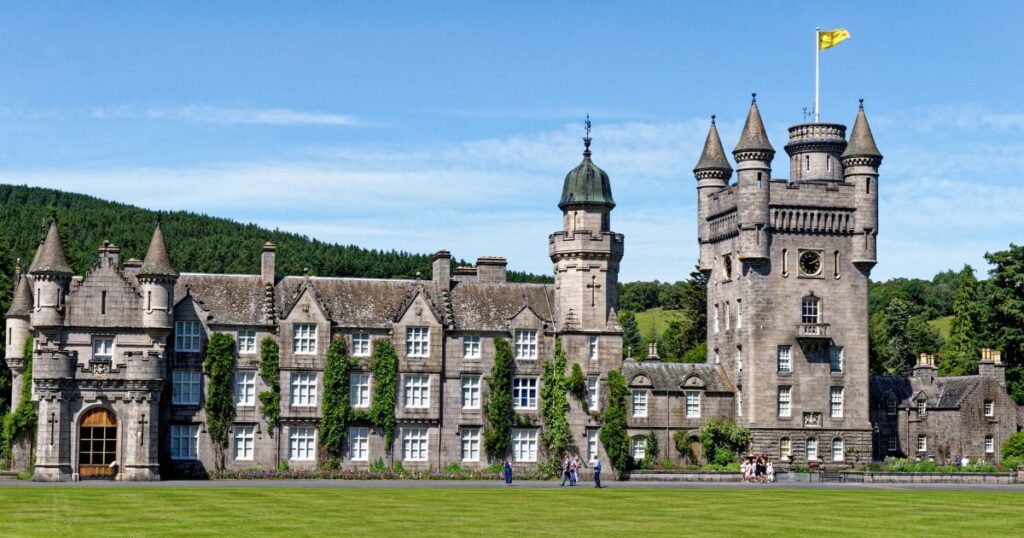
- Balmoral Castle – Royal Family’s private Scottish residence and baronial estate.
- Cawdor Castle – Macbeth-linked tower house with exceptional gardens.
- Drum Castle – Medieval tower house blended with Jacobean and Victorian wings.
- Craigievar Castle – Pink-harled fairy-tale tower famed for its Scottish Baronial style.
Central Belt: Royal History in Stirling & Edinburgh
This region holds Scotland’s most important royal residences, battle sites, and political centers.
Top Sites:
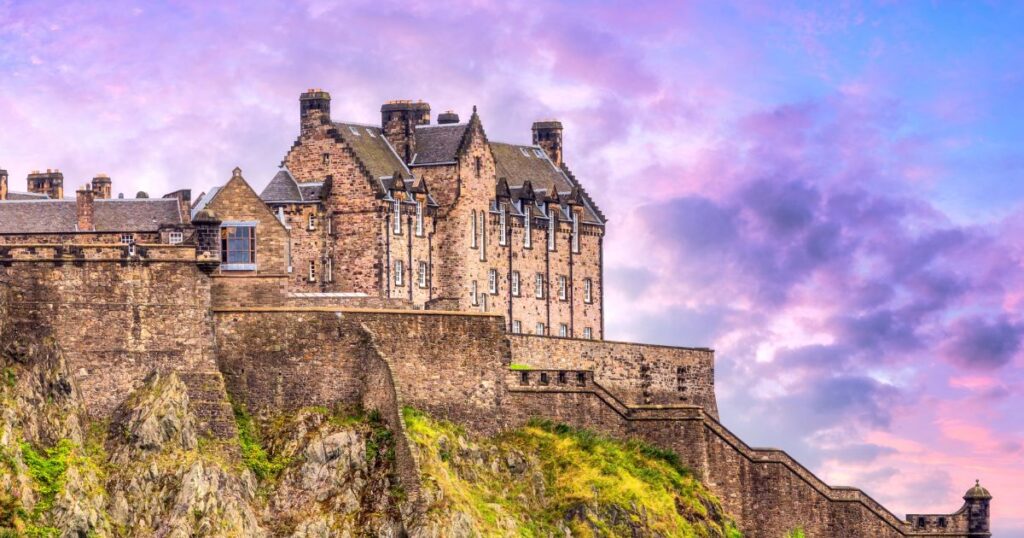
- Edinburgh Castle – Scotland’s defining royal fortress atop Castle Rock.
- Stirling Castle – Renaissance royal palace above historic battlefields.
- Linlithgow Palace – Atmospheric royal ruins and birthplace of Mary, Queen of Scots.
Argyll & the West Coast: Sea Power & Islands
A region connected to maritime trade, Viking influence, and elegant 18th-century estates.
Top Sites:
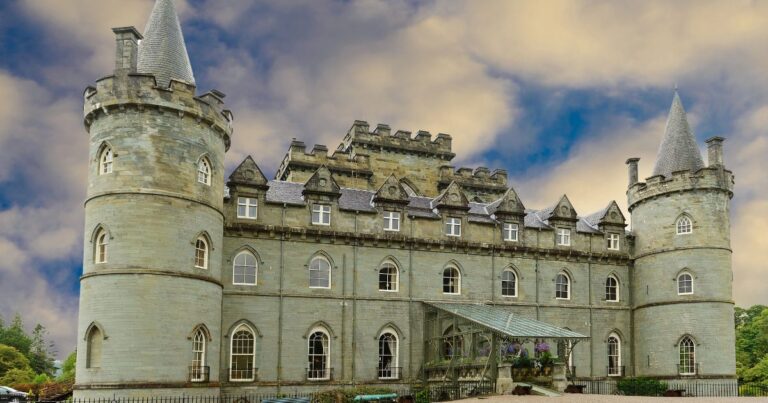
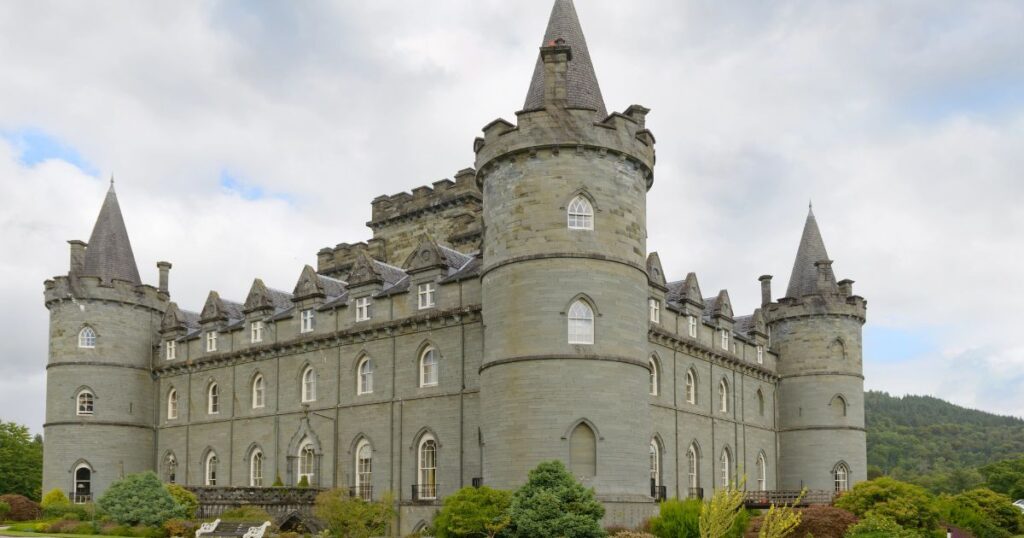
- Inveraray Castle – Elegant west-coast estate of Clan Campbell.
- Dunstaffnage Castle – One of Scotland’s oldest stone strongholds at a strategic coastal site.
- Castle Stalker – Striking tidal islet tower rising from Loch Laich.
Scotland pairs beautifully with Wales, a country known for having one of the highest densities of castles in the world. And for travelers expanding beyond the British Isles, France offers an extraordinary range of châteaux and medieval fortresses. And for a shared Celtic heritage and rich storytelling traditions, Ireland is a great fit with Scotland.
Top Castles to Visit in Scotland
Edinburgh Castle
Scotland’s most visited castle and an unmissable landmark. Sitting atop Castle Rock, this fortress has witnessed royal ceremonies, battles, and centuries of political intrigue. Don’t miss the Crown Jewels and the Stone of Destiny.
See my full Edinburgh Castle guide.
Stirling Castle
A masterpiece of Renaissance architecture. The Royal Palace, Great Hall, and sweeping views over the historic Stirling battleground make it one of Scotland’s most important royal sites. Full Stirling Castle Guide here.
Eilean Donan Castle
One of the most photographed castles in the world, rising from its tidal island where three lochs meet. A must-see for anyone exploring the Highlands or driving to Skye.
This is my full Eilean Donan Castle Guide.
Urquhart Castle
Dramatic ruins perched along Loch Ness. Its turbulent history and stunning viewpoints make it a top stop for travelers driving the Great Glen. Full Urquhart Castle Guide.
Balmoral Castle
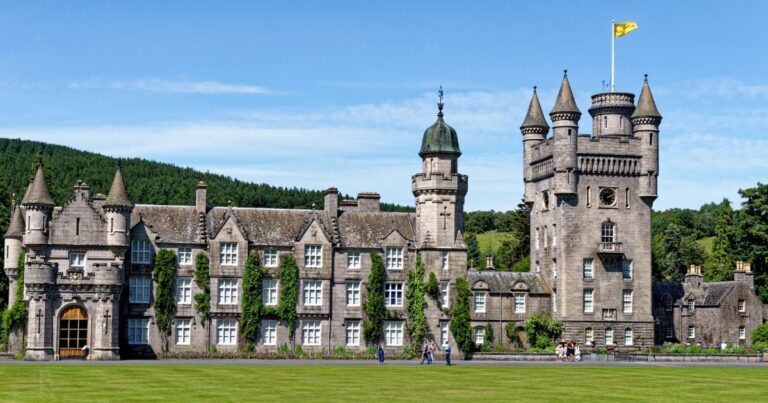
A beloved royal residence and the private Scottish home of the Royal Family. Known for its baronial architecture, gardens, and wooded estate. Here’s my full guide to Balmoral Castle.
Dunrobin Castle
A spectacular French-inspired palace overlooking the North Sea. Its gardens, grand facade, and fairy-tale appearance make it one of Scotland’s most photogenic estates. Full Dunrobin Castle Guide.
Glamis Castle
Famous for its ties to royalty, Macbeth, and centuries of folklore. Inside, expect beautifully furnished rooms and some of Scotland’s most elaborate period interiors. Full Glamis Castle Guide.
Culzean Castle
A dramatic clifftop estate overlooking the Firth of Clyde. The grounds, beaches, and sweeping gardens make it ideal for families and nature lovers. See my full guide to Culzean Castle.
Cawdor Castle
A richly furnished castle known for its Macbeth associations, beautiful gardens, and peaceful woodland estate. Full Cawdor Castle Guide here.
Blair Castle
Seat of Clan Murray and home to the Atholl Highlanders, Europe’s only private army. Interiors, armories, and gardens make this a favorite for history enthusiasts. Here is my full Blair Castle Guide.
Dunnottar Castle
A dramatic cliff-top fortress with a powerful role in Scotland’s history. Once the hiding place of the Honours of Scotland during Cromwell’s invasion, its sweeping sea views and atmospheric ruins make it one of the country’s most unforgettable castle experiences.
Doune Castle
A remarkably preserved medieval stronghold famed for its great hall, royal connections, and film history. Known to fans of Outlander, Monty Python, and Game of Thrones, it offers one of Scotland’s most entertaining and immersive castle tours.
Other Noteworthy Scottish Castles
These additional sites offer powerful clan history, coastal scenery, or architectural beauty. Perfect additions if you’re exploring beyond the Top 10.
- Dunvegan Castle – MacLeod stronghold on the Isle of Skye
- Inveraray Castle – Elegant west-coast estate with Baroque touches. Full Inveraray Castle Guide here.
- Dunstaffnage Castle – One of Scotland’s oldest stone fortresses
- Craigievar Castle – The pink fairy-tale tower house (Aberdeenshire)
Castle lovers often expand their travels to the Czech Republic, known for Gothic fortresses and fairy-tale palace complexes, or Austria with its opulent palaces and dramatic mountain strongholds.
Castle Gardens & Landscapes in Scotland
Scotland’s castle gardens are as atmospheric as their stone walls – shaped by rugged coastlines, Highland weather, Victorian landscaping trends, and centuries of clan stewardship. Unlike the symmetrical formality of French palaces or the vast Baroque displays of Germany, Scottish gardens often blend natural beauty with cultivated elegance, creating landscapes that feel both historic and deeply rooted in place.
Across the country, you’ll find everything from windswept coastal gardens and peaceful woodland paths to structured parterres, ancient orchards, and vibrant walled gardens bursting with color in summer. Many estates were expanded during the Victorian era, when exotic plant collecting was at its height, while others retain the quieter charm of medieval or early-modern design.
Here are some of the most distinctive garden styles and experiences you’ll encounter:
- Coastal gardens with sea views, hardy perennials, and dramatic cliffside settings
- Woodland walks shaded by centuries-old trees and carpeted with spring bluebells
- Historic walled gardens dating back to the 17th and 18th centuries
- Victorian plant collections featuring rare species from around the world
- Lochside lawns and terraces perfect for photography and scenic strolls
And across Scotland, several castle gardens truly stand out:
- Cawdor Castle – A magnificent walled garden layered with color and structure
- Dunrobin Castle – Formal French-style parterres overlooking the North Sea
- Culzean Castle – Expansive grounds with beaches, forests, ponds, and cliff paths
- Balmoral Castle – A mix of formal gardens, wooded trails, and Royal Family traditions
These gardens aren’t just decorative-they reflect Scotland’s climate, history, and the personalities of the families who shaped them. Exploring them gives visitors a deeper appreciation for life at a Scottish castle, past and present.
Castle Restoration & Preservation in Scotland
Scotland’s castles survive thanks to a mix of national organizations, private stewardship, and conservation efforts:
- Historic Environment Scotland – manages major sites like Edinburgh Castle
- National Trust for Scotland – preserves estates such as Culzean
- Private families – maintain ancestral homes (e.g., Dunrobin, Cawdor, Blair Castle)
- Royal stewardship – Balmoral remains privately owned by the Royal Family
Restoration challenges include:
- Harling and stone repair
- Weathering from rain and sea winds
- Roof and masonry stabilization
- Preserving tapestries and historic interiors
Visitor revenue contributes significantly to these ongoing efforts.
Notable Figures & Events
Scotland’s castles are inseparable from the influential figures, clan leaders, queens, warriors, and political upheavals that shaped the country’s identity. Many of the most pivotal chapters in Scottish history unfolded within castle walls – or because of them.
Mary, Queen of Scots
Few historical figures are more intertwined with Scotland’s castles. Mary spent her childhood at Stirling Castle, held court at Edinburgh Castle, and sought refuge or negotiation in several royal residences. Her dramatic life – marked by alliances, betrayals, and forced abdication – casts a long shadow across Scotland’s castle landscape.
Robert the Bruce
One of Scotland’s greatest warrior kings, Robert the Bruce seized and destroyed several English-held castles during the Wars of Independence, reshaping the nation’s strategic fortifications. Stirling, in particular, gains its legendary status in part because of his decisive victory at Bannockburn in 1314.
Clan MacLeod
For centuries, the MacLeods ruled from Dunvegan Castle, making it one of the most important clan seats in Scotland. The Fairy Flag – their mystical banner said to hold protective powers – remains one of the country’s most famous artifacts of folklore and clan tradition.
Clan Campbell
Among the most powerful and politically influential clans, the Campbells used Inveraray Castle as their base of operations. Their alliances and conflicts, particularly during Jacobite uprisings, shaped regional politics for centuries.
Clan Murray & the Atholl Highlanders
Blair Castle is distinguished as home to the Atholl Highlanders, Europe’s only remaining private army. Their history, pageantry, and ceremonial role are deeply tied to the Murray family’s long stewardship of the castle.
The Jacobite Uprisings
Castles across Scotland felt the impact of the 1715 and 1745 uprisings. Some were destroyed to prevent further rebellion, others fortified, and many became strategic strongholds. Urquhart Castle, for example, was deliberately blown up to prevent Jacobite use.
Wars of Independence & Medieval Conflict
Edinburgh, Stirling, Dunbar, and countless others were repeatedly besieged or captured during conflicts with England. These wars turned many Scottish castles into symbols of national perseverance.
Together, these figures and events shaped not only the architecture and geography of Scotland’s castles, but also their spirit – a blend of resilience, legend, and identity unlike anywhere else in Europe.
Castles in Modern Scottish Culture
Today, Scotland’s castles continue to play a powerful role across film, tourism, identity, and the arts. They’re not just relics – they are living cultural touchstones.
Film, Television & Global Pop Culture
Scotland’s dramatic landscapes and storybook fortresses make them prime filming locations. Many visitors plan entire itineraries around familiar scenes:
- Outlander: Doune Castle (Castle Leoch), Blackness Castle, Midhope Castle
- Highlander: Eilean Donan Castle’s unforgettable introduction
- Monty Python and the Holy Grail: Doune Castle’s multiple stand-in roles
- James Bond: Skyfall: Brooding Highland scenery
- Braveheart: Stirling and surrounding landscapes
These appearances have propelled Scottish castles into global travel wishlists and Instagram feeds.
Symbols of Scottish Identity
Castles serve as enduring emblems of:
- National independence
- Clan heritage
- Folklore and storytelling
- Highland culture
- Architectural pride
- The power struggles that shaped Scotland
From modern festivals to clan gatherings, castles are often chosen as backdrops for celebrations, reenactments, and historic commemorations.
Architecture, Preservation & Education
Many castles operate as:
- Museums with curated historical exhibits
- Venues for lectures and educational programs
- Conservation landmarks demonstrating Scottish stewardship
- Research sites for medieval architecture, archaeology, and genealogy
Organizations such as Historic Environment Scotland and the National Trust for Scotland invest enormous resources into preserving these structures for future generations.
Weddings, Events & Community Life
Several castles – particularly baronial estates – now serve as:
- Wedding venues
- Cultural festivals
- Highland games locations
- Gardens used for botanical events
- Galleries for local artists and exhibitions
This blending of old and new keeps Scotland’s castles embedded in daily life.
Tourism & Economic Impact
Castles remain some of Scotland’s most-visited attractions, drawing millions of travelers each year. Iconic sites like Edinburgh Castle, Stirling Castle, Eilean Donan, and Dunnottar act as anchors for regional tourism, supporting hotels, guides, restaurants, and local businesses.
Their continued vitality helps ensure the preservation of Scotland’s heritage – making tourism not only an experience, but a form of stewardship.
Cultural Traditions Linked to Castles
Scottish castles are inseparable from the traditions, folklore, and storytelling that define the nation’s cultural identity. Far beyond their stone walls and battlements, these estates preserve rituals, legends, and customs that have been passed down through generations.
Many traditions began as practical aspects of clan life – ceremonies, gatherings, seasonal celebrations – and evolved into the cultural symbols visitors recognize today. Others grew from centuries of mythmaking: tales of faeries, prophetic flags, ghostly apparitions, and legendary battles woven into the fabric of each castle’s story.
Here are some of the most distinctive traditions connected to Scotland’s castles:
- Clan heritage and tartans – Many castles served as clan seats where patterns, mottos, and ancestral stories were preserved and celebrated.
- Highland Games – Events like piping, dancing, and athletic competitions often took place on castle grounds; Blair Castle’s region still hosts them today.
- Faerie lore and ancient legends – Stories like Dunvegan’s Fairy Flag or the spirits said to roam Glamis Castle blend Celtic myth with medieval superstition.
- Ghost traditions – Nearly every historic castle claims a spectral inhabitant, from the Grey Lady of Stirling to the mysterious figures of Cawdor and Glamis.
- Historic ceremonies and feast traditions – Banqueting halls, medieval kitchens, and great fireplaces reflect centuries of communal gatherings and celebrations.
- Bagpipe and musical traditions – Pipes were often played for clan chiefs and gatherings, a sound still associated with ceremonial life at many estates.
These cultural threads add depth to the castle experience. Visitors don’t just tour historic buildings – they step into living symbols of Scottish identity, shaped by the beliefs, fears, triumphs, and imagination of the people who lived within these walls.
Planning Your Castle Tour in Scotland
Scotland’s compact geography makes it easy to explore multiple castles in a single trip. Here are some themed routes to consider:
Highlands Loop
Edinburgh → Stirling → Blair Castle → Inverness → Urquhart Castle → Eilean Donan → Isle of Skye (Dunvegan)
Aberdeenshire Castle Trail
Cawdor → Balmoral → Craigievar → Drum Castle → Fraser Castle
Central Scotland Royal Route
Edinburgh Castle → Linlithgow Palace → Stirling Castle → Doune Castle
West Coast Scenic Route
Inveraray Castle → Dunstaffnage Castle → Castle Stalker → Oban region
Isle of Skye & the Western Isles
Eilean Donan → Dunvegan Castle → Duntulm Castle (ruins)
Many travelers combine Scotland with England, especially when exploring royal heritage and famous fortresses, or with destinations like Italy, where medieval fortresses blend with Renaissance palaces. And if it’s dramatic landscapes and storied strongholds, you might want to consider visiting the castles in Portugal.
Practical Tips For Visiting Castles In Scotland
Castle exploring in Scotland is one of the most atmospheric travel experiences in Europe, blending rugged landscapes, medieval ruins, and grand stately homes. These practical tips help you navigate weather, transport, crowds, and terrain so you can enjoy each site at its best.
Trip Planning Essentials
Regions to consider:
Edinburgh/Central Belt (major historic sites), the Highlands (dramatic lochside ruins), Aberdeenshire (Castle Trail), and Scotland’s islands for atmospheric, remote fortresses.
Getting around:
A car is best for Highlands, Skye, and Aberdeenshire. Public transport works well around Edinburgh and Glasgow. Expect single-track rural roads.
When to visit:
May–September offers long daylight. Autumn brings beautiful colors. Winter = reduced hours or full closures, especially for smaller sites.
Book ahead:
Reserve early for Edinburgh Castle, Stirling Castle, and Balmoral’s seasonal openings.
On-Site Advice & Insider Insights
Terrain:
Expect steep paths, cobblestones, and narrow staircases – sturdy shoes are essential.
Weather:
Scotland is known for “four seasons in a day.” Waterproof layers and wind protection are a must.
Photography:
Interiors may restrict flash. Iconic exterior shots:
Eilean Donan (sunrise/dusk), Dunnottar (clifftop), Edinburgh Castle (sunset), Dunrobin (gardens & falconry).
Accessibility:
Best options for low-mobility visitors: Culzean, Inveraray, and Balmoral’s gardens.
Great for kids:
Blair Castle (armory + red deer), Urquhart (ruins), Culzean (parkland & beaches).
Seasonal highlights:
Highland Games in summer, autumn colors at Cawdor & Dunrobin, quiet winter visits at open sites.
Facilities:
Large castles have cafés; rural ruins may have none. Many estates offer beautiful picnic spots.
Frequently Asked Questions About Castles In Scotland
How many castles are there in Scotland?
More than 2,000, including ruins, fortified tower houses, palaces, and Victorian baronial estates.
What is the most famous castle in Scotland?
Edinburgh Castle, followed closely by Eilean Donan and Stirling Castle.
Can you stay in a Scottish castle?
Yes – some operate as hotels or guesthouses, especially in the Highlands and Aberdeenshire.
What is the best region for castle-hopping?
Aberdeenshire (the Castle Trail), the Highlands Loop, and the Central Belt for royal history.
Are Scottish castles accessible in winter?
Some are; many have reduced hours. Always check official sources before visiting.
Which Scottish castles are best for families?
Culzean Castle, Blair Castle, Urquhart Castle, Dunrobin Castle.
Conclusion
Scotland’s castles are not just historic structures – they are living symbols of a nation shaped by clans, monarchs, battles, myths, and centuries of remarkable architectural evolution. From the royal power centers of Edinburgh and Stirling to the coastal fortresses of Skye and the Highlands’ dramatic ruins, exploring the castles in Scotland is like stepping into the pages of history.
If you have a mind to take a trip across the English Channel, France offers an extraordinary range of châteaux and medieval fortresses and logistically it’s easy to add it to a British Isles itinerary.
Whether you’re hiking to a windswept ruin above Loch Ness, wandering the elegant gardens of Dunrobin, or tracing clan stories at Dunvegan, these castles offer unforgettable experiences at every turn. Use this guide as your starting point and prepare to discover the magic, mystery, and majesty of Scotland’s most extraordinary historic estates.