
Castles in Ireland: Explore Ireland’s Most Historic Castles & Enchanting Ruins
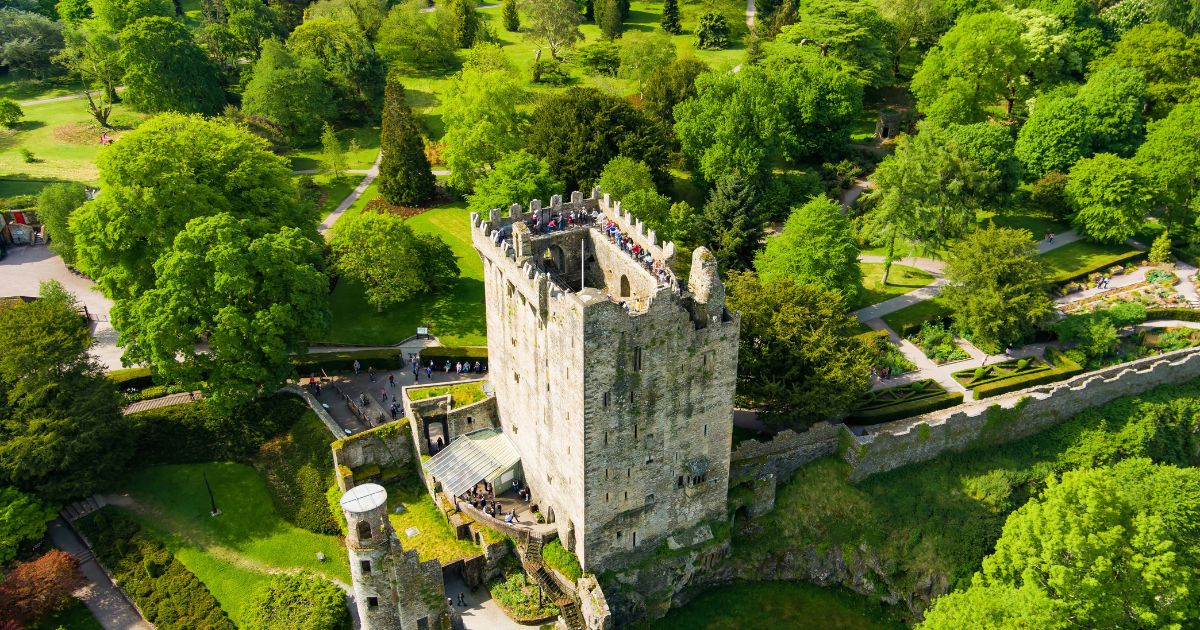
Castles in Ireland are among the most atmospheric in Europe – dramatic coastal ruins, towering Norman keeps, medieval strongholds, and romantic estates wrapped in legend and history. Whether perched on windswept cliffs, guarding ancient river crossings, or rising above rolling green hills, these sites reveal Ireland’s turbulent past and enduring heritage.
This guide explores Ireland’s most iconic castles, the eras that shaped them, the regions where they flourish, and essential tips for planning an unforgettable castle-filled journey.
Key Takeaways
- Ireland’s castles span 800+ years, from early Norman fortresses to Gaelic tower houses and Victorian romantic recreations.
- Major regions include the Wild Atlantic Way (dramatic ruins), the Midlands/Leinster (Norman power centers), Northern Ireland (clifftop fortresses), and Munster (medieval towns + tower houses).
- Many castles offer exhibitions, gardens, folklore tours, and seasonal events.
- Top sites include Dublin Castle, Bunratty Castle, Blarney Castle, Rock of Cashel, Trim Castle, Dunluce Castle, Ross Castle, and Kilkenny Castle.
- Expect powerful stories of clans, kings, rebellions, sieges—and breathtaking scenery at nearly every turn.
Historical Overview of Castles in Ireland
Ireland’s castles tell a story shaped by invasion, clan rivalries, medieval warfare, and cultural transformation. The earliest formidable stone fortifications arrived with the Norman invasion in 1169, when Anglo-Norman lords built massive keeps and walled towns to assert control. Their arrival drastically altered Ireland’s political landscape and architectural history.
During the later Middle Ages, Gaelic chieftains constructed distinctive tower houses, vertical stone fortifications designed for defense, storage, and prestige. These structures dot the countryside more densely than any other castle type in Ireland.
The Tudor and Elizabethan periods saw the rise of fortified manor houses, plantation castles, and strategic strongholds built during England’s campaigns to consolidate power. Later centuries brought Georgian and Victorian reimaginings, transforming medieval sites into romantic estates.
Today, Ireland’s castles remain powerful cultural icons – symbols of resistance, royalty, myth, architecture, and everyday life across centuries.
Notable Eras & Architectural Evolution
Norman Conquest & Early Fortification (12th–13th Centuries)
The Norman invasion transformed Ireland’s defensive landscape. In a remarkably short period, Anglo-Norman lords constructed stone keeps, motte-and-bailey structures, and fortified towns. Castles like Trim Castle, Dublin Castle, and Limerick’s King John’s Castle reflect classic Norman military design. Features of the era include:
- Square stone keeps
- Defensive curtain walls with gatehouses
- Strategic riverside placement
- Enclosed courtyards for soldiers and supplies
These early Norman castles established long-lasting centers of political control.
High Medieval Stone Castles & Walled Towns (13th–14th Centuries)
As Norman power expanded, so did the scale and sophistication of Irish castles. Many evolved into walled towns with towers, fortified bridges, and multi-ringed defenses. Typical features include:
- Reinforced curtain walls
- Towers for archers
- Moats or wet ditches
- Grand halls for administration and feasting
Examples include Kilkenny Castle, Carlingford Castle, and Roscommon Castle.
Gaelic Tower Houses (15th–16th Centuries)
Ireland’s most distinctive contribution to castle architecture is the tower house—a vertical stone structure built by Gaelic lords and later Anglo-Irish families. Key features are:
- Multiple defensive stories
- Narrow windows and arrow loops
- Battlements and machicolations
- Spiral staircases
- Compact courtyards or bawn walls
Examples such as Donegal Castle, Dunguaire Castle, and Ross Castle illustrate how these structures served both defensive and domestic roles.
Tudor & Elizabethan Fortified Houses (16th Century)
During England’s Tudor reconquest, a new wave of plantation fortifications appeared. These buildings combined military necessity with early modern domestic design. Common elements of Tudor & Elizabethan design are:
- Fortified gatehouses
- Large mullioned windows
- Symmetrical façades
- Defensive corner towers
Notable examples include Portumna Castle and Kanturk Castle.
Plantation Castles & Military Strongholds (16th–17th Centuries)
In Ulster and Munster, English and Scottish settlers built fortified manor houses and strongholds to secure territory during the Plantation period. These sites often feature a blend of Renaissance design and practical defense.
Examples: Derry Walls, Charlemont Fort, and Enniskillen Castle.
Georgian Estates & Victorian Romanticism (18th–19th Centuries)
As warfare waned, many medieval castles were remodeled as grand estates. Others were rebuilt entirely in picturesque Gothic Revival style. Typical features in these buildings are:
- Decorative battlements
- Towered silhouettes
- Ornamental gardens and parks
- Elegant interiors inspired by medievalism
Castles such as Ashford Castle, Glenveagh Castle, and Kylemore Abbey represent this romantic reinterpretation of Ireland’s past.
Architectural Styles & Design Elements in Irish Castles
Ireland’s castles reflect a remarkable blend of Gaelic, Norman, and later English influences, shaped by centuries of clan warfare, shifting political power, and regional craftsmanship.
Unlike England or France – where royal authority drove large-scale castle construction – Ireland’s castles developed through a more fragmented mix of local dynasties, Anglo-Norman settlers, and colonial administration. The result is an architectural landscape rich in diversity: rugged tower houses, sprawling Norman fortresses, fortified manor houses, and romantic Victorian restorations.
Below are the defining styles and elements that shaped Ireland’s castle architecture over nearly a millennium.
Norman Fortresses & Early Anglo-Norman Keeps (12th–13th Centuries)
The Normans introduced large stone fortifications built to secure military control across newly conquered territories. These early castles emphasized height, visibility, and defense. Key architectural features include:
- Massive square or polygonal stone keeps
- Thick curtain walls with rounded or square towers
- Gatehouses reinforced with murder holes and portcullises
- Large baileys for garrisons, livestock, and supply storage
Examples:
Trim Castle, Cahir Castle, and Carrickfergus Castle showcase Ireland’s most complete Norman military complexes. Their monumental scale reflects strategic strongholds meant to project dominance over Gaelic clans.
Gaelic Tower Houses & Native Irish Fortified Residences (14th–17th Centuries)
The tower house – tall, narrow, and defensive – is the most iconic form of native Irish castle architecture. Thousands were built by Irish chieftains and Anglo-Irish lords during a turbulent era of raids, rivalries, and shifting alliances. Defining characteristics include:
- Vertical emphasis, usually 3–5 stories
- Limited ground-floor access with heavy timber doors
- Spiral staircases built clockwise (giving defenders an advantage)
- Thick stone walls with few exterior windows
- Machicolations and bartizans for dropping projectiles
- Small rooftop battlements for last-resort defense
These were not grand palaces – they were compact, functional, and built to withstand sudden attacks rather than long sieges.
Examples:
Ross Castle, Bunratty Castle (before restoration), and Doonagore Castle embody the tower house tradition.
Fortified Manor Houses & Estate Residences (16th–17th Centuries)
As political stability increased under English rule, some Irish strongholds evolved into fortified manor houses – blending domestic comfort with security. Typical features:
- Large mullioned windows
- More elaborate chimneys and fireplaces
- Enclosed courtyards
- Symmetrical façades influenced by Renaissance design
- Defensive elements reduced to symbolic gestures
Examples:
Kanturk Castle, Portumna Castle, and Rathfarnham Castle illustrate this transitional style.
Plantation-Era Fortifications & Artillery-Ready Castles (16th–17th Centuries)
During the Tudor and Stuart plantations, new settlements – particularly in Ulster – included fortified buildings designed for musket fire and cannon defense. Notable characteristics include:
- Star-shaped or angled bastions
- Lower, thicker walls
- Gun loops replacing arrow slits
- Symmetrical defensive layouts
- Integrated military barracks or garrison quarters
Examples:
Charles Fort in Kinsale is the finest surviving example, its star-shaped plan clearly built for artillery resistance.
Castle Rebuilds & Georgian Transformations (18th Century)
By the 1700s, medieval structures were reimagined as elegant estate homes. Many castles were partially or fully rebuilt to reflect fashionable Georgian tastes. Key features include:
- Classical proportions and symmetry
- Sash windows
- Expansive landscaped gardens
- Stucco façades
- Grand staircases and plaster ceilings
Examples:
Emo Court and parts of Dublin Castle illustrate Georgian influence layered over earlier foundations.
Victorian Gothic Revival & Romantic Ruin Aesthetic (19th Century)
The 19th century brought renewed fascination with Ireland’s medieval heritage. Aristocratic families transformed existing castles or built new “castle-style” mansions inspired by romantic medievalism. Characteristic elements include:
- Pointed arches and decorative tracery
- Battlements, turrets, and crenellated parapets
- Grand entrance towers
- Ornamental heraldry
- Designed landscapes with lakes and follies
Examples:
Ashford Castle, Dromoland Castle, and parts of Lough Cutra Castle reflect Victorian grandeur and theatrical medieval style.
Common Design Elements Seen Across Ireland
Across all eras, several recurring features help define the Irish castle landscape.
- Strategic siting on cliffs, river bends, lakeshores, or hilltops
- Local limestone or sandstone masonry
- Compact footprints
- Verticality in tower houses
- Folklore often tied to architectural features
- Integration with rugged natural landscapes
Famous Castle Regions in Ireland
Dublin & Leinster (Norman Power Centers)
Dublin and the surrounding region house some of Ireland’s most historically significant Norman sites. Highlights include Dublin Castle, Trim Castle, and Kilkenny Castle, each reflecting centuries of political transformation.
Munster (Medieval Towns & Tower Houses)
Munster offers medieval charm, river-crossing fortresses, and some of Ireland’s most elegant estates. Top sites include Bunratty Castle, King John’s Castle, Blarney Castle, and Cahir Castle.
Connacht & The Wild Atlantic Way (Dramatic Ruins & Majestic Landscapes)
Ireland’s west coast is famous for its rugged beauty, dramatic views, and atmospheric ruins. The Wild Atlantic Way features Dunguaire Castle, Aughnanure Castle, Kylemore Abbey, Ashford Castle, and the clifftop remnants of medieval Gaelic strongholds.
Ulster / Northern Ireland (Clifftop Fortresses & Medieval Remains)
Northern Ireland boasts spectacular coastal castles like Dunluce Castle, perched dramatically over the sea. Inland sites such as Enniskillen Castle, Carrickfergus Castle, and Glenarm Castle reveal centuries of medieval and plantation-era history.
Ireland’s Midlands (Strongholds & Norman Towns)
Often overlooked, the Midlands hold some of the most impressive Norman remains, including Roscommon Castle, Birr Castle, and Charleville Castle (a Gothic Revival masterpiece).
Top Castles to Visit in Ireland
Rock of Cashel
A monumental complex set atop a limestone outcrop, once the seat of Munster’s kings. This spectacular site includes a round tower, chapel, high crosses, and sweeping views across the Golden Vale.
Blarney Castle
Famous for the Blarney Stone, this 15th-century fortress features dramatic battlements, winding stone passages, and expansive gardens filled with rock formations, waterfalls, and the mystical Poison Garden.
Kilkenny Castle
A beautifully restored Norman stronghold overlooking the River Nore. Visitors can tour its grand Victorian interiors, art galleries, and parklands that stretch across the heart of Kilkenny city.
Trim Castle
Ireland’s largest Anglo-Norman castle, known for its massive curtain walls and 12th-century keep. The sprawling grounds and towers were used extensively in Braveheart.
Bunratty Castle
A fully restored medieval fortress offering one of Ireland’s most immersive heritage experiences. The adjacent Folk Park recreates rural Irish life, while the castle hosts popular medieval banquets.
Dunluce Castle (Northern Ireland)
A dramatic clifftop ruin perched high above the Atlantic. Dunluce’s storm-broken walls, legends, and breathtaking setting make it one of the most atmospheric castles in the country.
Dublin Castle
A former seat of English and later British rule in Ireland, now a ceremonial complex with museums, medieval vaults, and lavish State Apartments reflecting centuries of political history.
Ross Castle (Killarney)
A classic Gaelic tower house set along the shores of Lough Leane. Its lakeside setting, boat tours, and mountain backdrop make it a highlight of Killarney National Park.
Cahir Castle
One of Ireland’s best-preserved medieval fortresses. Built on a rocky island in the River Suir, it features massive walls, towers, and film connections including Excalibur and The Tudors.
Ashford Castle
A lavish 19th-century castle-hotel overlooking Lough Corrib. Known for its luxurious interiors, falconry school, woodland trails, and beautifully manicured grounds. Today, Ashford operates as one of Ireland’s most famous five-star castle hotels, offering an unforgettable luxury experience in a historic setting.
Dromoland Castle
Set amid 500 acres of parkland in County Clare, Dromoland Castle was once the ancestral seat of the O’Brien clan, descendants of Ireland’s High King Brian Boru. Today it is a world-class luxury castle hotel, known for its ornate interiors, serene lake, championship golf course, and unforgettable guest experience. Its 19th-century Gothic Revival architecture now houses one of Ireland’s premier luxury hotels, blending historic grandeur with modern indulgence.
Other Noteworthy Irish Castles
- Carrickfergus Castle – A remarkably intact Norman fortress in Northern Ireland.
- Aughnanure Castle – A stronghold of the O’Flaherty clan, beautifully positioned near Lough Corrib.
- Donegal Castle – A restored Gaelic + Jacobean castle with elegant interiors.
- Glenveagh Castle – Romantic Victorian estate in a national park setting.
- Derry Walls & Tower Museum – A unique urban defensive network.
- Birr Castle – Home to lush gardens and the famous Leviathan Telescope.
Castle Gardens & Landscapes in Ireland
While Ireland is best known for rugged tower houses and medieval ruins, many estates evolved into cultural showpieces with beautifully planned gardens, woodlands, and parklands. These landscapes reflect layers of influence — medieval monastic plantings, Georgian symmetry, Victorian romanticism, and Ireland’s unique climate, which allows gardens to flourish with remarkable color and texture.
Medieval Courtyards & Defensive Grounds
Early Irish castles did not prioritize decorative gardens. Instead, open courtyards, livestock areas, and utilitarian plots dominated the landscape. Herb beds, orchard trees, and enclosed kitchen gardens supported daily castle life—often protected behind high stone walls.
Where to see it:
Ross Castle and Trim Castle maintain historically accurate grounds that illustrate how functional medieval landscape design once was.
Georgian Gardens & Formal Landscapes (18th Century)
As castles transitioned into refined residences, landscapes became statements of taste and sophistication. Symmetry, perspective, and order shaped the Georgian aesthetic.
Typical features:
- Broad lawns and axial pathways
- Walled gardens bursting with fruit trees and vegetables
- Classical sculptures or fountains
- Ornamental parterres
Examples:
Portumna Castle’s restored walled garden offers an exquisite glimpse into Georgian horticultural elegance.
Victorian Pleasure Grounds & Romantic Woodlands (19th Century)
Victorian-era estate owners transformed castle lands into sweeping parks, wooded carriage drives, and lakeside promenades. The focus shifted toward drama, emotion, and the “picturesque” ideal.
Expect to see:
- Glasshouses and exotic plant collections
- Decorative lakes and ornamental bridges
- Flowering rhododendrons and azaleas
- Winding woodland trails
- Garden follies (towers, grottoes, and decorative ruins)
Examples:
Ashford Castle and Kilkenny Castle boast some of Ireland’s most enchanting Victorian grounds, perfectly suited for scenic walks and photography.
Wild Irish Landscapes: Lakeshores, Cliffs & Boglands
Some of Ireland’s most unforgettable castle settings rely not on manicured gardens, but on the power of the natural landscape. Tower houses perched over lakes or ruins rising from windswept hills bring Ireland’s mystique to life.
Where to experience it:
Dunguaire Castle on Galway Bay, Doonagore Castle above the Atlantic, and Dunluce Castle clinging to the cliffs of Antrim.
Castle Restoration & Preservation in Ireland
Ireland’s castle heritage survived centuries of conflict, abandonment, and environmental wear. Today, restoration efforts balance historical accuracy with public access, ensuring these ancient structures remain safe, engaging, and true to their origins.
Major Historic Restoration Projects
Many castles underwent large-scale restoration during the 20th century, often after decades – or centuries – of decline. Examples include:
- Bunratty Castle – meticulously restored in the 1950s, now showcasing a vivid reconstruction of 15th-century life.
- Portumna Castle – an ongoing restoration that reveals the craftsmanship of the 1610 Renaissance mansion.
- Kilkenny Castle – transformed from near ruin into one of Ireland’s most visited heritage sites.
These efforts reflect Ireland’s commitment to preserving culture while fostering tourism.
Conservation Challenges
Ireland’s climate and geology present ongoing maintenance demands such as these:
- Constant moisture leads to stone erosion
- Atlantic winds accelerate weathering on coastal sites
- Vegetation growth can damage masonry
- Structural stabilization is needed for centuries-old towers
- Balancing public access with preservation is a continuous challenge
Community & Government Involvement
Many preservation projects succeed thanks to partnerships between:
- The Office of Public Works (OPW)
- Local councils
- Heritage Ireland
- Private estate owners
- Volunteer groups
Together, these groups ensure that castles remain both historically accurate and publicly accessible. For official information on Ireland’s state-managed castles, visit Heritage Ireland’s website.
Notable Figures & Events
- Strongbow (Richard de Clare) – Led the Norman invasion that sparked Ireland’s castle-building era.
- The O’Briens – Powerful Gaelic dynasty tied to Bunratty and other Munster strongholds.
- The Fitzgeralds (Earls of Kildare & Desmond) – Influential noble family with castles across Leinster and Munster.
- Queen Elizabeth I – Her policies shaped many fortified manor houses and plantation castles.
- Hugh O’Donnell & Red Hugh – Linked to Donegal Castle and the Nine Years’ War.
- The Flight of the Earls (1607) – Transformed power dynamics around Ulster’s castles.
- Cromwell’s Campaign (1649–1653) – Altered control and structure of many strategic sites.
Castles in Modern Irish Culture
Ireland’s castles continue to inspire storytellers, filmmakers, and travelers. Their dramatic silhouettes, haunting ruins, and atmospheric landscapes make them irresistible settings for stories of myth, romance, and adventure.
Film & Television Locations
For decades, Ireland’s castles have appeared on-screen in both historical dramas and fantasy worlds. Notable examples include:
- Dunguaire Castle – featured in classic films like The Quiet Man.
- Trim Castle – famously used for major battle scenes in Braveheart.
- Dublin Castle – a frequent filming location for historical series and political dramas.
- Ashford Castle – seen in numerous travel documentaries thanks to its luxury-hotel transformation.
These cinematic roles strengthen the global perception of Ireland as a land of romance, mystery, and timeless beauty.
Literary Inspirations
Ireland’s castles often appear in novels, folklore collections, and children’s fantasy books – usually as settings steeped in magic, tragedy, or heroic lineage. Writers draw on these elements and weave them into their stories:
- Clan rivalries
- Ghost legends
- Windswept coastal ruins
- Mysterious round towers and staircases
Cultural Iconography & Tourism
From postcards to tourism campaigns, castles symbolize Irish identity. They represent strength, endurance, artistry, and the layered story of a country shaped by invasions, rebellions, and resilient communities.
Cultural Traditions Linked to Castles
Beyond military history, Irish castles preserve centuries of tradition – from music and folklore to seasonal celebrations and ancestral customs.
Music, Dance & Storytelling
Castle halls once echoed with Gaelic harpers, poets, and storytellers who played key roles in clan society. Today, these traditions live on through:
- Medieval banquets with traditional music (Bunratty Castle)
- Storytelling festivals
- Harp and folk performances hosted in restored great halls
Festivals & Seasonal Celebrations
Many castles host events that draw on medieval or local tradition:
- Harvest fairs and artisan markets
- Christmas illuminations and decorated great halls
- Heritage days featuring costumed performers, falconry, and traditional crafts
Folklore & Ghost Legends
Ireland’s castles have their share of spirits and eerie tales — a beloved part of Ireland’s cultural fabric. Well-known legends include:
- The ghostly woman of Leamaneh Castle
- The banshee traditions tied to several old estates
- Haunted chambers in Malahide Castle
These stories enhance the mystique that surrounds many castles and remain popular during night tours and Halloween events.
Food Traditions & Historic Kitchens
Some castles keep culinary heritage alive through:
- Medieval-style banquets
- Mead tastings
- Demonstrations of traditional bread and stew preparation
- Walled-garden produce used in castle cafés
Planning Your Castle Tour in Ireland
Ireland is wonderfully compact, making multi-castle itineraries easy. Here are suggested routes for themed adventures:
Norman Heartlands Route (East to Midlands)
Dublin Castle → Trim Castle → Kilkenny Castle → Carlow Castle → Roscommon Castle
Wild Atlantic Way Scenic Castle Trail
Dunguaire Castle → Aughnanure Castle → Ashford Castle → Kylemore Abbey → Glenveagh Castle
Munster Medieval Highlights
Bunratty Castle → King John’s Castle → Cahir Castle → Blarney Castle
Northern Ireland Coastal Route
Carrickfergus Castle → Dunluce Castle → Glenarm Castle → Derry Walls
Gaelic Tower House Circuit
Ross Castle → Donegal Castle → Dunguaire Castle → Leap Castle
Family-Friendly Route
Bunratty Castle → Kilkenny Castle → Blarney Castle → Ross Castle → Birr Castle Gardens
Practical Tips For Visiting Castles In Ireland
Ireland’s landscape, weather, and rural roads make castle exploration memorable and sometimes challenging. These practical notes ensure smoother travel.
Trip Planning Essentials
Regions to consider:
Leinster (Norman power centers), Munster (medieval towns + tower houses), Connacht (dramatic ruins), and Ulster (clifftop fortresses). Ireland’s smaller size makes it easy to see diverse castle types in one trip.
Getting around:
A car offers the best flexibility, especially for rural ruins and Wild Atlantic Way sites. Public transport works well for Dublin, Kilkenny, and Limerick.
When to visit:
May–September provides the best weather. Winter brings reduced hours and early dusk, but major sites remain open.
Book ahead:
Reserve early for Bunratty Castle banquets, Kilkenny Castle tours, Dublin Castle State Apartments, and Blarney Castle (queues form early).
On-Site Advice & Insider Insights
Prepare for varied terrain:
Ireland’s castles often involve grassy slopes, uneven stone steps, and narrow staircases—especially tower houses and clifftop ruins.
Pack for changeable weather:
Rain showers appear quickly along the coasts. Bring layers and waterproofs even in summer.
Photography tips:
Cloudy skies can be dramatic—great for ruins like Dunluce, Dunguaire, or Trim. Early morning and late afternoon light are ideal.
Accessibility notes:
Tower houses tend to be steep and narrow. More accessible options include Kilkenny Castle, Dublin Castle, and Ashford Castle grounds.
Food & facilities:
Major sites have cafés; rural ruins may have none. Many castles offer picnic areas with scenic views.
Frequently Asked Questions About Castles In Ireland
How many castles are there in Ireland?
Over 3,000 sites exist, though many are ruins or partial remains.
What is the most famous castle in Ireland?
Blarney Castle is internationally famous, but the Rock of Cashel and Dublin Castle are historically more significant.
What region has the most castles?
Munster and Leinster have dense concentrations, while the west coast has the most dramatic ruins.
Can you stay in an Irish castle?
Yes – Ashford Castle, Dromoland Castle, and several tower houses offer overnight stays.
Are Ireland’s castles open year-round?
Most major sites are open year-round; rural sites may close in winter.
What makes Irish castles unique?
Ireland’s tower houses—vertical, clan-built fortifications—are found nowhere else in such density.
What is the best area for dramatic scenery?
Northern Ireland’s Antrim Coast and the Wild Atlantic Way offer the most breathtaking settings.
Conclusion
Exploring castles in Ireland immerses you in centuries of legend, invasion, clan history, and breathtaking landscape. From massive Norman fortresses to clifftop ruins and romantic Victorian estates, each site tells a powerful story shaped by kings, chieftains, rebellions, and myth.
Whether you’re climbing the battlements of Trim Castle, wandering the gardens of Kylemore Abbey, or watching Atlantic waves crash beneath Dunluce Castle, Ireland’s castles offer unforgettable beauty and historical depth.
These extraordinary sites remain central to Ireland’s identity – living reminders of the island’s cultural resilience, architectural legacy, and legendary storytelling tradition. Wherever your travels lead, Ireland’s castles will leave a lasting impression.
Wherever your journey takes you, Ireland’s castles offer the perfect blend of history, legend, and breathtaking scenery – an experience as unforgettable as the island itself.