Blair Castle Guide: History, Highlights & Visiting Tips

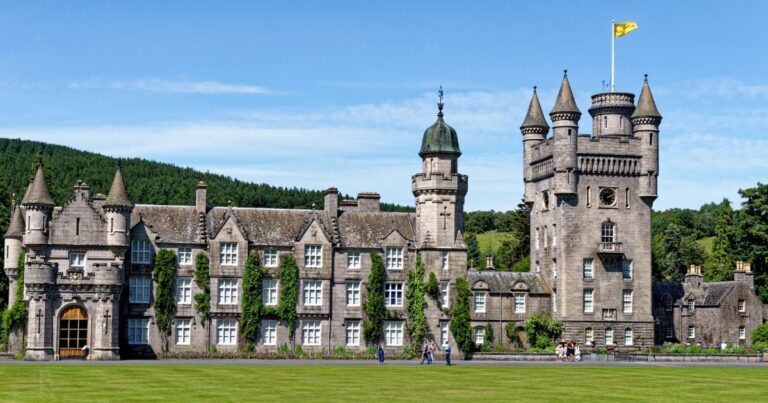
Blair Castle is one of the most distinctive historic estates in the Scottish Highlands – a striking white-walled palace with medieval roots, Georgian elegance, Victorian romance, clan heritage, and one of the finest Highland estates in Britain. Set in the dramatic landscape of Perthshire’s Atholl region, it has been the seat of the Dukes and Earls of Atholl for more than seven centuries and remains famous today for its sprawling grounds, grand interiors, and the only legal private army in Europe: the Atholl Highlanders.
As a long-time European travel advisor who’s explored Blair Castle during both quiet autumn mornings and peak summer months, I can say confidently that this is one of the most inviting, atmospheric, and well-presented historic homes in Scotland.
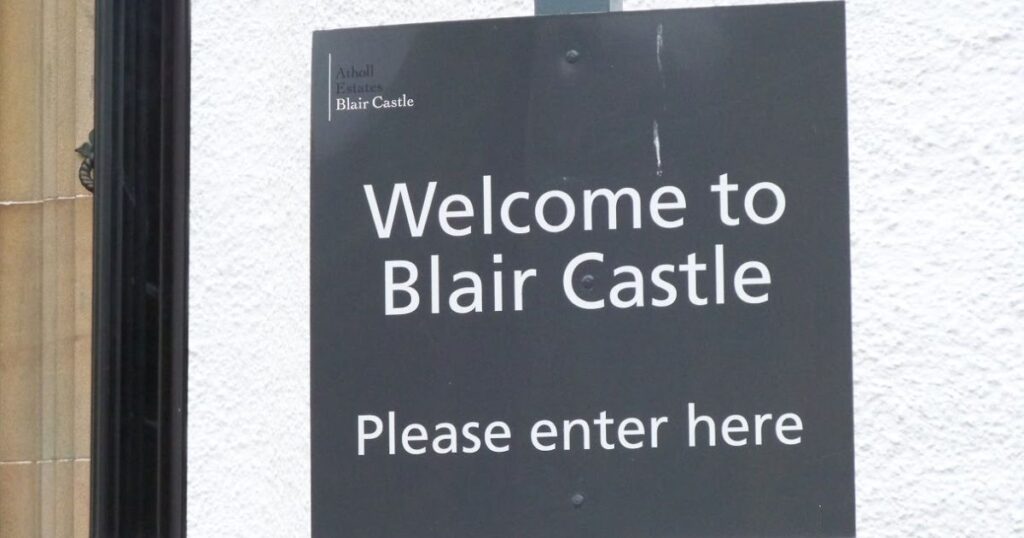
During my most recent visit, I snapped a photo of the entrance sign as I walked into the estate – that small moment of arrival always brings back the excitement of exploring one of Scotland’s most storied Highland castles.
Historical Snapshot
- Location: Perthshire, Scottish Highlands – near Pitlochry
- Founded: 1269
- Built By: John “The Red” Comyn (initial tower house)
- Later Owners: The Murray family, Earls & Dukes of Atholl
- Style: Medieval tower house, Georgian mansion, Victorian additions
- Famous For: Atholl Highlanders, grand ballroom, extensive estate
- Best For: History lovers, architecture fans, garden enthusiasts, Highland travelers
Planning a broader trip through the region? You can Explore Scottish Castles here.
Table of Contents
Historical Overview
Blair Castle has stood at the gateway to the Highlands for more than seven centuries, watching over clan battles, royal visits, Jacobite uprisings, and the transformation of Scotland from a feudal nation into a modern kingdom. Its story begins in the 1260s, when John Comyn seized land belonging to the Earl of Atholl and constructed a fortified tower to claim dominance over the region. The Atholls later reclaimed the estate and expanded that early tower into the grand white castle that now anchors the landscape of Perthshire.
If you’re interested in exploring more historic fortresses across the country, visit our full Castles in Scotland Guide.
During the medieval and early Renaissance periods, Blair Castle served as both a defensive stronghold and a seat of Highland power. Its strategic position along the main north-south route made it a coveted site, and it frequently found itself caught between rival clans and shifting political alliances.
In the 17th and 18th centuries, the castle entered one of its most dramatic phases. It played a prominent role in the Jacobite uprisings, alternately occupied by Jacobite and government forces. Bonnie Prince Charlie stayed here in 1745, and after the defeat at Culloden, British troops used the castle as a garrison—leaving musket marks and military modifications still visible today.
The 18th and 19th centuries marked a transformation from fortress to stately home. The Dukes and Earls of Atholl modernized the interiors, added genteel drawing rooms and grand staircases, and created the magnificent surrounding estate. It was during this era that Blair Castle became the headquarters of the Atholl Highlanders, the only private army in Europe, a tradition that continues today as a ceremonial regiment.
By the Victorian period, Blair had become a celebrated royal destination. Queen Victoria and Prince Albert were frequent guests, and her visit in 1844 elevated the status of the Atholl Highlanders, granting them official recognition. This royal connection further cemented Blair Castle’s place in Scottish cultural history.
Today, Blair Castle’s seven centuries of evolution remain visible in its architecture, interiors, and estate. Medieval fortification, Georgian refinement, Victorian romanticism, and modern conservation all intersect here, making it one of the most historically layered castles in Scotland.
Architectural and Design Highlights
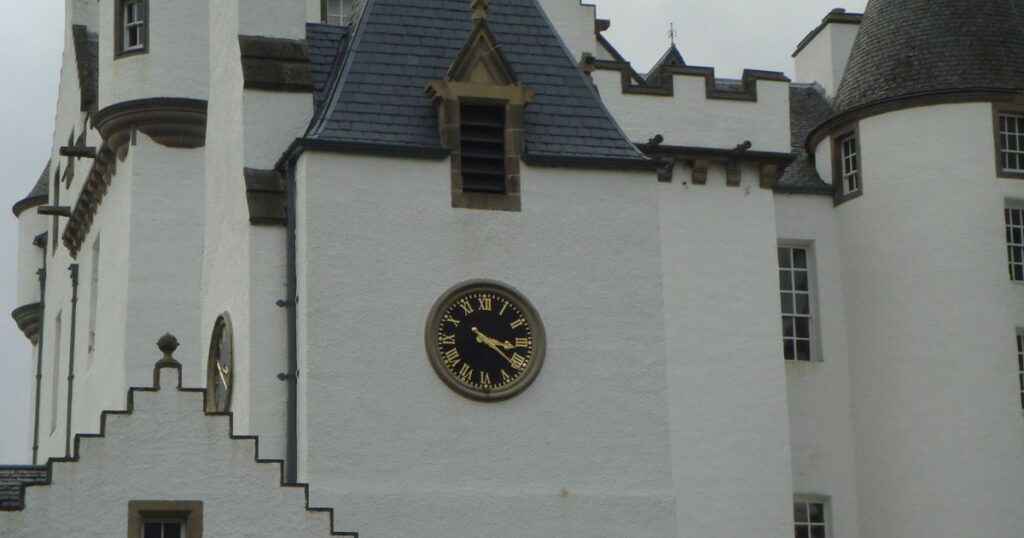
Blair Castle is an architectural tapestry woven from centuries of additions, renovations, and evolving tastes. What begins as a medieval tower house becomes, step by step, a Georgian mansion and later a Victorian showpiece. The result is a striking white-harled castle that feels both imposing and elegant – one of Scotland’s most recognizable silhouettes.
Fortified Medieval Tower
The earliest part of Blair Castle is the 13th-century tower that formed the core of the estate’s defenses. Its features include:
- Thick stone walls
- Small defensive windows
- A commanding position over strategic Highland routes
This tower set the foundation for the castle’s military significance and anchors the building to its medieval past.
17th–18th Century Expansions
As the Atholl family gained power, the castle evolved into a comfortable aristocratic residence. These periods introduced:
- Expanded domestic wings
- More refined private apartments
- Elegant reception rooms suited to a noble household
The medieval keep gradually blended with the symmetry and proportion of early modern architecture.
Georgian Refinements
The 1700s brought a desire for sophistication. The Dukes of Atholl added these elements to the castle.
- Bright, airy drawing rooms
- A grand staircase
- Balanced Georgian facades
- Classical interior touches
These additions softened Blair Castle’s defensive feel and made it a home fit for entertaining influential guests.
Victorian Romanticism
Queen Victoria’s patronage in the 19th century ushered in a new era of enhancement. Additions during that period included:
- Decorative plaster ceilings
- Grand public rooms
- Refreshed interiors in rich Victorian style
- Updates to the estate grounds to reflect Romantic tastes
It’s this layering of eras that gives Blair Castle its unique architectural personality – fortified yet stately, historic yet warmly habitable.
Inside Blair Castle: What You’ll See
Blair Castle’s interiors reflect centuries of Highland life, aristocratic tradition, and evolving tastes. Each room reveals a different chapter of Atholl family history.
The Victorian Ballroom
The largest room in the castle – and one of the grandest in the Highlands – features:
- Gleaming white walls trimmed with gold
- Dozens of stags’ heads lining the walls
- A musicians’ gallery
- Calcium-chloride chandeliers that create a soft glow
This spectacular ballroom hosts events to this day and embodies the Victorian love of grandeur.
The Drawing Rooms
These elegant spaces showcase Blair Castle’s transformation into a refined family home, with:
- Antique furniture
- Portraits spanning centuries
- Fine china displays
- Rich textiles and decorative objects
They offer a warm contrast to the older, fortified sections of the castle.
The Grand Staircase
A centerpiece of Georgian-era refinement, the staircase displays:
- A sweeping ascent
- Finely carved balustrades
- Portraits of Atholl ancestors
- Bright natural light illuminating the landings
It’s a beautiful architectural pivot between medieval and Victorian worlds.
The State Bedrooms
These historically rich rooms include:
- Canopied beds
- Period textiles
- Family heirlooms
- Personal artifacts belonging to generations of Atholl residents
They offer an intimate look at aristocratic daily life.
The Armoury Corridor
A nod to the castle’s military and Jacobite history, this corridor showcases:
- Muskets and swords
- Clan weaponry
- Displays interpreting the Atholl Highlanders’ legacy
It’s a vivid reminder of Blair Castle’s role in centuries of conflict.
The Portrait Galleries
These corridors hold one of the finest private portrait collections in Scotland, providing:
- Lifelike depictions of Scottish nobility
- Insight into fashion, power, and family lineage
- A visual timeline of the Atholls through the centuries
Altogether, Blair Castle’s interiors are a rare blend of domestic warmth and stately formality.
Blair Castle Grounds and Gardens
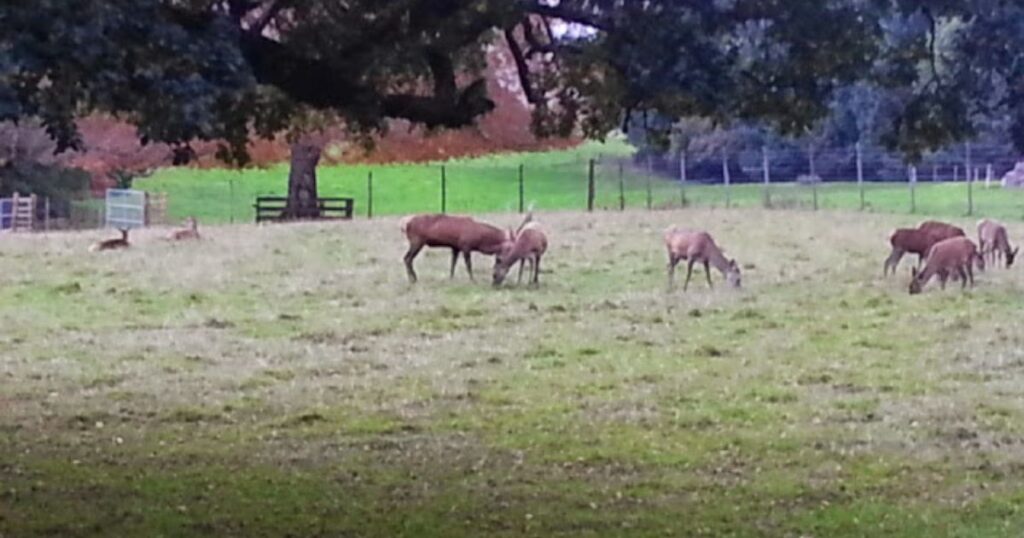
One of my favorite moments at Blair Castle happened out on the estate grounds, where I was lucky enough to spot – and photograph – some of the resident red deer. Encounters like this are part of what makes the estate feel alive and deeply connected to its Highland landscape.
The estate surrounding Blair Castle is nearly as impressive as the building itself. Spread across thousands of acres, the grounds showcase centuries of landscape design.
Hercules Garden
This restored 18th-century walled garden features:
- Formal ponds
- Sculptures and follies
- Manicured lawns
- Vibrant herbaceous borders
Its symmetrical layout offers some of the estate’s best views back toward the castle.
Diana’s Grove
A magical, tree-filled enclave, home to:
- Some of Britain’s tallest firs
- Quiet woodland paths
- A serene, cathedral-like atmosphere
It feels worlds away from the bustle of the main visitor areas.
The Red Deer Park
A highlight for wildlife lovers, this area includes:
- Herds of Highland red deer
- Educational signage
- Sweeping meadow views
It’s one of the estate’s most photographed features.
Estate Trails
Miles of walking routes allow visitors to explore:
- Forested areas
- Riverside stretches
- Highland vistas
Blair Castle’s grounds are a full-day experience for nature walkers and garden lovers.
Notable Figures and Events
Blair Castle’s long history includes many influential figures:
- The Murray Family (Earls & Dukes of Atholl) — owners since the 14th century
- Queen Victoria — stayed at Blair in 1844, granting the Atholl Highlanders their status
- John Comyn (“The Red Comyn”) — builder of the original tower
- Jacobite-era Atholls — several family members were deeply involved in the 1715 and 1745 uprisings
Major moments in history left marks on the estate — from Jacobite troop movements to Victorian royal visits.
Legendary Tales and Local Lore
Blair Castle brims with stories that add atmosphere to its long history.
Queen Victoria & the Atholl Highlanders
One of the castle’s most famous tales is Queen Victoria’s 1844 visit, during which she admired the disciplined Atholl Highlanders so much that she granted them official recognition – making them the only private army in Europe.
Ghostly Whispers
Whispers of a “Grey Lady” and faint footsteps in old corridors are among the castle’s lingering ghost stories, passed down through the estate for generations.
Jacobite Footprints
Legend has it that soldiers fleeing after the Battle of Culloden left hidden marks, carvings, and initials in the castle’s nooks – remnants of dramatic days.
Clan Feuds
Stories of clashes between rival clans, shifting loyalties, and political intrigue weave through Blair Castle’s long lineage.
These tales aren’t just folklore – they’re part of the emotional fabric of the castle.
Why Visit Blair Castle
Blair Castle stands apart from other Scottish castles thanks to its unique blend of medieval strength, aristocratic luxury, and Highland storytelling. Visitors should add it to their itinerary if they want:
- One of the most diverse architectural timelines in Scotland
- A rare look inside a lived-in noble residence
- Beautiful Victorian ballrooms and Georgian drawing rooms
- Extensive woodland trails and formal gardens
- Jacobite history brought vividly to life
- A castle with personality, charm, and seven centuries of stories
If you want history, architecture, nature, and legend all in one place, Blair Castle delivers it in abundance.
Visiting Blair Castle Today: What To Expect
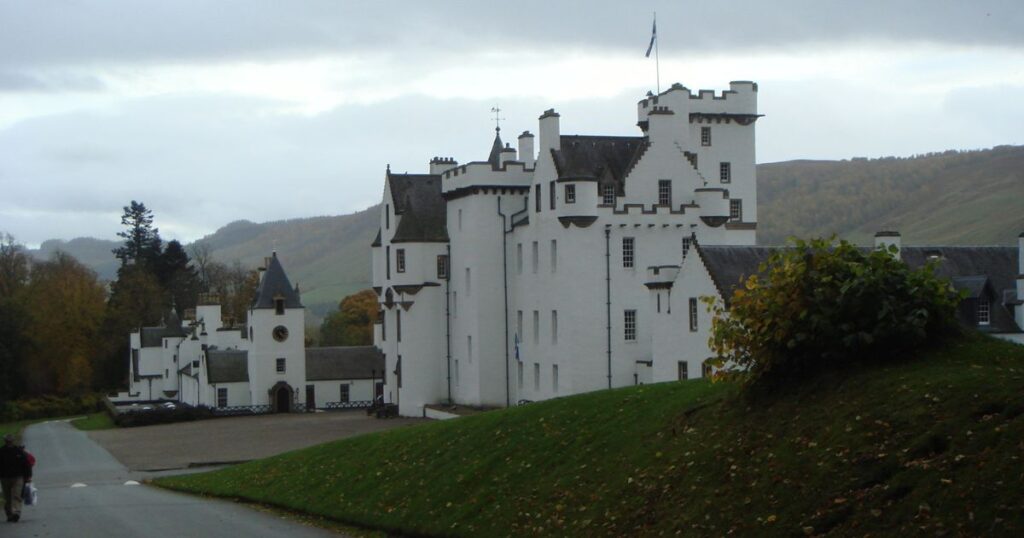
A visit to Blair Castle blends heritage, nature, and Highland beauty. Here’s what your experience will be like:
- Tours are self-guided, allowing visitors to explore at their own pace.
- Room attendants share detailed stories and answer questions.
- The ballroom, portrait galleries, and armoury corridor are must-see highlights.
- Gardens and woodland walks require extra time – they’re worth it.
- Photography is allowed in many areas, with some restrictions.
- Families love the wide-open spaces and wildlife viewing.
- Most visitors spend 2–3 hours here, or longer if exploring the estate trails.
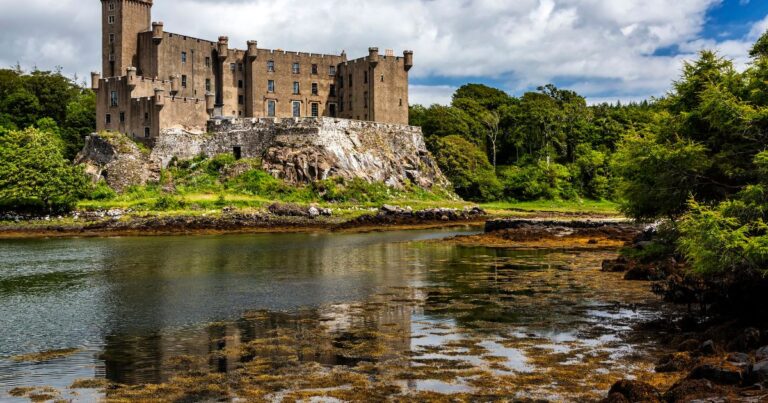
Blair Castle is one of Scotland’s most welcoming, immersive heritage sites. If you’re exploring more Highland castles during your trip, be sure to include Dunvegan Castle, the historic seat of Clan MacLeod on the Isle of Skye.
Getting There
Closest towns: Pitlochry (10 minutes), Inverness (90 minutes), Perth (45 minutes)
- By Car: Ample parking on-site
- By Train: Pitlochry station + short taxi
- By Bus: Routes from Pitlochry and Blair Atholl
- By Tour: Many Highlands itineraries include Blair Castle
Visitor Information
Hours, ticket details, and seasonal schedules can change – be sure to double-check the official website before planning your visit.
Hours
Open seasonally (spring–autumn), with varied opening hours.
Gardens sometimes operate slightly longer than interior times.
Admission
Separate or combined tickets for castle + gardens
Family & senior discounts available
Accessibility
- Wheelchair access to parts of the castle
- Gardens include some uneven pathways
- Staff assistance available
Nearby Attractions
- Killiecrankie Gorge
- Pitlochry
- Queen’s View
- House of Bruar
- Dunkeld Cathedral
Frequently Asked Questions About Blair Castle
Is Blair Castle worth visiting?
Yes – it’s one of Scotland’s most impressive and complete historic estates.
How long does it take to visit?
Most visitors spend 2-3 hours.
Are the gardens worth visiting?
Yes – the Hercules Garden alone is one of Scotland’s most beautiful walled gardens.
Do I need a guided tour?
Not required, but highly valuable. Guided tours and costumed interpreters add important historical context, especially in the Royal Palace and Great Hall.
Is Blair Castle accessible for those with mobility issues?
Partially. Some areas require steps, but accessible routes exist.
Can I take photos inside?
In most rooms, yes – but flash may be restricted.
Conclusion
Blair Castle blends medieval origins, Georgian refinement, Victorian romance, clan heritage, and one of the largest estates in the Highlands into a single unforgettable visit. Whether you’re here for the bright white façade, the 30 historic rooms, the Atholl Highlanders, or the peaceful Hercules Garden, Blair offers one of the most rewarding castle experiences in Scotland.
If you’re touring Scotland’s heritage estates, pair Blair Castle with Dunrobin Castle, Inveraray Castle, Edinburgh Castle, and our full Castles in Scotland Guide.