
Castles in Czech Republic: A Guide to the Best Castles, Châteaux & Hilltop Fortresses
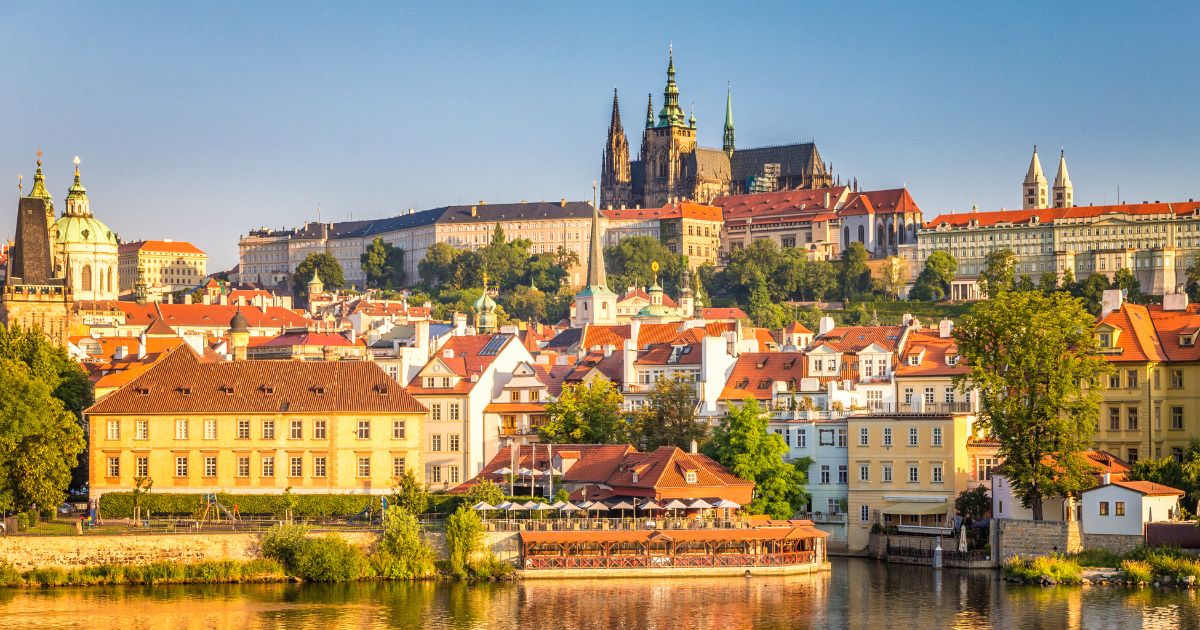
Castles in Czech Republic range from mighty Gothic fortresses and Renaissance châteaux to Baroque palaces, medieval hilltop ruins, and fairy-tale estates shaped by centuries of Central European history. From the powerful towers of Karlštejn to the Romantic silhouettes of Hluboká, the Czech landscape is one of Europe’s richest and most visually diverse castle regions.
Whether you’re wandering Prague’s monumental castle complex or exploring remote Bohemian forests and Moravian wine-country estates, Czech castles blend mythology, royal politics, architectural artistry, and unforgettable scenery.
After spending many winters exploring castles across Europe, the Czech Republic remains one of my favorite countries for atmospheric, deeply storied castle visits.
Key Takeaways
- The Czech Republic boasts one of Europe’s highest densities of castles and chateaux.
- Architecture ranges from medieval Gothic fortresses to Renaissance palaces, Baroque residences, and Romantic-era reconstructions.
- Top sites include Prague Castle, Karlštejn, Český Krumlov Castle, Hluboká Castle, Bouzov Castle, and Loket Castle.
- Many castles offer museums, night tours, seasonal events, gardens, and scenic viewpoints.
- Bohemia, Moravia, and Silesia each showcase distinct castle styles shaped by royal dynasties and strategic borders.
Historical Overview of Castles in Czech Republic
Castle-building in Czech lands reflects centuries of shifting empires, noble rivalries, religious wars, and artistic flourishing. Early fortifications began with Slavic hillforts, later expanded by Přemyslid rulers who built strategic stone castles to consolidate power across Bohemia.
The Middle Ages produced iconic Gothic masterpieces tied to royal authority, trade routes, silver mining, and ecclesiastical influence. The Renaissance ushered in Italianate elegance, transforming many fortresses into luxurious chateaux. The Baroque era followed with extravagant palaces reflecting Habsburg wealth. Romanticism in the 19th century revived medieval aesthetics, restoring or reinventing castles into dreamy, fairytale residences.
Today, Czech castles remain some of the best preserved in Europe – architectural time capsules spanning a thousand years.
Notable Eras & Architectural Evolution
Early Slavic Hillforts & Přemyslid Stone Castles (9th–12th Centuries)
Before formal “castles,” fortified hillforts (hradiště) defended early settlements. The Přemyslid dynasty later introduced stone keeps and fortified complexes to control Bohemia’s trade routes and frontier borders. Many modern castles sit atop these ancient foundations.
High Gothic Royal Castles (13th–14th Centuries)
The reign of Charles IV brought monumental Gothic architecture. Castles emphasized symbolic power, tall towers, ribbed vaulting, defensive walls, and richly decorated chapels. Karlštejn and Křivoklát exemplify this era’s grandeur.
Late Gothic & Hussite Fortification Upgrades (15th Century)
Religious wars prompted new military adaptations: fortified towns, thicker curtain walls, artillery towers, and complex gate systems. Castles like Tábor and Švihov were engineered for prolonged siege resistance.
Renaissance Chateaux & Noble Residences (16th Century)
Peace and prosperity shifted architectural priorities from defense to comfort. Italian architects introduced arcaded courtyards, ornamental sgraffito, gardens, and elegant interiors. Český Krumlov’s transformation belongs largely to this era.
Baroque Grandeur & Habsburg Influence (17th–18th Centuries)
The post–Thirty Years’ War era produced stately Baroque palaces with sweeping staircases, ornate salons, French and Italian gardens, and dramatic façades. Many medieval castles were remodeled into lavish noble estates.
Romantic Revival & 19th-Century Reimagination
Inspired by medieval nostalgia, aristocrats rebuilt or embellished castles with neo-Gothic towers, decorative battlements, and fairy-tale detailing. Hluboká Castle is the most famous example — transformed into a Czech Windsor.
Architectural Styles & Design Elements in Czech Castles
Czech castle architecture reflects more than a thousand years of shifting kingdoms, dynastic wealth, religious upheaval, and artistic reinvention. While the earliest fortifications were simple wooden hillforts, later rulers – especially the Přemyslids, Luxemburgs, and Habsburgs – introduced increasingly sophisticated stonework, Gothic grandeur, Renaissance comfort, and Baroque theatricality. Today, the Czech Republic offers one of Europe’s most varied castle landscapes, blending medieval fortresses, fairy-tale châteaux, forest-rimmed hunting lodges, and dramatic cliffside ruins.
Early Hillforts & Romanesque Stonework (9th–12th Centuries)
The earliest Czech fortifications were Slavic hillforts (hradiště), built of earthworks, wooden palisades, and defensive ditches. As royal and church power expanded, stone Romanesque castles emerged with thick walls, rounded towers, small arched windows, and central keeps designed for both defense and administration. Many later castles sit atop these early fortified sites, preserving the strategic logic of high ridgelines and river overlooks. Notable remnants appear at places like Přimda and early phases of Prague Castle.
High Gothic Castles of the Luxemburg Era (13th–14th Centuries)
The Gothic period produced some of the Czech lands’ most iconic castles, marked by pointed arches, ribbed vaulting, fortified gatehouses, and tall defensive towers. During the reign of Charles IV, castle architecture flourished, blending military function with regal prestige. Interiors featured chapels, great halls, and decorative frescoes, while exteriors emphasized verticality and powerful silhouettes. Karlštejn, perhaps the most famous, exemplifies this blend of royal symbolism and military engineering.
Late Gothic Fortification & Hussite-Era Innovation (15th Century)
Amid the religious conflicts of the Hussite Wars, castles adapted to new forms of siege warfare. Reinforced bastions, angled walls, and expanded outer baileys helped defend against early gunpowder weapons. Castle complexes became more layered and extensive, adding moats, artillery platforms, and multiple defensive rings. Strongholds such as Kost demonstrate this transitional architecture—massive, compact, and built to withstand prolonged siege.
Renaissance Châteaux & Noble Residences (16th Century)
As stability grew under the Habsburgs, the Czech nobility shifted from purely defensive castles to Renaissance palatial residences. Symmetry, arcaded courtyards, sgraffito facades, decorative gardens, and elegant loggias replaced stark medieval forms. Castles became cultural centers rather than military strongholds. Litomyšl Château and the Renaissance features at Český Krumlov are landmark examples of Italian-inspired artistry in a Bohemian context.
Baroque Rebuilding & Elaborate Court Culture (17th–18th Centuries)
The Baroque period transformed many medieval castles into grand estates emphasizing theatricality, ornate interiors, sculpted gardens, and chapel complexes. Curved facades, monumental staircases, and richly decorated halls showcased aristocratic power during the post–Thirty Years’ War era. Even older fortresses were refashioned into showpiece residences with extensive landscaping. Castles such as Vranov nad Dyjí embody this dramatic, sweeping Baroque vision.
Romantic Revival, Neo-Gothic & Picturesque Landscapes (19th Century)
The Romantic movement sparked a resurgence of medieval aesthetics, turning ruined castles into poetic landmarks and inspiring Neo-Gothic renovations. Pointed windows, battlements, and fantasy-inspired towers were added not for defense but for beauty. Parklands, winding paths, and ornamental lakes complemented this picturesque ideal. Hluboká Castle stands as the most striking example – an English Windsor-style dreamscape reimagined in Bohemia.
Industrial-Era Fortress Adaptation & Preservation (19th–20th Centuries)
As traditional castles lost strategic value, some were abandoned, others repurposed, and many restored as national monuments. Archaeological interest in the early 20th century sparked careful conservation campaigns, stabilizing ruins and recovering lost medieval elements. These efforts ensured that the Czech Republic retains one of Europe’s richest and most complete castle landscapes today, ranging from untouched ruins to lavish aristocratic palaces.
Famous Castle Regions in Czech Republic
The Czech Republic has one of the highest densities of castles, châteaux, and fortified manors in Europe – more than 2,000 by some counts. The country’s historical regions (Bohemia, Moravia, and Czech Silesia) offer dramatically different landscapes, architectural influences, and preservation styles. From medieval Gothic strongholds built by Bohemian kings to Renaissance châteaux shaped by Central European nobility, each region tells its own architectural and cultural story.
Central Bohemia (Prague Region & Surroundings)
Central Bohemia is the heart of Czech castle culture, home to some of the nation’s most iconic medieval fortresses and Gothic royal residences. These castles often appear atop forested hills, deep river valleys, or rocky outcrops close to Prague, making the region ideal for day trips.
What defines the region: powerful medieval fortifications, Gothic royal residences, deep forest landscapes, and easy accessibility.
Where you’ll find them: Karlštejn (the jewel of Bohemian Gothic), Křivoklát (royal hunting lodge and fortress), Český Šternberk, and the dramatic romantic ruins of Okoř.
South Bohemia (Lakes, Forests & Fairy-Tale Châteaux)
South Bohemia blends Renaissance elegance with natural beauty — shimmering lakes, rolling countryside, forests, and some of the most photogenic châteaux in Europe. Castles here often evolved from medieval fortresses into lavish noble residences, influenced by Italian Renaissance and Central European architectural trends.
What defines the region: Renaissance splendor, noble estates, painted façades, water-filled moats, and carefully landscaped parks.
Key highlights: Český Krumlov Castle (UNESCO), Hluboká Castle (Romantic Neo-Gothic masterpiece), and the fortress-town of Rožmberk.
West Bohemia (Spa Towns & Borderland Fortresses)
This region borders Germany and historically served as a defensive frontier. Castles here often rise above rivers or border passes and were shaped by centuries of shifting political control. West Bohemia is also spa country, giving castle visits a luxurious twist.
What defines the region: rugged frontier fortresses, hilltop ruins, German-influenced architecture, and elegant spa-town settings.
Where to go: Loket Castle overlooking a dramatic river bend, the vast ruins of Rabí, and Bečov nad Teplou, home to a significant reliquary treasure.
North Bohemia (Sandstone Cliffs, Rock Cities & Striking Ruins)
North Bohemia offers some of the most dramatic castle settings in the country. Castles and châteaux perch on sandstone pillars, volcanic hills, and rugged rock formations, creating cinematic landscapes seen almost nowhere else in Europe.
What defines the region: unique geological formations, panoramic rock cities, volcanic outcrops, and atmospheric ruins shrouded in forest.
Standout sites: Trosky Castle with its twin basalt towers, the clifftop ruins of Sloup Castle, and Frýdlant Castle with its fortress-palace blend.
Moravia (Wine Country, Noble Châteaux & Baroque Palaces)
Eastern Czech Republic (Moravia) offers a different rhythm: elegant Baroque châteaux, fortified manor houses, vineyards, and aristocratic estates influenced by Austria and Central Europe. Castles here tend to be more residential than militaristic.
What defines the region: noble gardens, vineyards, UNESCO-listed cultural landscapes, and refined palace architecture.
Top visits: Valtice and Lednice, part of Europe’s largest designed landscape; Pernštejn Castle, one of the best-preserved Gothic-Renaissance fortresses in Central Europe; and Bouzov Castle, a romanticized medieval revival.
Czech Silesia (Mountain Borders & Austro-Hungarian Influence)
Czech Silesia, bordering Poland, features smaller but historically important fortresses tied to mining, trade routes, and military defenses in the Jeseníky and Beskydy Mountains. Many sites reflect Austro-Hungarian influence and a mix of architectural traditions.
What defines the region: mountain passes, trade-route fortresses, Habsburg administrative centers, and lesser-known but culturally rich sites.
Where to go: The Baroque Jánský Vrch Castle, the Silesian-influenced Hradec nad Moravicí Château, and the atmospheric ruins of Sovinec.
Top Castles to Visit in Czech Republic
Karlštejn Castle
A Gothic masterpiece founded by Charles IV to guard the Imperial Regalia, famous for its tiered towers and richly decorated chapels.
Český Krumlov Castle
A vast Renaissance complex with Baroque gardens, red-roofed towers, and panoramic views of the Vltava River bend.
Hluboká Castle
A stunning Neo-Gothic fairytale palace inspired by Windsor Castle, surrounded by manicured parkland.
Křivoklát Castle
One of the oldest and most important royal residences — a fortress of thick towers, forest surroundings, and historic prisons.
Pernštejn Castle
A beautifully preserved medieval-to-Renaissance fortress known as the “marble castle,” perched dramatically on a rocky hill.
Bouzov Castle
A romantic Neo-Gothic castle beloved for its picture-perfect towers, drawbridge, and storybook atmosphere.
Prague Castle
A UNESCO crown jewel: the world’s largest ancient castle complex, home to St. Vitus Cathedral and centuries of Bohemian history.
Trosky Castle
Two volcanic towers – “the Maiden” and “the Crone” – create one of the most iconic silhouettes in Czech landscape history.
Frýdlant Castle
A hybrid medieval fortress and Renaissance chateau set above the Jizera Mountains, famous for its extensive preserved interiors.
Other Noteworthy Czech Castles
- Bečov nad Teplou – Riverside castle-chateau with a rich Baroque interior.
- Jindřichův Hradec – Renaissance palace with famed sgraffito.
- Velhartice Castle – Medieval ruins with dramatic mountain views.
- Nové Hrady – Baroque residence nicknamed “Czech Versailles.”
- Švihov Water Castle – Hussite-era fortress built for siege endurance.
- Kunětická Hora – Hilltop Gothic castle near Pardubice.
- Frýdštejn – Cliffside ruin in the Český ráj region.
- Grabštejn – Border castle with Renaissance and Baroque elements.
- Náměšť nad Oslavou – Elegant Renaissance residence in Moravia.
Castle Gardens & Landscapes in Czech Republic
Czech castle landscapes range from rugged volcanic cliffs to manicured Renaissance gardens and vast Baroque estates. The variety reflects centuries of shifting architectural tastes and the distinctive geography of Bohemia and Moravia.
Medieval Hilltop & Rocky Ridge Castles
Many early castles perch on basalt peaks, sandstone pillars, or forested hills for defensive visibility. These rugged settings now offer some of Europe’s most dramatic castle photography.
Where to experience it: Trosky, Bezděz, Rožmberk, Křivoklát.
Renaissance & Baroque Gardens
With warfare decreasing, noble families embraced symmetry, terraces, fountains, hedged parterres, and Italian-inspired ornamental gardens. These estates highlight the Czech Republic’s aristocratic golden age.
Where to experience it: Český Krumlov Baroque Garden, Kroměříž Chateau Gardens, Hluboká’s landscaped grounds.
River Valleys, Lakes & Forest Estates
Castles set beside water or integrated into forests gained scenic promenades, hunting parks, and lakeside viewpoints.
Where to experience it: Český Krumlov, Konopiště, Jindřichův Hradec, Lednice-Valtice Estate.
Romantic-Era Parks & Fairy-Tale Landscapes
19th-century castle owners added picturesque English-style parks with winding paths, bridges, follies, and artificial ruins.
Where to experience it: Hluboká, Bouzov, Lednice’s forested grounds.
Castle Restoration & Preservation in Czech Republic
The Czech Republic has one of Europe’s most extensive and active castle restoration programs. Centuries of war, fire, abandonment, and Habsburg land reforms left many castles in ruins — but modern conservation has revived hundreds of sites.
National Heritage & Post-Communist Restoration
After 1989, major efforts began to stabilize, restore, and reopen historic monuments. Many castles previously inaccessible under communism were conserved and returned to public life.
Authentic Preservation vs. Romantic Reconstruction
Czech restorers balance historical accuracy with preserving 19th-century Romantic additions that have become culturally iconic, especially at Hluboká, Bouzov, and Lednice.
Engineering Challenges
Common issues include moisture infiltration, forest encroachment, foundation erosion on volcanic rock, and winter freeze-thaw cycles that damage stonework. Laser scanning and drone surveys support modern stabilization.
Museums, Cultural Venues & Tourism
Many castles now house museums, historic apartments, armories, theaters, and galleries. Festivals, concerts, and night tours bring renewed life to once-ruined fortresses.
Heritage Stewardship
Restoration is overseen primarily by the National Heritage Institute (NPÚ – Národní památkový ústav).
Notable Figures & Events
- Charles IV – Builder of Karlštejn; key figure in Gothic expansion.
- Přemyslid Dynasty – Early rulers who established stone fortification networks.
- Habsburg Nobility – Transformed castles into Baroque palaces.
- Hussite Wars – Drove major defensive innovations.
- 19th-Century Aristocrats – Reimagined castles into Romantic chateaux.
Castles in Modern Czech Culture
Czech castles are deeply interwoven into the nation’s cultural identity, artistic imagination, and tourism landscape. Their Gothic silhouettes, Baroque facades, Renaissance courtyards, and dramatic hilltop views appear across film, literature, folklore, festivals, and modern storytelling. These castles are more than historical landmarks — they are living cultural spaces that host concerts, holiday events, craft fairs, and theatrical productions that revive centuries of tradition.
Film, TV & International Media
Many Czech castles serve as filming locations thanks to their remarkably preserved medieval and Renaissance architecture. Their atmospheric courtyards and wooded surroundings provide perfect backdrops for historical dramas, fantasy series, and period films. Well-known examples include:
• Karlštejn Castle – featured in Czech films and adaptations of the play Night at Karlštejn
• Český Krumlov Castle – used in international productions due to its massive Baroque theater and Renaissance façades
• Hluboká Castle – widely photographed and used in European romance and fairy-tale productions
Festivals, Seasonal Events & Living History
Castles throughout the Czech Republic host seasonal festivals, including:
• Medieval markets with costumed performers
• Summer Shakespeare theater festivals in castle courtyards
• Christmas markets inside historic walls
• Concerts, opera, and classical music evenings
• Historical reenactments and knightly tournaments
These events turn castles into cultural hubs that draw both locals and international visitors.
Folklore, Legends & Ghost Traditions
Czech folklore is filled with stories of mysterious ladies in white, hidden treasures, cursed lords, and ghostly apparitions. Many castles preserve unique legends tied to local identity.
Examples include:
• The White Lady ghost of many Bohemian castles
• Treasure legends connected to ruined hillforts
• Mythic stories surrounding Karlštejn’s sacred relics
These tales appear in children’s stories, oral tradition, and regional celebrations.
Tourism & National Identity
Castles symbolized resilience through centuries of shifting borders and empires. Today they represent:
• The heritage of the Bohemian Kingdom
• Pride in Renaissance and Baroque artistry
• The Czech Republic’s reputation as one of Europe’s most castle-rich countries
Their prominence in national parks, UNESCO sites, and heritage routes keeps them central to modern Czech tourism.
Cultural Traditions Linked to Castles
Czech castles remain active guardians of tradition, blending medieval customs, local folklore, religious events, and community celebrations.
Seasonal & Medieval Festivals
Many castle towns celebrate local history with events featuring:
• Costumed pageants
• Knightly duels and jousting demonstrations
• Medieval music and artisan craft markets
• Fire shows, lantern walks, and night tours
Notable examples include events at Karlštejn, Loket, Trosky, and Český Krumlov.
Religious Processions & Pilgrimage Traditions
Some castles and châteaux host or border important pilgrimage routes. Annual festivals often weave together sacred and secular customs, particularly around Easter and local saint feast days.
Folk Music, Theater & Outdoor Performances
Czech castles are famous for summer theater traditions. The most iconic is the Summer Shakespeare Festival, held in the courtyards of major castles and palaces. Outdoor concerts, opera, and folk dance performances enliven sites throughout the warmer months.
Culinary Heritage & Craft Traditions
Castle regions frequently showcase regional foods, wines, and artisanal goods. Visitors often encounter:
• Mead tastings
• Local pastries and medieval-style food stalls
• Traditional ceramics, wooden toys, lacework, and Moravian folk embroidery
These traditions preserve local identity while enriching modern tourism.
Planning Your Castle Tour in Czech Republic
The Czech Republic is compact and very easy to navigate, making it one of Europe’s best countries for castle-focused travel. Whether you’re exploring by car, train, or guided tour, these planning insights help simplify your trip.
Bohemian Highlights
Prague Castle → Karlštejn → Konopiště → Český Šternberk
Perfect for first-time visitors who want major Gothic and Renaissance sites near the capital.
South Bohemia Castle Circuit
Český Krumlov → Hluboká → Rožmberk → Třeboň
A mix of fairy-tale châteaux, river valleys, and scenic Renaissance towns.
North Bohemia Medieval Route
Bezděz → Trosky → Kost → Frýdlant
Ideal for travelers interested in rugged ruins and dramatic landscapes.
Moravian Heritage Route
Špilberk → Pernštejn → Vranov nad Dyjí → Buchlov
Showcases baroque palaces, Gothic fortresses, and Moravian cultural history.
Practical Tips For Visiting Castles In Czech Republic
Castle visits often involve hills, forests, stairs, and large palace complexes. These tips help visitors maximize comfort and enjoyment.
Trip Planning Essentials
Regions to consider:
Prague and Central Bohemia for Gothic and Renaissance landmarks; South Bohemia for fairy-tale châteaux; Moravia for Baroque palaces and fortress ruins; North Bohemia for dramatic volcanic landscapes.
Getting around:
Trains connect major towns, but many castles sit in rural or forested areas best reached by car. Parking near historic centers may require short walks.
When to visit:
April–October offers ideal conditions. Summer brings festivals and long daylight. Winter may have reduced hours or limited access for hilltop ruins.
Book ahead:
Popular sites such as Prague Castle, Karlštejn, Hluboká, and Český Krumlov can require timed entry during peak season.
On-Site Advice & Insider Insights
Expect stairs and steep paths:
Hilltop castles like Bezděz and Trosky involve steep climbs. Wear supportive shoes.
Photography tips:
Morning and late afternoon give soft light for Gothic silhouettes and castle courtyards. Český Krumlov’s riverbend views are stunning at golden hour.
Check for guided tours:
Many interiors—especially Renaissance and Baroque palaces—are only accessible on guided tours, often offered in multiple languages.
Accessibility considerations:
Medieval sites frequently have narrow passages, uneven floors, and limited wheelchair access.
Food & facilities:
Larger castles offer cafés and rest stops, but rural sites may have none. Plan snacks for day trips.
Frequently Asked Questions About Castles In Czech Republic
How many castles are there in the Czech Republic?
Over 2,000 — one of the highest concentrations in Europe.
What is the most famous castle in the Czech Republic?
Prague Castle, followed by Karlštejn and Český Krumlov.
Are castles interiors open year-round?
Some are, but many reduce hours from November–March.
Which Czech castle has the most impressive interior?
Hluboká Castle is renowned for its richly decorated Tudor-style interiors, grand halls, and impressive art collections.
Can you stay overnight in a Czech castle?
A few châteaux and historic estates have been converted into boutique hotels, especially in South Bohemia and Moravia.
What makes Czech castles unique compared to the rest of Europe?
Their combination of Gothic fortresses, Renaissance noble estates, preserved Baroque châteaux, and dramatic volcanic-peak ruins creates exceptional visual diversity.
Which Czech castle is best for photography?
Trosky for dramatic silhouettes, Český Krumlov for riverbend panoramas, and Hluboká for fairy-tale architecture.
Conclusion
Exploring the castles in the Czech Republic is a journey through Gothic strongholds, Renaissance chateaux, Baroque palaces, cliffside ruins, and Romantic fairy-tale residences. Whether perched above river bends or rising from Bohemian forests, these castles offer unforgettable scenery and centuries of storytelling.
Wherever your travels take you — Bohemia, Moravia, or beyond — Czech castles promise beauty, history, and endless discovery.