
Castles in Italy: Explore Italy’s Medieval Fortresses, Palaces & Hilltop Strongholds
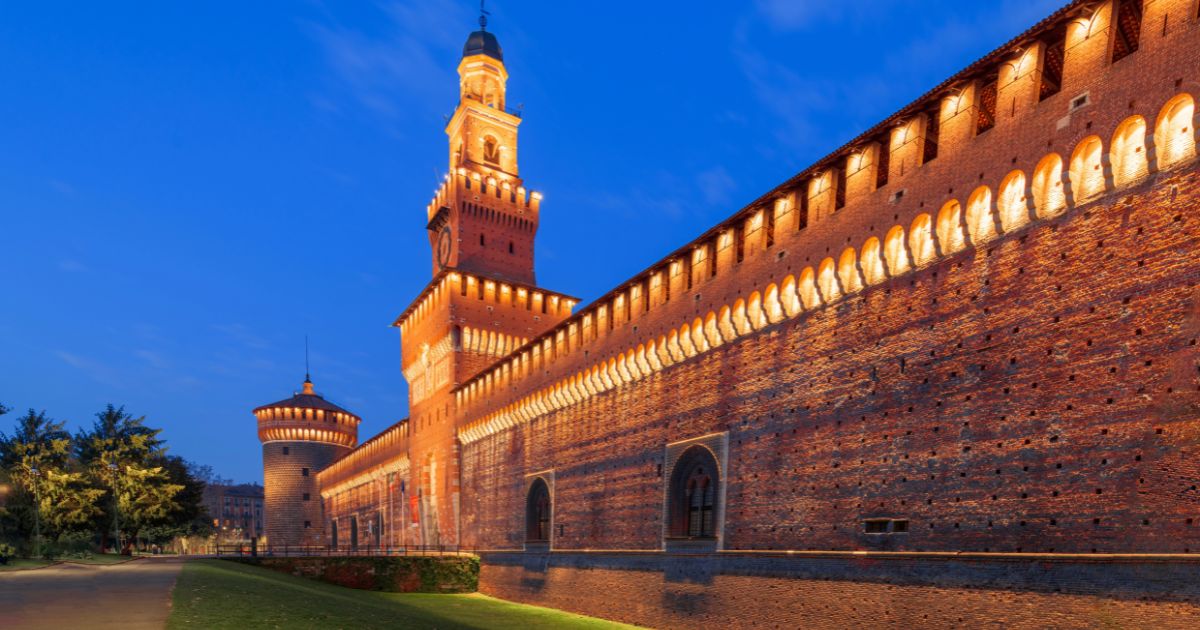
Castles in Italy span more than two thousand years of history, rising from Alpine ridgelines, Tuscan hill towns, volcanic lakes, coastal cliffs, and ancient Roman frontiers. From medieval fortresses and Renaissance palaces to fairy-tale strongholds and seaside citadels, Italy’s castles reveal a layered story of emperors, dukes, popes, and warring city-states.
Each region offers its own distinct architectural flavor – Norman keeps in the south, Venetian defenses in the northeast, Sforza strongholds in Lombardy, and impossibly romantic towers overlooking vineyards, lakes, and olive-covered hills.
Whether you’re wandering turreted fairy-tale castles in the north, exploring cliff-top ruins in Sicily, or stepping inside Renaissance palaces filled with frescoes, the castles in Italy offer some of the most atmospheric historic experiences in Europe.
After spending many winters exploring European castles, Italy remains one of the most surprising – unexpectedly castle-dense, dramatically varied, and bursting with regional identity.
Key Takeaways
- Italy has thousands of castles, fortresses, palaces, and walled towns – many dating from Roman, Lombard, Norman, and medieval eras.
- Castle styles vary dramatically by region: Alpine fortresses in the north, Norman strongholds in the south, Venetian defenses along the coast, and Renaissance palaces in central Italy.
- Some of Italy’s most iconic castles include Castel del Monte, Sforza Castle, Castello di Miramare, Castello di Fenis, Castelvecchio, and Aragonese Castle.
- Expect medieval towers, frescoed halls, courtyards, moats, fortified bridges, ancient walls, and sweeping panoramas.
- Many castles host museums, gardens, concerts, wine tastings, night tours, and seasonal cultural events.
Historical Overview of Castles in Italy
Italy’s castle history stretches back to ancient Rome and continues through medieval city-states, Norman invaders, Renaissance dynasties, and the unification of Italy. Unlike many European countries where castles follow a mostly linear medieval evolution, Italy’s fortifications reflect shifting empires, powerful families, and remarkable regional diversity.
In the north, Alpine passes were fortified by Romans, Lombards, and medieval dukes guarding trade routes. Central Italy saw fortified hill towns built by rival city-states like Florence, Siena, Pisa, and Lucca. The south contains massive Norman and Swabian fortresses, including enigmatic Castel del Monte, while Sicily blends Greek, Arab, Norman, and Spanish influences.
By the Renaissance, Italian castles evolved into grand palaces – richly decorated residences that showcased power and artistry rather than military might.
Today, Italy’s castles remain spectacular gateways to its layered, multicultural past.
Notable Eras & Architectural Evolution
Italy’s fortifications span more than two millennia, shaped by empires, invasions, and ruling dynasties.
Roman & Late Antique Fortifications (1st–6th Centuries)
Rome built fortified towns, military camps, and walls across the peninsula. While not “castles” in the medieval sense, their engineering – thick stone walls, towers, and strategic hilltop placement – influenced later medieval defenses.
Lombard & Early Medieval Strongholds (6th–10th Centuries)
After Rome fell, the Lombards built fortified duchies centered in the north and center of Italy. Their early stone fortifications and hilltop strongholds set the stage for future castle development.
Norman & Swabian Fortresses (11th–13th Centuries)
Southern Italy and Sicily flourished under Norman rule. Massive stone fortresses, coastal citadels, and square-towered keeps dominated the landscape. Under Emperor Frederick II, the region saw the construction of innovative castles like Castel del Monte.
Communal & City-State Fortifications (12th–14th Centuries)
Central and northern Italy were shaped by rival city-states – Florence, Siena, Milan, Verona, Venice – each building fortified walls, towers, and castles to defend territory and assert dominance. This era produced Italy’s most iconic medieval skylines.
Renaissance Palaces & Fortress-Residences (15th–17th Centuries)
As warfare evolved, castles became palatial residences showcasing frescoes, grand halls, gardens, and refined architecture. Defensive features remained, but artistry took center stage.
19th-Century Romanticism & Restoration
Italy saw renewed appreciation for medieval heritage, leading to restorations and castle-inspired villas, especially in the north.
Architectural Styles & Design Elements in Italian Castles
Italian castle architecture is among the most diverse in Europe, shaped by thousands of years of conquest, local rivalries, independent city-states, and shifting artistic movements. From Roman military engineering to Lombard fortifications, Norman expansions, medieval commune towers, Renaissance courts, and Baroque reinterpretations, Italy’s castles reflect a continuous dialogue between warfare, politics, and art. This mix of defensive innovation and aesthetic refinement creates castle landscapes unlike anywhere else on the continent.
Roman Foundations & Early Fortified Structures
Long before medieval castles appeared, the Romans built fortified camps, watchtowers, walled towns, and strategic strongholds across the peninsula. While few complete Roman forts survive, their influence shaped later Italian castle-building. Grid-like layouts, defensive walls with towers, and engineered gates were often repurposed by medieval rulers. Many castle towns in Italy – such as Verona and Aosta – incorporate Roman walls and foundations that became the blueprint for later fortifications.
Lombard Fortifications (6th–8th Centuries)
After the fall of Rome, the Lombards introduced hilltop fortresses, stone ramparts, and military outposts across northern and central Italy. These early medieval structures prioritized height, visibility, and defensible terrain. Built from thick local stone and irregular masonry, Lombard forts served as both military posts and administrative centers for regional dukes. Their rugged, compact forms influenced later medieval castle design, especially in regions like Lombardy and Friuli.
Norman Castles in Southern Italy & Sicily (11th–12th Centuries)
The Normans brought advanced military engineering to southern Italy, introducing massive stone keeps, polygonal towers, and strong concentric defenses reminiscent of northern Europe but blended with Arabic and Byzantine influences. Their castles often featured large courtyards, fortified gates, and monumental halls that reflected both martial strength and cultural sophistication. In Sicily especially, Norman architecture merged with Islamic craftsmanship, resulting in richly decorative geometric elements and pointed arches.
Communal & Feudal Castles of Medieval Italy (12th–14th Centuries)
Italy’s unique political landscape – divided into independent communes, noble families, and warring city-states – produced a remarkable variety of medieval castles. Unlike the symmetrical fortress complexes of northern Europe, Italian castles often followed irregular footprints shaped by rocky cliffs, densely built towns, or ancient foundations.
Two key types emerged:
Hilltop Strongholds: Perched above valleys and trade routes, these castles featured tall defensive walls, narrow passages, and strategic watchtowers. They dominated areas such as Tuscany, Umbria, and Emilia-Romagna.
Urban Castles & Tower Houses: In city-states like Siena, San Gimignano, and Bologna, noble families constructed tall tower houses as both residences and symbols of power. Their verticality remains one of Italy’s most distinctive medieval styles.
Renaissance Castle-Palaces (15th–17th Centuries)
As gunpowder diminished the value of traditional medieval fortifications, Italian castles evolved into Renaissance palaces emphasizing beauty, symmetry, and courtly life. Defensive towers became decorative. Interior courtyards were redesigned with frescoes, loggias, and classical columns. Elaborate gardens replaced outer baileys. These castle-palaces served as luxurious residences for dukes, marquises, and papal families in regions such as Lombardy, Lazio, and Tuscany.
Star Forts & Military Bastions (16th–17th Centuries)
Italy played a major role in the development of “trace italienne” fortifications – angular, star-shaped bastion systems designed to withstand artillery. While technically not castles in the medieval sense, these military complexes influenced the landscapes around older fortresses, often incorporating or replacing earlier medieval walls. Examples appear throughout Piedmont, Veneto, and the northern borderlands facing Austrian or Spanish threats.
18th–19th Century Romantic Revival
A renewed fascination with medieval imagery swept across Italy during the Romantic era. Ruins were documented, partially restored, or transformed into picturesque estates. Aristocratic families modernized interiors while preserving “medieval” silhouettes. Decorative battlements, Gothic motifs, and landscaped gardens complemented surviving medieval structures. These restorations were not always historically accurate, but they preserved many castles that might otherwise have fallen into ruin.
Famous Castle Regions in Italy
Italy’s castles are as diverse as its landscapes – Alpine fortresses guarding mountain passes, Renaissance palace-castles built for powerful dukes, volcanic-crag citadels in the south, lakeside strongholds in the north, and coastal defenses shaped by centuries of maritime conflict. Each region reflects a different chapter of Italy’s political fragmentation, artistic innovation, and strategic geography.
Northern Italy (Alpine Castles, Medieval Fortresses & Border Strongholds)
Northern Italy’s castles reveal the constant tug-of-war between regional powers, Holy Roman Empire influence, and strategic control of Alpine routes. Expect turreted fortresses, river-valley lookout towers, and beautifully preserved castles framed by dramatic mountain scenery.
Where you’ll find these: Valle d’Aosta (Fénis, Issogne, Verrès), Piedmont (Ivrea, Masino), and the Trentino-South Tyrol region (Tirolean castles, Castel Beseno, Castel Roncolo).
Lombardy & Lake Regions (Waterfront Castles & Fortress Towns)
Italy’s northern lakes – Garda, Como, Iseo – are dotted with some of the country’s most picturesque strongholds. These castles protected trade routes and medieval townships and now sit beside deep-blue waters backed by Alpine foothills.
Where to visit: Scaliger Castle (Sirmione), Malcesine Castle, and the fortresses surrounding Lake Garda and Lake Como.
Emilia-Romagna & Veneto (Renaissance Fortresses & Noble Residences)
These prosperous regions showcase Italy’s transition from medieval strongholds to Renaissance courts. Powerful families – Estensi, Gonzaga, della Scala – built castles that evolved into elegant palaces with frescoes, gardens, and ceremonial halls.
Highlights include: Este Castle (Ferrara), Castelvecchio (Verona), Mantua’s fortified palace complex, and numerous walled towns such as Montagnana.
Tuscany & Umbria (Hilltop Castles, Medieval Towers & Walled Cities)
Central Italy’s rolling hills hide a vast number of fortress towns and rural keeps. Castles here protected rival city-states – Florence, Siena, Pisa, Perugia – and many remain remarkably intact, surrounded by vineyards, olive groves, and ancient stone villages.
Key areas: Monteriggioni’s intact medieval walls, Castello di Brolio in Chianti, Poppi Castle in the Casentino, and Assisi/Spoleto hillforts in Umbria.
Rome & Lazio (Papal Fortresses & Coastal Citadels)
Lazio blends imperial history with the fortified architecture of noble families and the Papal States. Many castles here reflect politics, power, and artistic patronage rather than simple military necessity.
What to see: Castel Sant’Angelo in Rome, Ostia’s Renaissance fortress, Bracciano Castle, and the Orsini-Colonna strongholds scattered across the region.
Southern Italy (Norman Castles, Swabian Architecture & Coastal Defenses)
The south offers some of Italy’s most extraordinary fortresses, shaped by Norman kings, Frederick II’s Swabian empire, and later Spanish rule. These castles often sit on volcanic ridges, limestone cliffs, or deep bays once patrolled by pirates and rival fleets.
Where to explore: Castel del Monte (Puglia), Castello Svevo in Bari and Trani, the Norman-Arab castles of Sicily (Caccamo, Maniace), and coastal citadels in Calabria and Campania.
Sicily (Arab-Norman Architecture & Unique Island Fortresses)
Sicily’s castles reflect centuries of multicultural influence – Byzantine, Arab, Norman, Swabian, and Spanish. Expect massive walls, geometric towers, island citadels, and fortresses perched above sun-bleached coastal towns.
NOTE: Sicily has an unusually rich number of castles, many tied to legendary rulers including Roger II, Frederick II, and the Spanish viceroys.
Sardinia (Phoenician Towers, Medieval Fortresses & Coastal Watchtowers)
Sardinia’s castle tradition is distinctive: rugged medieval fortresses inland, Catalan-Aragonese citadels along the coast, and thousands of nuraghi (Bronze Age towers) that create some of the most ancient fortified landscapes in Europe.
Key highlights: Castello di Bosa, Castle of Sanluri, and the fortified upper town of Cagliari.
Top Castles to Visit in Italy
Castel del Monte (Apulia)
A mysterious octagonal masterpiece built by Frederick II, famous for its perfect geometry, symbolism, and hilltop presence.
Castello Sforzesco (Milan, Lombardy)
A vast Renaissance fortress and ducal residence filled with museums, courtyards, and artworks—including pieces linked to da Vinci.
Castello di Miramare (Trieste, Friuli-Venezia Giulia)
A 19th-century seaside castle with white limestone façades and panoramic terraces overlooking the Adriatic.
Castel Sant’Angelo (Rome, Lazio)
Originally Hadrian’s Mausoleum, later a papal fortress and escape route hub—layers of Roman, medieval, and Renaissance history in one site.
Castelvecchio (Verona, Veneto)
A spectacular medieval red-brick stronghold with a fortified bridge crossing the Adige River.
Castello di Fenis (Aosta Valley)
A fairy-tale Alpine castle with towers, frescoes, and photogenic courtyards set among mountain landscapes.
Castello di Monteriggioni (Tuscany)
A perfectly preserved circular walled fortress village dominating the Tuscan hills along the Via Francigena.
Castello di Malaspina (Bosa, Sardinia)
A dramatic hilltop fortress overlooking colorful houses, the Temo River, and Sardinia’s rugged west coast.
Castello di Torrechiara (Parma, Emilia-Romagna)
A golden-stone castle famous for its “Room of the Golden Chamber” and romantic Renaissance frescoes.
Castello Estense (Ferrara, Emilia-Romagna)
A moated brick fortress at the center of Ferrara, blending military might with princely Renaissance elegance.
Other Noteworthy Italian Castles
- Castel Brando (Veneto) – A vast hilltop complex with panoramic lifts and museum spaces.
- Aragonese Castle (Ischia) – A dramatic island fortress accessed by a causeway.
- Castel Thun (Trentino) – Alpine manor-castle with period interiors and orchards.
- Castello di Sammezzano (Tuscany) – Orientalist 19th-century fantasy palace (rarely open).
- Castello di Grinzane Cavour (Piedmont) – Wine-country castle tied to the Risorgimento.
- Castel Pergine (Trentino) – Atmospheric medieval castle with lake and mountain views.
- Castello Brown (Portofino, Liguria) – A coastal fortress overlooking Portofino’s iconic harbor.
- Castello di Gradara (Marche) – Famous as the setting of Dante’s tragic Paolo & Francesca story.
- Rocca Scaligera (Sirmione, Lake Garda) – A postcard-perfect fortress surrounded by water.
- Castel Pietraio (Tuscany) – A romantic stone castle set among vineyards and forests.
- Castello di Avio (Trentino) – One of Italy’s oldest castles, with medieval fresco cycles.
Castle Gardens & Landscapes in Italy
Italy’s castle landscapes are exceptionally varied, shaped by Alpine ridges, Tuscan hills, northern lakes, volcanic crags, coastal cliffs, and fertile plains once controlled by medieval city-states.
Italian castles did not typically feature elaborate gardens during their earliest defensive phases, but many later evolved into noble residences with terraced gardens, Renaissance courtyards, orchards, and landscaped grounds that reflected Italy’s emerging architectural styles. Today, visitors encounter everything from rugged fortress settings to refined villa-like estates, forming one of the richest landscape palettes of any castle tradition in Europe.
Mountain & Alpine Settings
Northern Italy’s medieval fortresses often occupy dramatic, elevated terrain – sheer cliffs, narrow ridges, and rocky peaks that provided natural defense along historic trade routes. These landscapes emphasize raw topography rather than cultivated gardens. Many castles seem to grow out of the mountains themselves, creating unforgettable silhouettes against the Alpine skyline.
Where to see it:
Castel Beseno overlooking the Adige Valley, Castel Roncolo near Bolzano, and fortresses throughout Trentino-Alto Adige.
Renaissance Terraces, Courtyards & Formal Gardens
As warfare declined and noble families transformed castles into residences, Italian garden design flourished. Terraces, water features, geometric layouts, and formal courtyards became central to Italian castle estates – especially during the Renaissance. These gardens often merged classical Roman influences with new landscape principles that would later inspire all of Europe.
Where to see it:
Castello di Miramare’s terraced botanical gardens, the landscaped grounds of Castello Estense in Ferrara, and Renaissance-style gardens surrounding northern Italian manor-castles.
Tuscan & Umbrian Hillside Castles
Some of Italy’s most atmospheric castle settings rise above vineyards, olive groves, and rolling hills. Instead of formal gardens, these landscapes showcase sweeping panoramas and agricultural terraces that reveal medieval settlement patterns. Many castles here were fortified towns, blending walls, towers, and village streets into the surrounding countryside.
Where to see it:
Monteriggioni’s hilltop crown, Castiglione del Lago overlooking Lake Trasimeno, and walled villages throughout Chianti.
Coastal & Lakeside Castle Environments
Italy’s coastline and lakes host some of the country’s most iconic castle landscapes. These fortresses guarded maritime republics, shipping lanes, and medieval port towns. Their settings rely on natural beauty—limestone cliffs, turquoise bays, and glittering lake waters—rather than cultivated gardens.
Where to see it:
Castello Aragonese on Ischia, Castello Scaligero rising from Lake Garda, and coastal fortresses in Liguria and Puglia.
Urban Castle Grounds & Noble Estates
Some Italian castles sit within lively cities and became palatial complexes surrounded by courtyards, arcades, gardens, and artistic installations. These urban landscapes often reflect centuries of adaptive reuse – from military citadels to ducal residences to museums and cultural centers.
Where to see it:
Castel Sant’Angelo (Rome), Castello Sforzesco (Milan), and Castello del Valentino (Turin).
Castle Restoration & Preservation in Italy
Italy’s castles have survived empires, earthquakes, warfare, and periods of abandonment. Today, restoration and preservation combine archaeology, engineering, and art conservation to protect these structures for future generations.
Restoration Movements from the 19th Century Onward
The Romantic era sparked renewed appreciation for medieval architecture, prompting restorations that stabilized ruins, reconstructed battlements, and revived castle interiors. Many noble families restored their ancestral fortresses, while new owners reimagined them as residences or patriotic monuments.
Modern Conservation Challenges
Italy’s castles face diverse threats – seismic activity in central Italy, coastal erosion in the south, humidity affecting frescoes and plaster, and simple aging of centuries-old stone. Conservation teams use a combination of traditional methods (such as lime mortar repointing) and modern tools like 3D modeling, drone surveys, and ground-stability mapping.
Rehabilitation & Adaptive Reuse
Many castles now serve as museums, cultural centers, event venues, or luxury hotels. Restoration efforts often balance historical integrity with accessibility—adding lighting, safe footpaths, stabilizing towers, and restoring frescoed chambers while preserving original materials.
Public & Private Stewardship
Italy’s castles are preserved through a mix of regional governments, the Ministry of Culture, UNESCO programs, private foundations, and family estates. Some castles thrive under active tourism management; others rely on ongoing fundraising or archaeological projects.
For official information on monumental heritage, restoration projects, and Italy’s protected sites, visit Italy’s Ministry of Culture (Ministero della Cultura), which oversees preservation efforts across the country.
Notable Figures & Events
These historical figures and events shaped the construction, expansion, and preservation of castles throughout Italy:
- Frederick II (Holy Roman Emperor) – Commissioned Castel del Monte, Italy’s most mysterious and mathematically precise fortress-palace.
- The Sforza Family (Milan) – Powerful Renaissance rulers responsible for transforming Castello Sforzesco into a political and artistic powerhouse.
- The Medici Family (Tuscany) – Patrons of fortified villas and Renaissance court culture.
- The Este Family (Ferrara & Modena) – Noble patrons who developed moated fortresses like Castello Estense into refined Renaissance residences.
- The Normans (Southern Italy & Sicily) – Introduced massive stone keeps, military innovation, and a network of coastal and hilltop castles still dominant today.
- The Venetian Republic – Constructed sophisticated coastal fortresses across the Adriatic and Northeastern Italy, including Verona’s Castelvecchio.
- The Papal States – Strengthened central Italian fortifications, including Castel Sant’Angelo, to maintain political and religious control.
- The Italian Wars (15th–16th Centuries) – Triggered rapid military upgrades, expanding bastions, artillery towers, and fortified city walls.
- Napoleonic Rule (1796–1814) – Reorganized defensive networks and repurposed fortresses for administrative or military use.
- 19th-Century Unification (Risorgimento) – Many castles were restored, repurposed, or symbolically tied to emerging national identity.
Castles in Modern Italian Culture
Italian castles remain deeply woven into the country’s artistic, cinematic, and cultural imagination. Their dramatic silhouettes appear in films, literature, operas, historical festivals, and national tourism campaigns.
Film, TV & Media
Many castles serve as filming locations for historical dramas, fantasy series, and international productions requiring atmospheric backdrops. Examples include:
- Castel del Monte – Featured in The American, documentaries, and global UNESCO campaigns
- Castello Orsini-Odescalchi – A glamorous venue for high-profile events and film shoots
- Castello di Miramare – Appears in Italian cinema and European historical series
- Castel Sant’Angelo – Iconic backdrop in countless films set in Rome
Cultural Events & Festivals
Italian castles host medieval reenactments, opera performances, Renaissance fairs, wine tastings, equestrian shows, and seasonal festivals. These events showcase the intersection of Italy’s artistic traditions and historic settings.
Tourism & National Identity
Castles contribute to regional storytelling – from the Norman legacy in Sicily to the Renaissance court culture of central Italy. They appear in branding, literature, and heritage programs that highlight Italy’s layered history.
Cultural Traditions Linked to Castles
Italian castles preserve centuries of tradition tied to feudal history, folklore, regional identity, and family dynasties.
Folklore & Legends
Stories of ghosts, noble families, hidden passages, and enchanted towers abound. Tuscany, Umbria, and Sicily are especially rich in castle legends tied to medieval intrigue and regional myths.
Festivals & Historical Reenactments
Castles across Italy frequently host medieval banquets, historic costume parades, Renaissance tournaments, and town-wide celebrations that revive local traditions.
Wine, Food & Artisan Heritage
Many castle estates remain tied to vineyards, olive groves, and artisan production. Food festivals, wine events, and craft fairs connect living regional culture with centuries-old landscapes.
Music & Performance
From operatic performances at castle courtyards to classical concerts in frescoed halls, Italian castles remain vibrant artistic venues.
Planning Your Castle Tour in Italy
Italy is large and geographically diverse, so the best approach is to explore castles region by region – from snow-capped Alpine fortresses to Renaissance palazzi and sun-baked southern citadels. These suggested routes help visitors experience Italy’s extraordinary architectural variety and cultural depth.
Northern Italy – Alpine & Medieval Strongholds
Valle d’Aosta → Trentino-Alto Adige → South Tyrol
Perfect for exploring stone fortresses perched above valleys and surrounded by dramatic mountain scenery.
Central Italy – Renaissance Courts & Papal Castles
Tuscany → Umbria → Lazio
See castles tied to noble families, papal power, and medieval towns rising from rolling countryside.
Southern Italy – Norman & Swabian Castles
Puglia → Campania → Basilicata → Calabria
Explore fortress-monasteries, coastal watchtowers, and iconic structures like Castel del Monte.
Sicily – Multicultural Fortresses
Palermo → Catania → Enna → Erice
A rare mix of Norman, Arab, Byzantine, and Spanish architectural influences.
Venetian & Adriatic Strongholds
Veneto → Friuli-Venezia Giulia
Walled towns, Gothic castles, and coastal defenses built to protect the Venetian Republic.
Practical Tips For Visiting Castles In Italy
Castle experiences in Italy often involve hilltop climbs, irregular medieval architecture, long scenic drives, and seasonal variations in opening hours. These insights will help visitors plan smoother, more enjoyable days.
Trip Planning Essentials
Regions to consider:
Northern Italy for Alpine strongholds (Valle d’Aosta, Trentino, South Tyrol); Central Italy for Renaissance castles and medieval towns (Tuscany, Umbria, Lazio); Southern Italy for Norman fortresses and coastal defenses (Puglia, Campania); Sicily for multicultural medieval sites. Lakes regions (Como, Garda) also offer spectacular castle scenery.
Getting around:
A car is ideal for rural or mountain regions, where many castles sit high above valleys or small villages. Trains work well for major hubs such as Milan, Verona, Rome, Naples, and Palermo – many castles are walkable or a short taxi ride from stations. Expect winding mountain roads, ZTLs in historic centers, and limited parking in hill towns.
When to visit:
Spring (April–June) and autumn (September–October) offer comfortable temperatures and clear views. Summer can be extremely hot in central and southern Italy, especially for hilltop climbs. Winter is peaceful in the north but may bring snow closures at high elevations.
Book ahead:
Purchase advance tickets for extremely popular sites like Castel Sant’Angelo (Rome), Castello Sforzesco (Milan), and Castel del Monte (Puglia). Special exhibitions, night tours, and limited-capacity rooftop walks often sell out early.
On-Site Advice & Insider Insights
Expect elevation changes:
Many Italian castles sit atop steep slopes, requiring uphill walks or stair climbs. Wear sturdy shoes and plan for breaks, especially in summer heat.
Photography tips:
Golden hour enhances stone textures and mountain or seaside backdrops. Northern castles offer spectacular winter light, while central Italy’s hill towns glow at sunset.
Check restoration status:
Some fortresses undergo multi-year restorations. Temporary closures of towers, walkways, or interior rooms are common — always check official pages before visiting.
Accessibility considerations:
Medieval layouts often include tight staircases, uneven floors, and limited step-free routes. Larger urban castles may offer lifts or partial accessibility but remote ruins rarely do.
Food & facilities:
Castles near cities often have cafés or nearby trattorias. Remote sites may offer no services at all – pack water and snacks, especially for mountain castles or multi-site days.
Frequently Asked Questions About Castles In Italy
How many castles are there in Italy?
Thousands – Italy is one of Europe’s most castle-dense countries.
What is the most famous castle in Italy?
Castel del Monte is the most iconic, but Sforza Castle and Castel Sant’Angelo are equally renowned.
Can you stay in an Italian castle?
Yes – many operate as hotels, agriturismi, or luxury retreats.
Are castles open year-round?
Most are, but rural or mountain castles may reduce hours in winter.
What makes Italian castles unique?
Their extraordinary regional variation, Renaissance interiors, Norman-Swabian engineering, and integration with historic walled towns.
Why does Italy have so many castles?
Italy’s fragmented medieval history – separate duchies, city-states, kingdoms, and papal territories – led to constant defense building and architectural innovation.
Which region of Italy has the most castles?
Northern Italy (especially Valle d’Aosta, Trentino-Alto Adige, and Lombardy) has the highest concentration of well-preserved medieval forts.
What is the oldest castles in Italy?
Many early fortifications date to the Lombard period, but Castello di Avio (Trentino) is among the oldest surviving medieval castles with extensive frescoes.
Conclusion
Exploring castles in Italy reveals a world of medieval power, Renaissance brilliance, mountain fortresses, seaside citadels, and walled towns straight out of a storybook. Whether you’re tracing Norman history in the south, wandering frescoed courtyards in the north, or soaking up Tuscan hilltop views, Italy’s castles offer unforgettable beauty and cultural depth.
Wherever your travels take you, Italy’s castles promise history, wonder, and endless discovery.